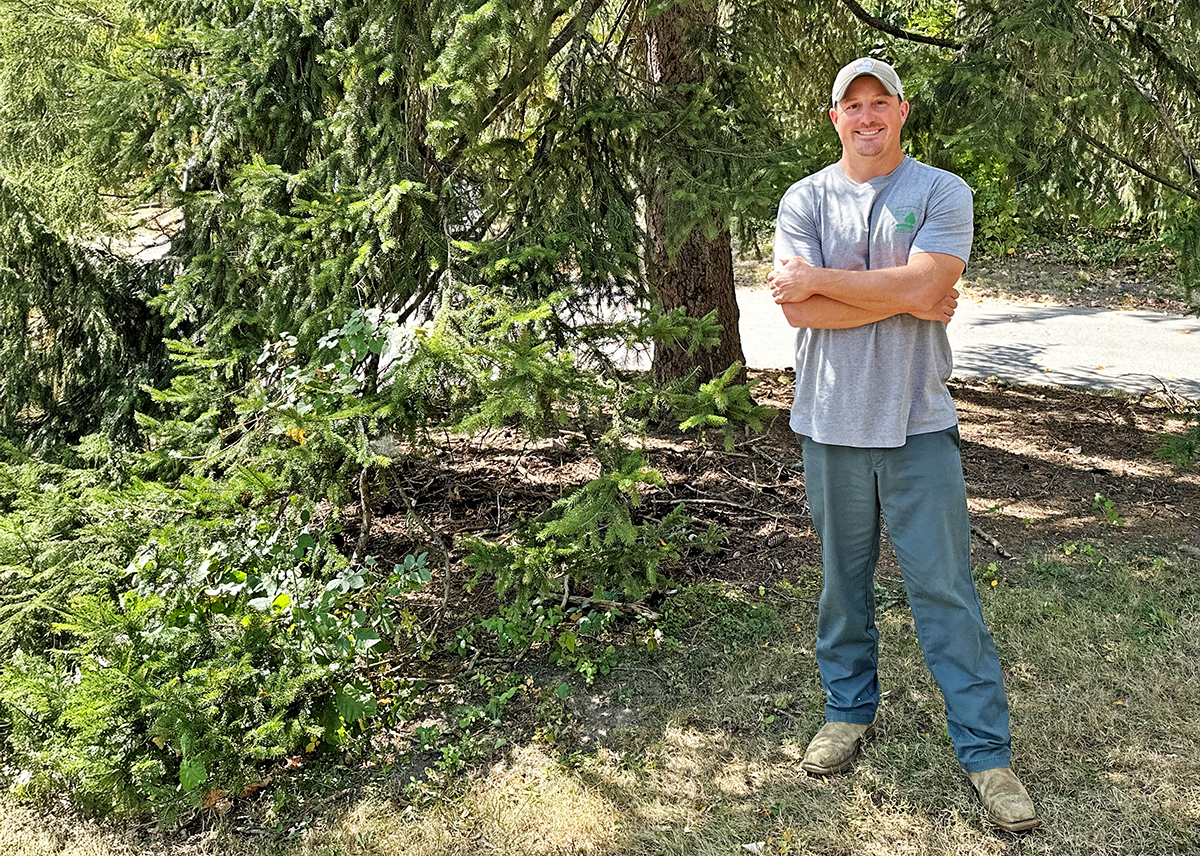
Logan Dunn
Assistant Resource Manager
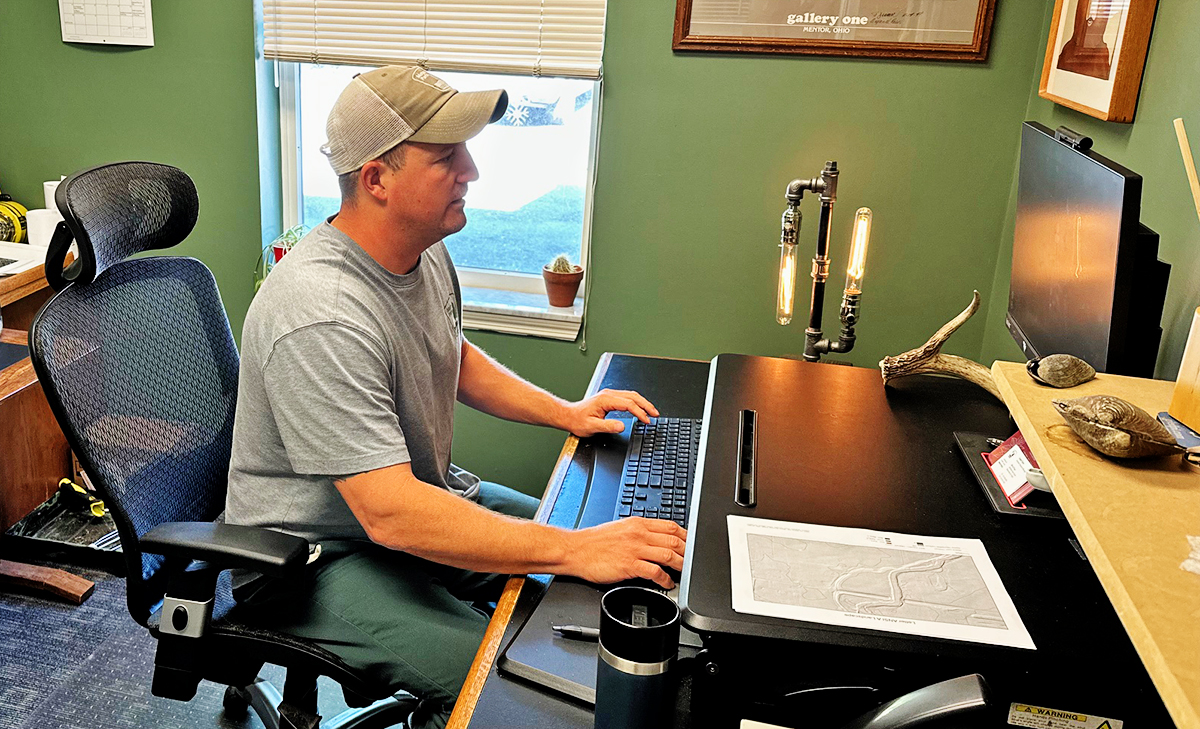
Logan Dunn is talking with Communications Coordinator, Virginia Gordon
About me
I come from Big Island, Ohio, which is neither big, nor an island. Early settlers to the area named it because a very large forested area stood out as an isolated natural feature, so it was an ‘island of trees.’ Outside the forest there is one of Ohio’s largest natural wet prairies, with lots of wetlands. Growing up there explains a lot about why I love working with wetlands now.
The unincorporated township of Big Island has a population of just under 1,200. Most residents live on farm land, and I grew up on a farm, with my parents and my brother, Taylor, who is one year younger than me. Long before I was born, my grandfather had reared cattle on the family farm, but he later converted it to a grain farm. We grew corn and soy beans. Our farm was small, only about 80 acres. We sold our corn and soybeans to local grain mills. It was hard work and the rewards weren’t great. In 1995, my grandfather signed up to a conservation program, operated in Ohio by the Farm Service Agency, called the Conservation Reserve Program. The program paid local farmers a pre-defined rate to convert their farmlands over into conservation, and convert their crops to warm-season grasses, such as big bluestem, Indian grass and switch grass.
We had a natural wetland on our property too, of about 5 acres. A plethora of ducks would spend time at our wetland during the spring and fall migration seasons, mostly mallards but also lots of redhead, wood ducks and hooded mergansers. I discovered a love for the environment very early in my life. A lot of farmers in the area drained their wetlands, but my grandpa was very conservation-minded and retained ours as part of the conservation program. I would spend a lot of time watching birds in the nearby Big Island Wildlife Area, and the even bigger and adjacent Killdeer Plains Wildlife Area, which is part of the Sandusky Plains prairie ecosystem. I saw a lot of sandhill cranes there.
SCHOOL AND FARM WORK
I went to school at Ridgedale Elementary and Ridgedale High Schools in Morral, Ohio, which was about half an hour from our farm by bus. Our school bus driver lived just down the road from us, which meant that Taylor and I were first on the bus, and last off the bus, every school day. With all the other kids living on isolated farms, it seemed like my brother and I were on that bus forever. Two hours a day on a bus definitely feels like forever to kids growing up!
Taylor and I were really close, although very different from each other too. We got used to working hard on farms. Before grandpa entered our family farm into the conservation program, I used to ride with him as we harvested our corn in September and October. And I’d help my dad to split firewood, which we sold to locals. As teenagers, Taylor and I worked on our neighbor’s farm, baling hay, planting crops, feeding the animals and cleaning their stalls.
We signed our farm into the CRP program in 5-year blocks. After my grandpa passed, my family decided to leave the conservation program and rent out our land to other farmers. This was in 2010. It was more profitable to do that than to keep the land in the conservation program. The house I grew up in had become structurally unsound, and so my parents moved to a new house off the farm, in the nearby community of Green Camp. My uncle still lives in another house on the farm. I had already left the family home by then. In fall 2006 I went to Ohio State University, on the Environmental Engineering track, but I was only there for one Quarter. I didn’t yet have a specific idea in mind about what I wanted to do with my future.
BULL RIDING
When I was 17, I started bull riding. A friend of mine, Adam Quick, gave me practice on his mock up, which was actually a large barrel, strung up lengthways to his hayloft, and with other ropes that he would pull on to simulate the bull’s movement, as I sat astride the barrel and tried to balance myself on it. Adam and other friends were already bull riders at a local bull riding association, A-Bar Rodeo. I joined myself and loved it. We were an amateur association, and we’d send riders to compete at the rodeos at county fairs all across Ohio and also in Indiana. A sane person should probably be very nervous about bull riding, but at age 17 I couldn’t resist the excitement and the adrenaline rush of riding a bull that’s doing its darndest to throw you off its back. At the association we had as many as 25 bulls to ride, and we’d send anywhere from 15 to 20 riders out to compete at the rodeos. A rider’s goal is to make it to eight seconds on the bull’s back to score points, which would include style points for the ride.
I’d been bull riding for about three years and had been loving every minute of it. Then I competed at the Marion County Fair Rodeo. The bull is constrained in a metal chute before the rider gets on the bull’s back. Then a gate is released and the bull goes charging into the arena, trying to buck the rider off its back. Obviously, I had done this many times before. Riders climb a fence and then straddle the bull while it’s in the chute. The rider puts a rope on the bull and holds the rope tightly, helped by resin in the rider’s glove that creates friction with the rope. This time, the bull flipped its head as I tried to get on its back. Its horn hooked behind my leg and threw me off balance and pinned my leg against the metal fence of the chute and kept on slamming my leg into the metal. Other riders saw something was terribly wrong and some of them tried to grab my hand in an attempt to pull me off the bull. It wasn’t very long before they succeeded, but it felt like forever in the moment.
My leg was very bloodied from numerous cuts and scratches, but fortunately no bones were broken. Being young and stubborn, I didn’t seek further medical attention, but that was the last time I ever attempted to ride a bull.
WORK AND FAMILY
When I left high school, I started working at JD Equipment in Marion, maintaining and repairing their combines. I worked on a lot of farm equipment growing up. In March 2008, my first daughter, Jacey, was born. And in April 2009, we had our second daughter, Bailey. I had come to realize that I wanted a better life and career for me and my family, and so in fall 2009 I enrolled at OSU again. I studied on the Environmental Policy and Management track. Having had so much exposure to wetlands in my earlier years, I was keen to broaden my knowledge of water policy, water rights and water law. Those were the main focus of my classes. I continued working at JD Equipment, working mornings and taking my college classes in afternoons and evenings. I especially enjoyed the field work we did as students at OSU’s Olentangy Wetland Research Park.
In January 2011 my son Tristan was born. We wanted a name for him that wasn’t commonplace, and Tristan fit the bill. Later that year, I began to solidify my thinking about a future career. I left JD Equipment and went to an OSU Career Fair to look for a summer internship. I was thinking my future might be with the EPA, ODNR or Metro Parks. There was an opportunity to become a maintenance intern at Prairie Oaks Metro Park and that’s what I did in the summer of that year. I was promoted to a seasonal technician the following summer, and in May of 2013 I was promoted again, to a part-time technician. I worked 24 hours a week, in three eight-hour days. I graduated from OSU in June 2013.
I was desperate to get full-time work, as I didn’t have any health insurance benefits as a part-time employee. There were no full-time vacancies at Metro Parks, so I felt lucky to be offered a full-time job with Preservation Parks in Delaware. It was a park technician position, but my role included natural resources liaison and I did a lot of resource management work there, including planning and constructing seven wetlands, based on soils and landscape topography, invasive species work, prairie restoration and reforestation projects. We used heavy equipment to make the depressions that would become the wetland cells, which ranged from a quarter of an acre for the smallest, up to a 7-acre wetland.
A MASTERS DEGREE, A NEW RELATIONSHIP AND A NEW JOB
When I started working at Preservation Parks in 2013, I met a naturalist who worked there, Liz Neroni. As the name might suggest for you, Liz is from an Italian-family background. Her grandfather immigrated to the US from Italy. Liz and I started dating in 2018, which is the same year I began studying for a Masters Degree in Restoration Ecology from Colorado State University in Fort Collins.
All my classes were online. The focus of the study was on plant community relationships, how plants interact with each other in different natural settings, and how that can lead to planning for successful restoration of forest, prairie or wetland environments. Although typically a two-year course of study, I took my online classes as I could afford them and could find the time for them, and qualified for my Masters Degree in 2022. I hadn’t visited Colorado once, in all my four years of study, but I was so proud to go there, with my family, for my graduation in June 2022.
In the interim, I changed jobs again. After seven years at Preservation Parks, I was looking to work full-time in conservation, and that opportunity arose when I started working for MAD Scientist Associates, an environmental consulting firm with headquarters in Westerville. We worked with many different metropolitan parks, agencies and non-profits in Ohio, often on invasive-species removal, floristic surveys cataloging all native and non-native plant species, and sometimes on wetland delineations, marking boundaries of wetlands based on existing vegetation, soils and water holding capacity. I loved the work, but there were a lot of overnights which I had to spend away from my family.
The overnights began to happen too often for comfort. So I moved again, and became the nursery manager at Natives and Harmony, a small native plant nursery based in Marengo. We worked with golf courses and private landowners to restore native habitats on their land, along with propagating and selling native plants at the nursery and various plant sales across the state.
FINDING MY WAY BACK TO METRO PARKS
In February 2022 I saw a job posting on the Metro Parks website for a park technician position at Sharon Woods. I interviewed for the position, and I was offered a job, but they asked if I would work at Quarry Trails instead of Sharon Woods. Quarry Trails Metro Park had only opened about three months earlier. It was only a month after starting that a park technician II position opened up at Highbanks Metro Park, which is a supervisory position. I was elated to get the position, and worked with the Columbus City Schools Interns that summer to add additional structures to the natural play areas.
The following year, in September 2023, I was promoted to my present position as assistant resource manager. It had long been my aspiration to get a job like this with Metro Parks. I’ve enjoyed all aspects of my job, which have included reforestation plantings, numerous restoration projects, seed harvesting, overseeing contracts for invasive species removal, and grant writing, especially for two large and hopefully upcoming projects from H2Ohio, at Glacier Ridge and Prairie Oaks Metro Parks. At Glacier Ridge, the project will provide our inhouse staff with the perfect opportunity to work hands-on and construct a wetland and include reforestation on a 42-acre site. The Prairie Oaks project will be based on a large wetland complex and we will contract out the construction and restoration work to outside contractors.
What I love about Metro Parks
WORKING
What I love most about working at Metro Parks is the restoration work, changing a landscape from an agricultural base to what I like to call a ‘biodiversity buzz spot.’ Some of our restoration projects have taken place on formerly agricultural land, while others have been in more natural settings. We transition farm fields to reforested areas, or to prairies with warm-season grasses that create habitats for birds, such as Henslow’s sparrow, and insects like the monarch butterfly, which love the grassland prairie habitats we create.
At Slate Run, a very enjoyable project has been a thinning-out of an early successional forest, to help one of the park’s most famous and best-loved visitors, the sandhill cranes. Two families of sandhill cranes have been using the Slate Run wetlands for many years. The Slate Run wetlands were created in the late 1990s, but over the years the site was transitioning and became more like an early successional forest. Negative impacts for the sandhill cranes could have arisen from such a transition, such as deterring flight paths and adding natural barriers more conducive for predators. Although the sandhill cranes have continued to nest and raise colts at other wetland cells at the park, we don’t want to risk losing them in the future. Our thinning of the successional forest should help to keep them coming back to nest with us for many more years into the future. I also really enjoy working with all the people from Metro Parks. Everyone has their very own unique perspective and it’s always great collaborating on various projects around the district.
RECREATION
Our mom brought Taylor and me to programs at Metro Parks, mostly at Highbanks and Sharon Woods. At Sharon Woods, in those days, there was a very large contingent of deer at the park, and they were generally very docile. Park staff did all they could to stop visitors from interacting with the deer, and from feeding them. But me, as an 11-year-old know-it-all at the time, I decided to walk up close to a doe and feed it a carrot. I’d done it before. Deer seemed to like carrots. As I came close to this particular deer, she stood up on her hind legs and then forcefully pushed into me, sending me flailing to the ground. She really gave me the ‘what-for!’ I ended up with hoof mark bruises on either side of my chest, and learned a valuable lesson – never approach a wild animal, no matter how docile or unthreatening it might appear to be. And I learned another valuable lesson – listen to mom! My mom had told me not to approach the deer and of course I had ignored her wise advice, to my cost!
Fishing programs at Sharon Woods were also a favorite, as well as the night owl hikes. Visitors were taken through the park by tram, after dark, as we went searching and listening for owls. I enjoyed taking my own kids to Metro Parks programs when they were younger, at Glacier Ridge, Highbanks and Battelle Darby Creek Metro Parks.
STUDYING
Whenever Liz and I come to the parks to enjoy a hike, I can’t stop myself from botanizing. Basically, for me, that means I stop and spend what – to Liz – is an inordinate amount of time standing still and staring at the plants. But it’s what I’ve always done and what I love to do. Birds might be heard and not seen, or glimpsed fleetingly as they fly from branch to branch or tree to tree. But plants are immobile. They stay perfectly still, as if to say, “Look at me!” And I look and derive great pleasure from it.
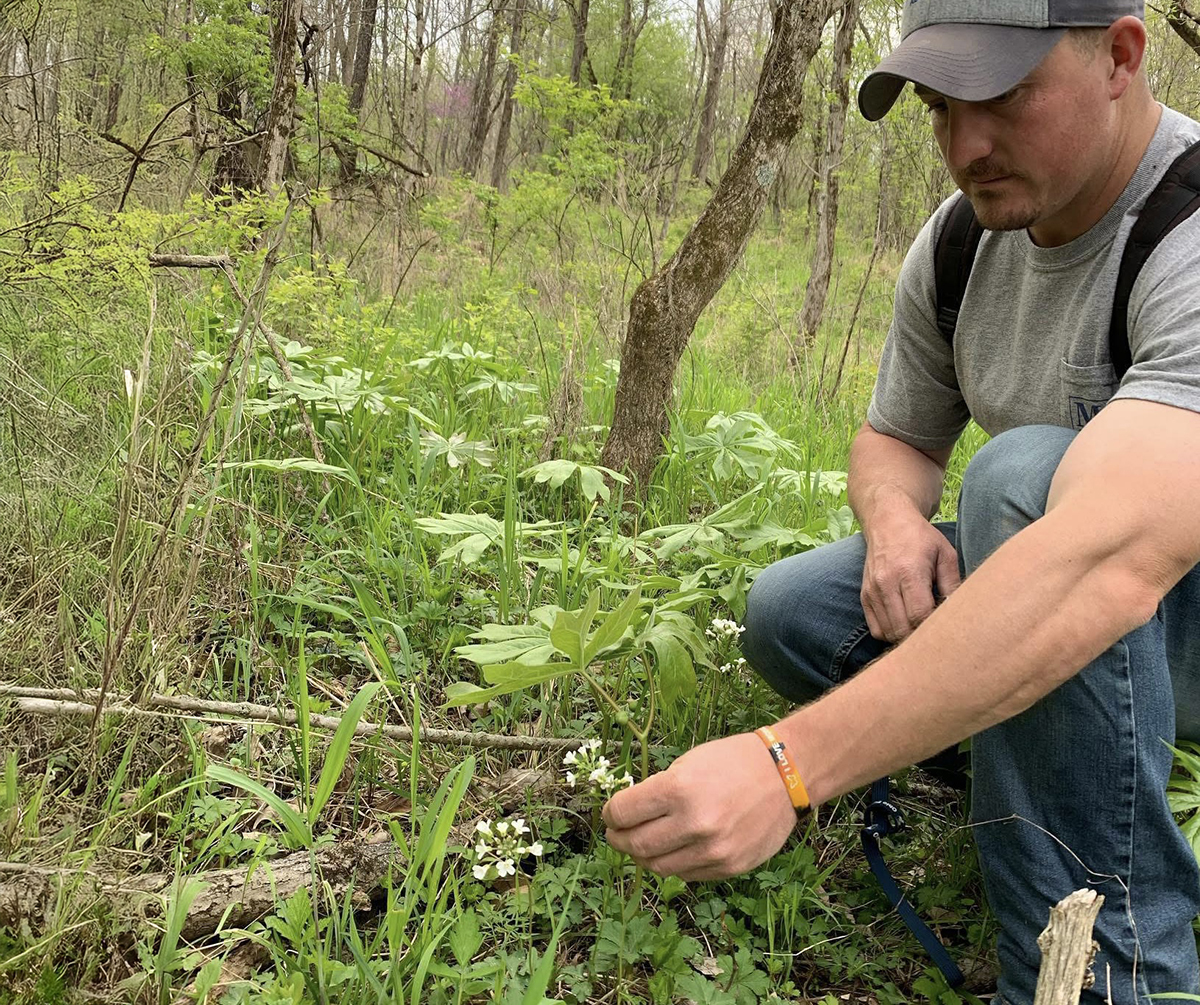
I study them closely to identify them, and reference them to a book I always carry with me, Newcomb’s Wildflower Handbook. Very recently, this paid off as I identified a smooth wild petunia just outside an agricultural field at Battelle Darby Creek. I had never seen this dicot plant before growing naturally. A dicot plant is so-called because it has two cotyledons, or two embryonic leaves which provide nutrients to the plant. I confirmed this exciting find thanks to having my Newcomb’s Wildflower Handbook with me. Smooth wild petunia is more of a moist to mesic open woods species, so discovering one growing naturally really piqued my interest.
A memorable visitor interaction
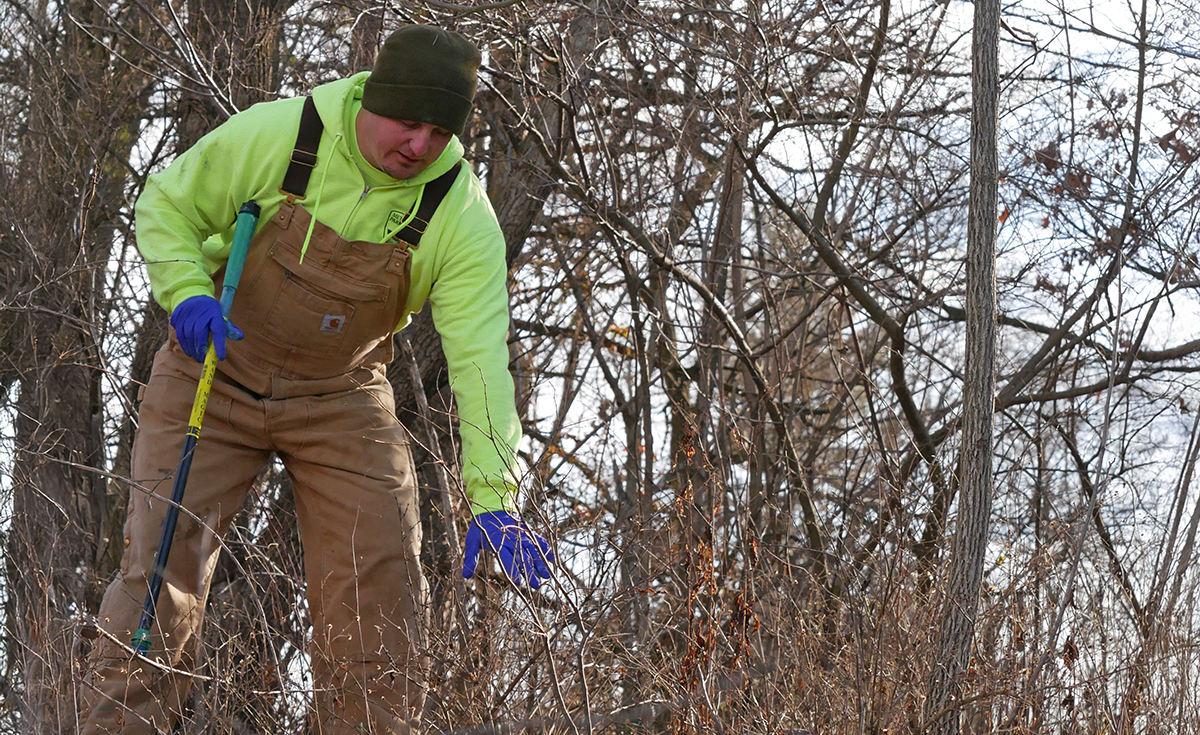
While I was working at Highbanks, I was out on a tractor, on my own, treating Canada thistle by spraying with herbicide. We were maintaining our treatment plan in order to keep this invasive plant under control. I came upon a large milkweed patch, in which there were a few isolated Canada thistle plants. I didn’t want to damage the milkweed, so I got off my tractor and went into the milkweed patch and hand-cut the Canada thistles.
A family saw me and came up to me to ask what I was doing. It turned into a memorable conversation. I told them that I was removing the Canada thistle but protecting the milkweed, which is a vitally important plant for monarch butterflies. The parents had their two elementary-age boys with them, who were excited to tell me that their school had just done a monarch tagging event. They told me all about the tagging, and said that they were going to grow a milkweed patch at home. I was able to give them some advice on how to plant a successful milkweed garden. The boys, as well as the parents, were so excited to have run into me and to get the advice. In the end, we talked for about a full hour, and the boys definitely took delight in sharing back their interest in the environment and conservation.
Moments like this can be so important for kids, and it reminded me of times in my own young life when I experienced a moment that stimulated my own interest in the environment. In my case, it was seeing sandhill crane colts for the first time, which I saw at Killdeer Plains. Every time I saw sandhill cranes flying over our own wetland at home, it reminded me of that moment and solidified my love for nature and conservation.
Traveling – places I’ve been, places I’d love to go
FLORIDA
When Taylor and I were young, we would have family vacations nearly every year at New Smyrna Beach on the Florida Atlantic coast. Our grandparents had a condo on the beach. Taylor and I loved to play shuffleboard. There were courts on the sea wall. On either end of a long court there are triangle shapes, and the idea is to use an aluminum stick to shove resin-based discs down to the opposite end of the court, and to stop the disc in the highest-scoring parts of the triangle. We would play it for hours every day. As a family, we’d swim in the ocean, and also eat often at Shell’s, which is a fantastic Florida seafood restaurant chain. Their fried cod was amazing, with such a tasty breading, flavored with various herbs and spices. I also loved their mahi-mahi sandwich.
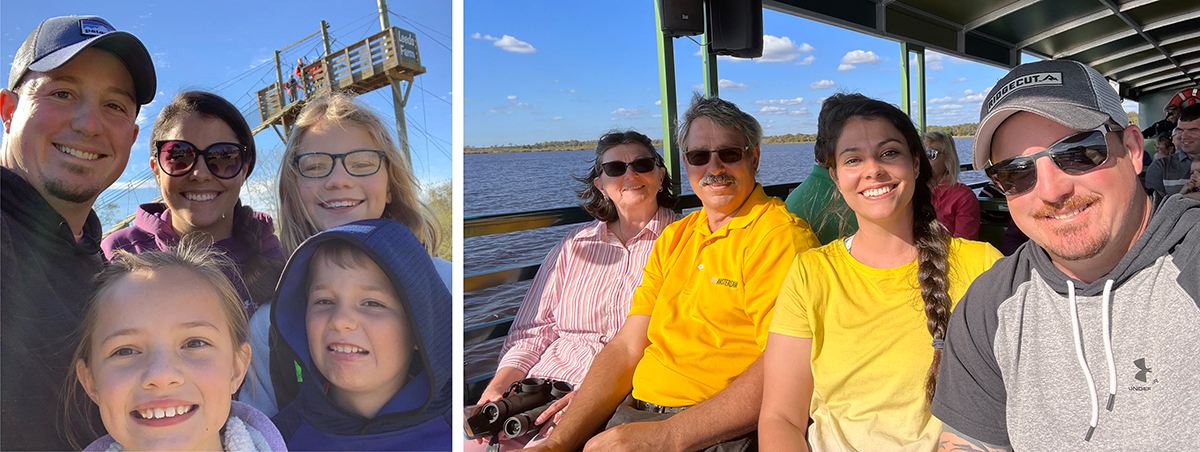
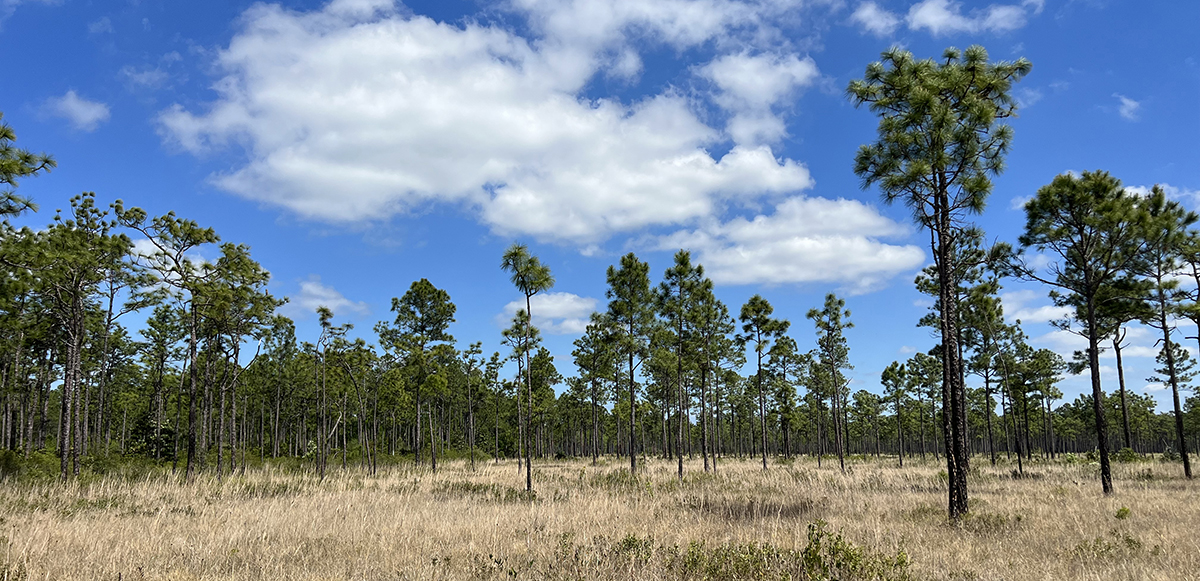
Liz’s parents have a vacation house on the Florida Gulf Coast, in Englewood. We’ve been vacationing down there nearly every year since we started dating in 2018. We go in November or December, to escape the Ohio cold for a week or so. Both of us love to go to the nature preserves on the Gulf Coast. We especially love going to Blue Springs State Park, which is most famous for being the winter home of the Florida manatee. These fully aquatic mammals can grow up to 13 feet long and can weigh up to 3,000 pounds. The water at Blue Springs State Park is very clear and quite shallow, only about 6 feet deep. The manatee congregate there in winter as the shallow water is much warmer than the deeper waters of the oceans, where they usually live for the rest of the year. You get to see them very closely as they swim around and munch on aquatic plants such as sea grass. Florida also has lots of different flora than we get in Ohio. I particularly like seeing the long leaf pine savannahs, and many of their more exotic prairie grasses, such as sawpalmetto, a grass that loves dry and sandy soils.
COLORADO
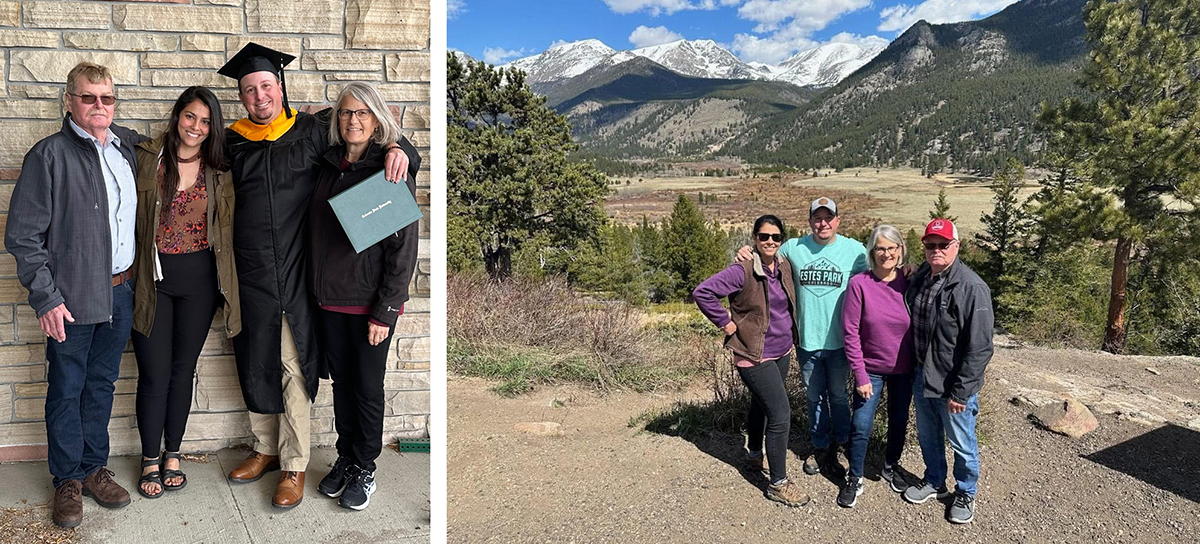
Another trip that was a fantastic family vacation was our visit to Colorado. As I mentioned earlier, I graduated with my Masters Degree from Colorado State University in 2022. My whole family came for the graduation, but earlier in the trip we spent six days at Estes Park, where we saw elk and moose. I had never seen either of these massive animals before. Moose like to congregate in the grassy lower slopes of the mountains, whereas elk are more comfortable at higher elevations, up on the rocky slopes. We did lots of hiking in the mountains. On one of them, I experienced breathlessness, just through the sheer thinness of air at the higher elevations. I was quite scared at one point, as I struggled to breathe. We had only walked about 2 miles, but that included a very steep rise from our starting point, at about 6,000 feet above sea level, to our highest rise, at about 12,000 feet.
AUSTRALIA
This is one for the future, if possible. It’s been atop my bucket list of places to go since I was about 6 years old. It has so many different ecosystems to experience, and all on the one solid landmass, which include rain forests, deserts, temperate regions, and all of it surrounded by oceans. My mom tells me it’s a crazy idea, to want to go to a place where so much of the native wildlife wants to kill you. I suppose she has a point. They have spiders that can kill you, including the red-backed spider, the funnel-web spider, and the appropriately named huntsman’s spider. And then there are box jelly fish, which get washed up all the time on the beaches, and which have a potent sting, lethal to humans. And the blue-ringed octopus, which has a venom that can kill as many as 25 people in a matter of minutes. And that’s without even considering the crocodiles and the great-white sharks. But I want to see all of them! And I want to see the Great Barrier Reef, the largest coral reef system in the world, and see the whale sharks, more than 40 feet long, that swim off the eastern coast.
Liz would love to go there too, but it costs about $10,000 for a two-week trip for two, more than half of that being the air fares. That definitely makes it a challenge to achieve this particular bucket list. And there is also a culinary drawback. A friend of mine, who had visited Australia, brought back some double chocolate covered cookies, called Tim Tams, and they were delicious. But he also brought back a jar of Vegemite for me, and that was the worst thing I have ever tasted in my entire life. I don’t even know how to describe it. I put a little of it on a slice of bread and it was totally gross. I still have the jar at home, though, years later. I like to bring that ‘sucker out’ when friends visit me for the first time, and I tell them they simply ‘have to try this delicious treat from Australia.’ It’s a devilish entertainment for me to see the horror on their faces when they try the evil stuff. Nobody I know likes it!
Fun facts about me and my family
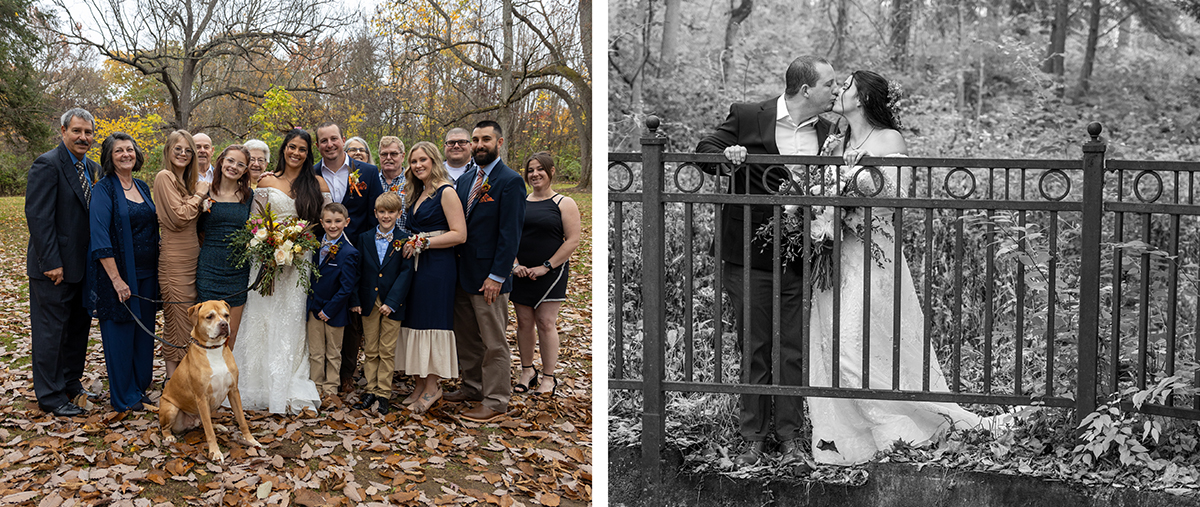
1. Liz and I got married at Highbanks! We got married in October 2023, with the ceremony at the Mansion Shelter, and the reception at the nearby Northern Shelter. A friend of ours, who is an ordained minister in Maryland, had to get an Ohio license so she could officiate the wedding for us at Highbanks. We had about 180 people at the reception. To my eternal embarrassment, the music for our walk-in to the reception as a newly-married couple was the Chicken Dance Song. It was a fun and eventful evening for us, although it did get a little chilly late on as we partied into the night.
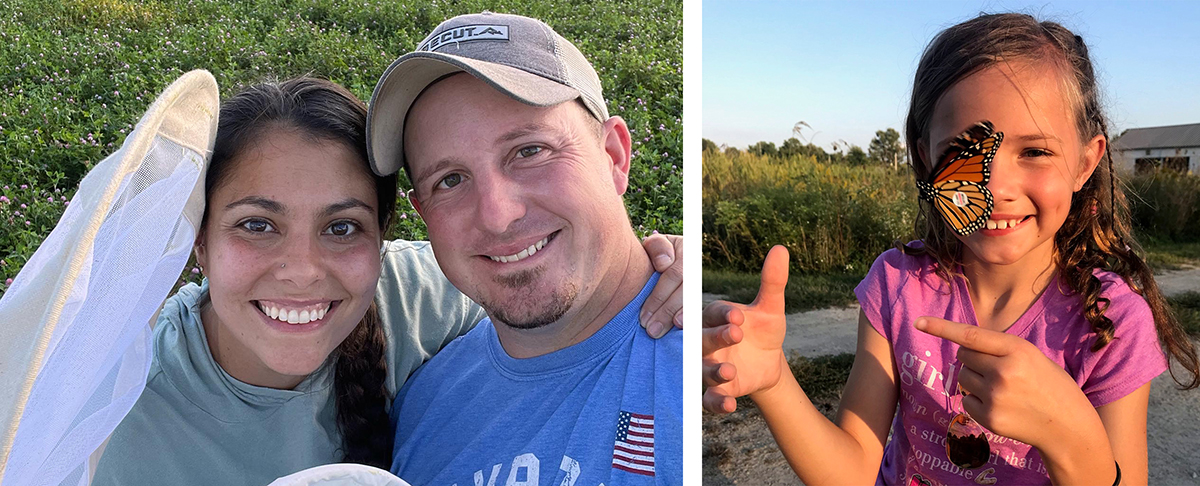
2. Family monarch tagging! Every year we do monarch tagging, sometimes as a family event. This year we went to Cleveland, to the Lake Erie Nature and Science Center. Liz’s family usually comes with us too, as they currently live there during the summer. We sometimes draw in a crowd of people who ask us what we’re doing. We order stickers, in advance, from Monarch Watch, every one with a unique number. We catch the monarchs using special butterfly nets, and then attach one of the tiny stickers to their forewing before releasing them. The stickers don’t affect their ability to fly, but they do provide important information about the life cycle and journey of the tagged monarchs. We usually go up there two different days every year, and submit our tagging data to Monarch Watch using their mail in service.
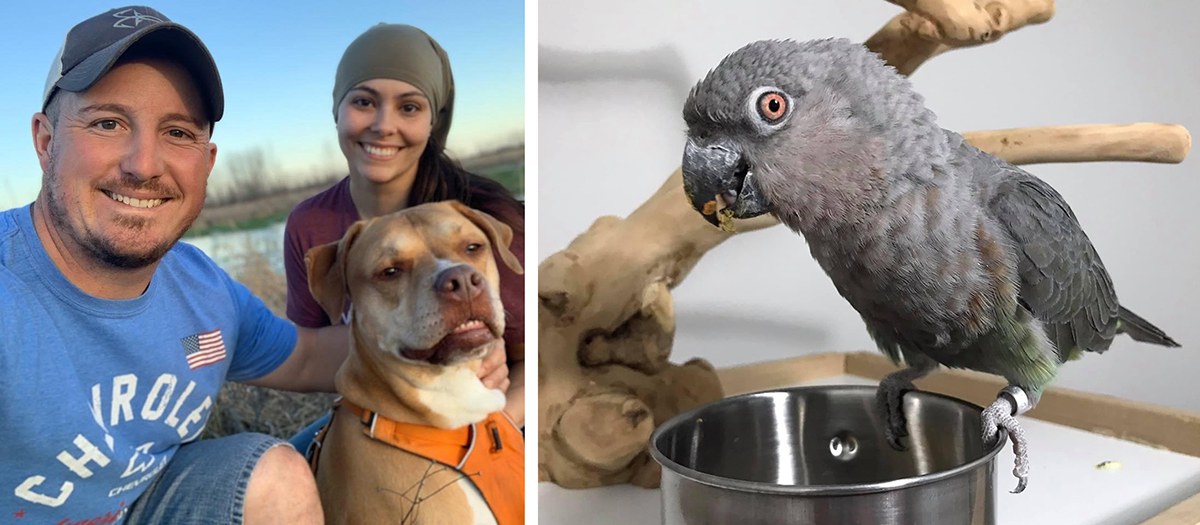
3. Pets! We have 15 chickens as pets, and they all have a name. They are also egg producers, which is great for us. We have a pitbull, named Jack, who is very lanky and a bit goofie-looking, as far as pitbulls go. And we also have two Senegal parrots. My parrot, named Shay, always says ‘Hello’ whenever my phone rings. She’s a very nice parrot, a very friendly parrot. Liz’s parrot, named Goob, is more like a T-Rex! She doesn’t like anybody, except for Liz. She’ll rip your head off as soon as she looks at you! The parrots are caged for most of the day, but we release them for four or five hours when we get home after work. They don’t get along with each other terribly well, but both of them are good listeners, so if we issue a firm ‘No!’ they’ll stop whatever nefarious action they were plotting. Quite often, the parrots will sit atop Jack’s head. He’s a very intelligent dog. We’ve made him understand that the parrots are family too, so he puts up with the indignity of having parrots perched atop his head, and goes into a kind of family-protect mode. We also have a built-in aquarium in our bathroom. It’s a 20-gallon tank and we have one beta, which is larger than the other fish. We can only have one beta in a tank, as they would fight each other to the death if there were two. But we do have many other much smaller tropical fish as well.
My favorite food and desert
Liz doesn’t enjoy cooking, so I’m happy to do the majority of the cooking at home. Liz’s family has long made their own, special recipe spaghetti sauce, which is just for family use. But there’s nothing better out there at any supermarket. The sauce is canned and supplied to us, so all I have to do is cook the spaghetti and add their sauce. I often sear some ground sausage to add to the sauce, which makes a great and easy to prepare dish. Liz has a particular liking for my home-made omelets. I add spinach, tomato, red onion, green peppers, banana peppers and jalapenos, all grown in our own garden. Sometimes I add in my own lightly-seared hash browns with the omelet. It’s our weekend breakfast of choice.
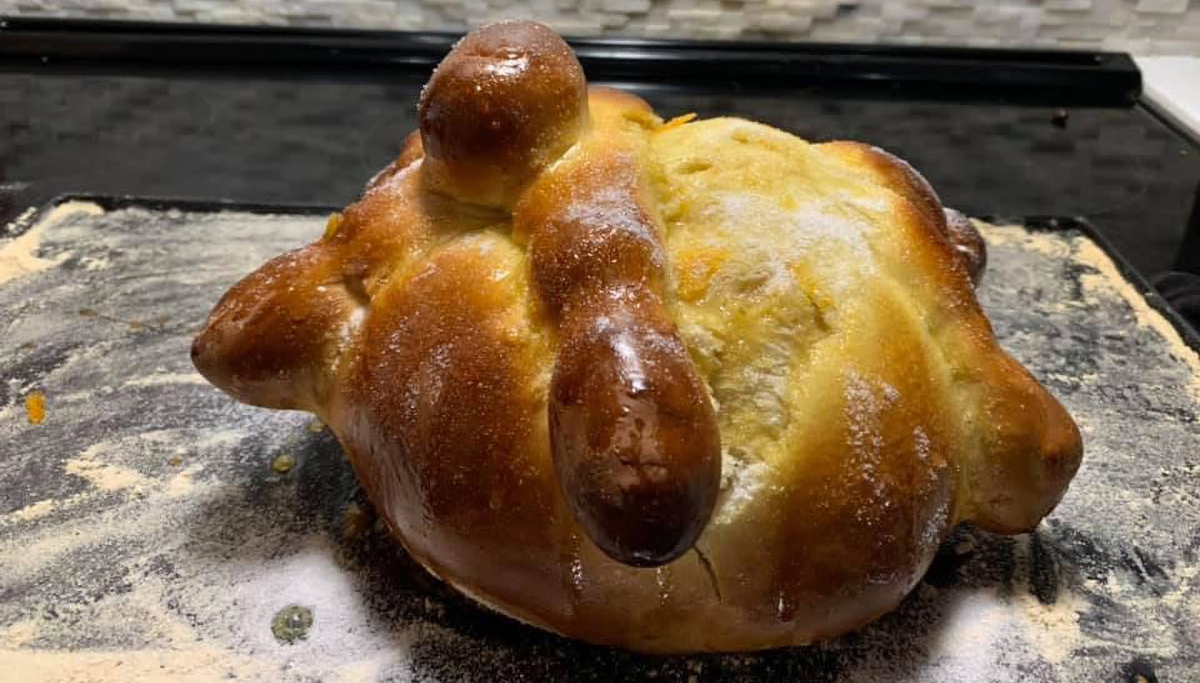
An annual delicacy that I make is my Day of the Dead bread, or pan de meurtos. It’s a Mexican sweet bread, associated with the Day of the Dead Festival in Mexico, on November 1 and 2 every year. It’s more a celebration of life, than of death, and is meant to welcome the spirits of one’s ancestors to the festival celebrations. I make the bread from scratch. Years ago, Liz developed a food allergy. She is dairy and wheat intolerant, so I use gluten-free flour to make the bread. The bread, traditionally, is a round shape, with bone shapes across the top. The bread is coated with butter and lots and lots of sugar, and then orange zest is added near the end. It’s the most delicious tasting bread in the world!
But if pressed for a favorite food, I always like to gravitate towards pizza. My favorite is a basic margherita pizza from Dewey’s Pizza in Dublin. The sauce has a wonderful flavor, and they have a really nice thin crust, which is never too hard. They don’t do delivery, but we’ll head out there a couple of times a month to buy pizza and bring it back home.
For dessert, I love nothing better than my grandma’s strawberry and rhubarb pie. She usually makes me one for my birthday, and occasionally at other times. She grows the rhubarb in her own garden and she makes a deliciously buttery and flaky crust.
Because of Liz’s food allergy, I’ve experimented and found lots of different recipes that I can make. She has found lots of things that she can eat, such as vegan ice cream, which is just as delicious as regular ice cream. The only problem is, it costs ten times as much.
My favorite entertainment
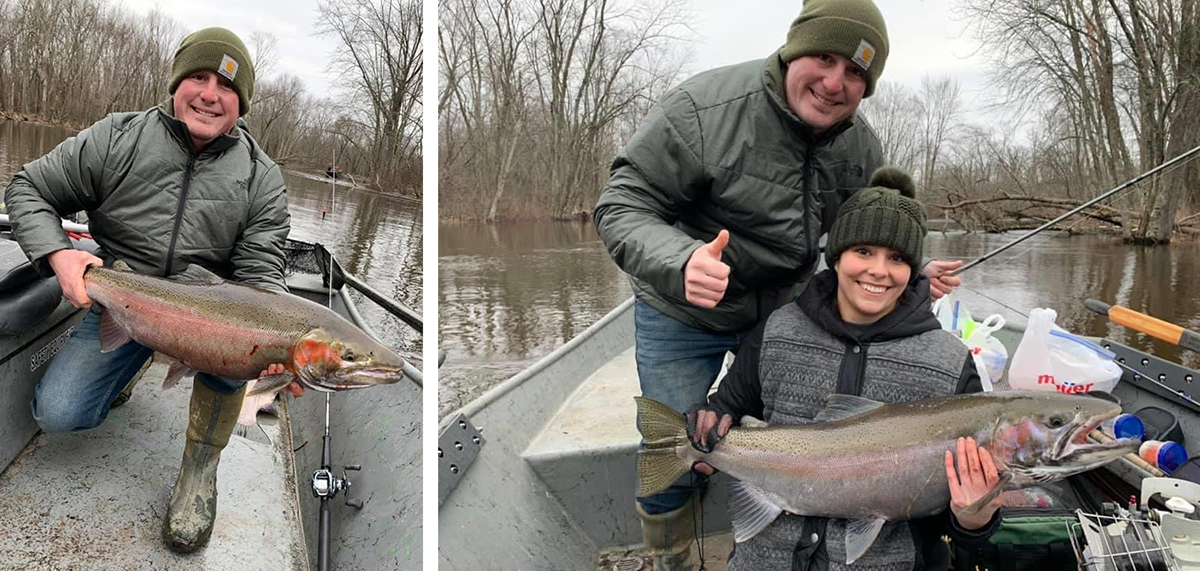
My number one favorite pastime is to go fishing. I always carry a fishing pole in my truck bed. Liz loves fishing too, so we go together to catch catfish at Delaware Lake, or to catch smallmouth bass and rock bass from Mill Creek, a tributary of the Scioto River. We try to go fishing at least once a week, usually for four or five hours. We have a small Jon boat, powered by an electric motor, that we use on the lake. Once a year, we go up to Manistee in Michigan, and fish on the Pere Marquette River. We go there to catch steel-head trout, which are a very large fish found in really cold streams. We go in late September or early October and spend a weekend there. We take our catch of steel-head trout home, to cook. It makes a delicious treat.
We don’t watch much TV, although we have a television for the kids. Much of my non-working time is devoted to other conservation pursuits. I run a small business, called Habitat Partners. I consult with residential landowners that want to put in pollinator habitat or other various conservation practices to attract bees, butterflies, birds, mammals or bats. The goal is to enhance conservation from a small-scale effort with large-scale effects. We also work well with zoning officials to fill in as experts on a variety of issues related to conservation projects.
My wife and mother inspired me to set up my small business. For many years, and still today, my mother runs her own cleaning business, cleaning the houses of farmers and neighbors. She does it all herself. She has never employed anyone to work with her as she can’t convince herself that anyone would do the job as well as she does it herself.
I also serve in a volunteer capacity as the Director of the Outdoor Land Lab at Hayes High School, working with teachers and students to create pollinator habitat on school grounds. I volunteer about 20 hours a month.
Until recently, and for about six years, I also served on the board of the Ohio Wetlands Association. Such other time as Liz and I have available in our spare time is devoted to gardening. We have a yard of about half an acre, front and back. About 80% of it is planted with native plants, such as false aloe, royal catchfly and fire pinks, plus as many as 300 other species. About 10% is reserved for our vegetable garden, growing the kind of fruits and vegetables mentioned earlier when talking to you about my omelets. The rest is pure lawn, but we are thinking of converting that soon, as Liz has a desire to grow cut flowers.
What Kevin Kasnyik, Manager of Park Operations (Resource Management), says about Logan
” Logan brings a consistently high level of energy and enthusiasm to work every day. He’s always ready and willing to run with any ideas or initiatives that get discussed or directed toward our department. He and the rest of the resource management staff make positive impacts across the District.”
I really enjoyed reading your article as we have similar interests, and I am familiar with some of the things you mention. I worked as an intern at Delaware Wildlife Area in the early 70’s and have friends that farm at Killdeer Plains, The Ralph Brothers. I have many memorable visits there over the years, the most recent being watching the total solar eclipse from their barnyard last year. I also like to make omelets with New Mexican green chiles that I grow in my garden. I live adjacent to Chestnut Ridge Metropark and hike there regularly. I would like to see the invasive Amur Honeysuckle. and Autumn Olive eliminated there (I know this is a daunting task) and actual American Chestnut trees restored once viable GMO become available.
Thank you for sharing all of this wonderful and interesting information about Logan!