
EVELYN HILGEMAN
Outdoor Adventure Programmer

The Metro Parks Outdoor Adventure team recently hosted a DIY Sundials program, where we explored the history of clocks, and everyone had the opportunity to decorate their own take-home sundial. During this program, we briefly discussed the past, but there is an extensive history that isn’t commonly shared. The history of sundials, and how ancient peoples were able to devise a clock-like concept from scratch, is truly amazing.
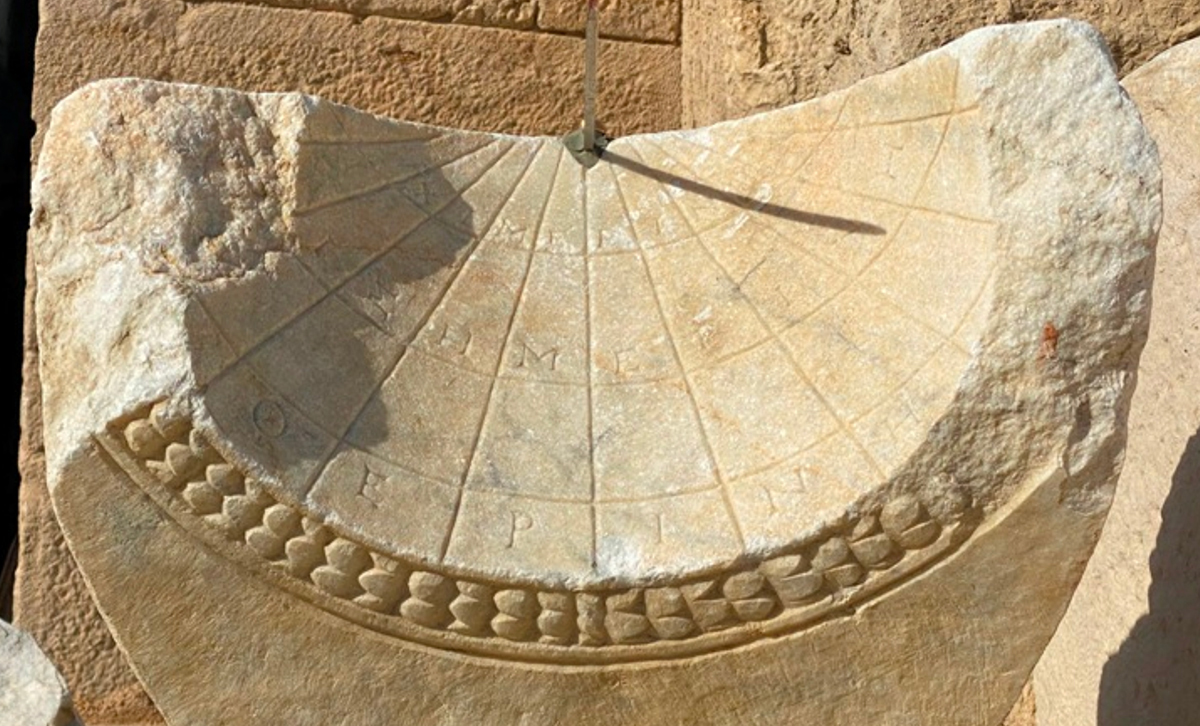
For many years before the invention of the modern-day clock, civilizations used the sun to tell time. They created sundials – a time-keeping device that used the sun’s position to mark the passing of time. Simply put, sundials consist of a dial plate that is marked with lines to signify the hours of the day, and a stick (called a gnomon) that is raised from the center and casts a shadow onto the plate as the sun moves across the sky.
While theories predict an earlier time, the first sundial actually recorded came from ancient Egyptians in 1500 BC. Their sundials consisted of simple objects casting shadows onto hour markers. Over time, sundials became more advanced and complex. While sundials originated from ancient Egypt, the ancient Greeks were the first ones to develop equatorial and horizontal designs. Since shadows depend on your latitudinal position, sundials were made to accommodate different locations. They concluded that by tilting the gnomon due north so the angle matched the approximate degrees of your latitude, you would have a more accurate reading of time.
With the invention of the modern-day clock, sundials now serve as reminders of early scientific advances and creativity. While they are no longer widely used, decorative sundials reflect the rich history of ancient civilizations.
We should put a few sundials in some of our parks. We should use different designs in different parks. This should be educational for our visitors.