
MARIA BERGMAN
Battelle Darby Creek Naturalist
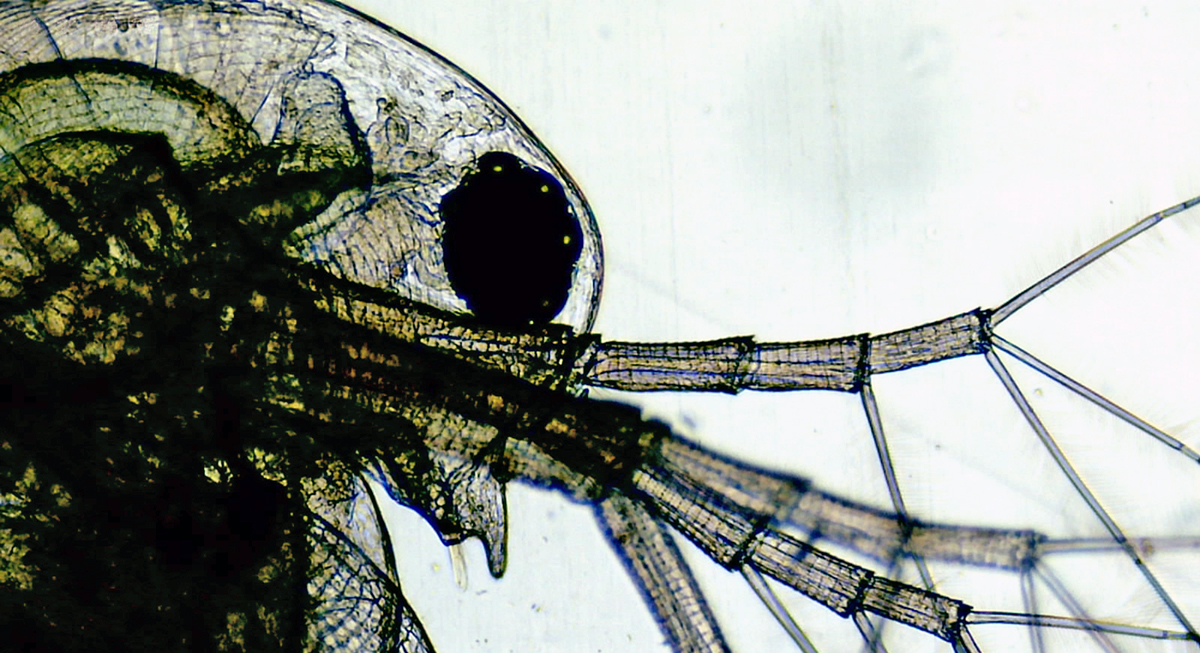
It’s springtime in the Metro Parks. The question is always asked: are the salamanders out yet? But what about the rest of the critters? No one asks me if the copepods are out yet? If the daphnia are moving, or if the mosquito larvae are wriggling? Thus, it is my duty as a naturalist to help educate on the other cool critters we have using those same habitats. Habitats being vernal pools, temporary water sources in the springtime. Hopefully, then I will occasionally get asked about the state of copepod emergence.
Starting out, what is a copepod? The name pops very entertainingly across your lips, but for most people, it’s not a name they ever knew to say. Copepods are tiny, but mighty crustaceans. The copepod family encompasses many types of feeders and shapes. (Think of Plankton from SpongeBob – but red).
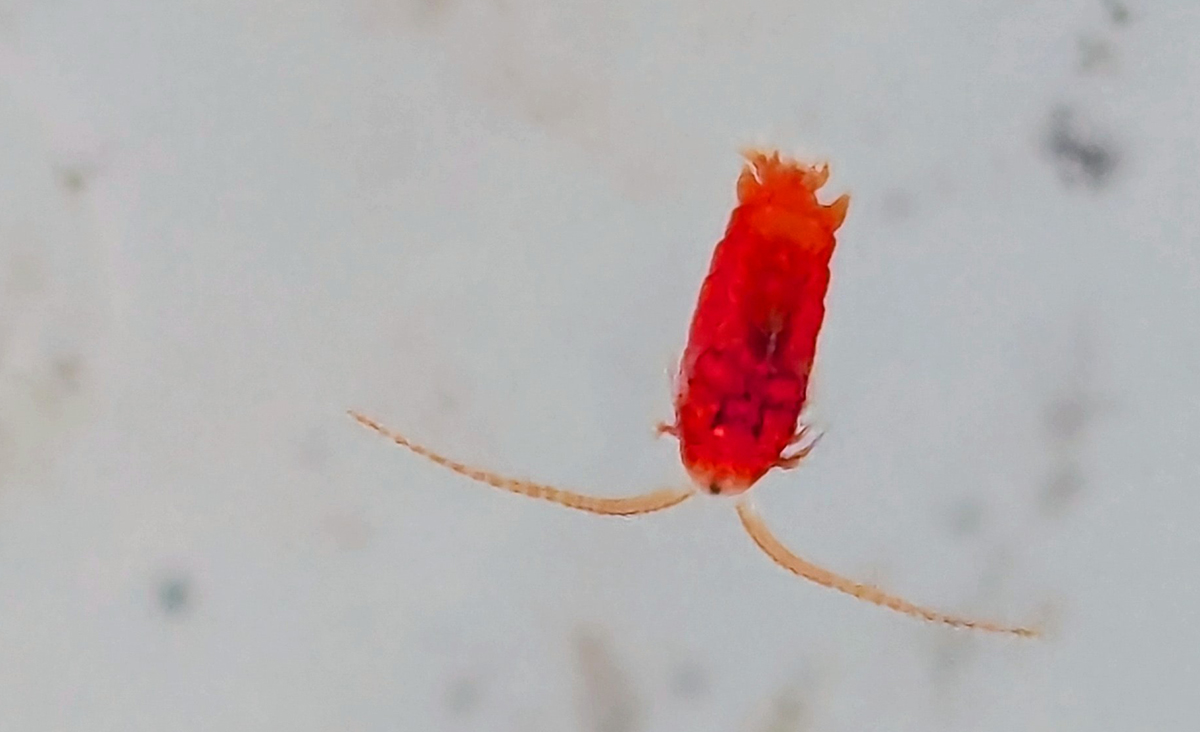
There has to be such diversity as you can find copepods anywhere and everywhere there is water. The bright red color of this species found at Battelle Darby Creek, calanoid copepods, has what we call cryptid coloration. Basically, the red color helps them disappear in murky depth.
Daphnia are one of the first animals I find moving in vernal pools once the snow melts. Most people know this species as a water flea- I think Daphnia makes them more personal. Very few people want to look for a flea in the water- but they’ll look for daphnia! These are one of the most charismatic movers in the water table. They look like they teleport! By flexing the front antennae, they are jolted forwards giving them a choppy movement easy to see in comparison to their physical features. Being 0.01-0.24 inches in length you have to really focus on the movement to find them!
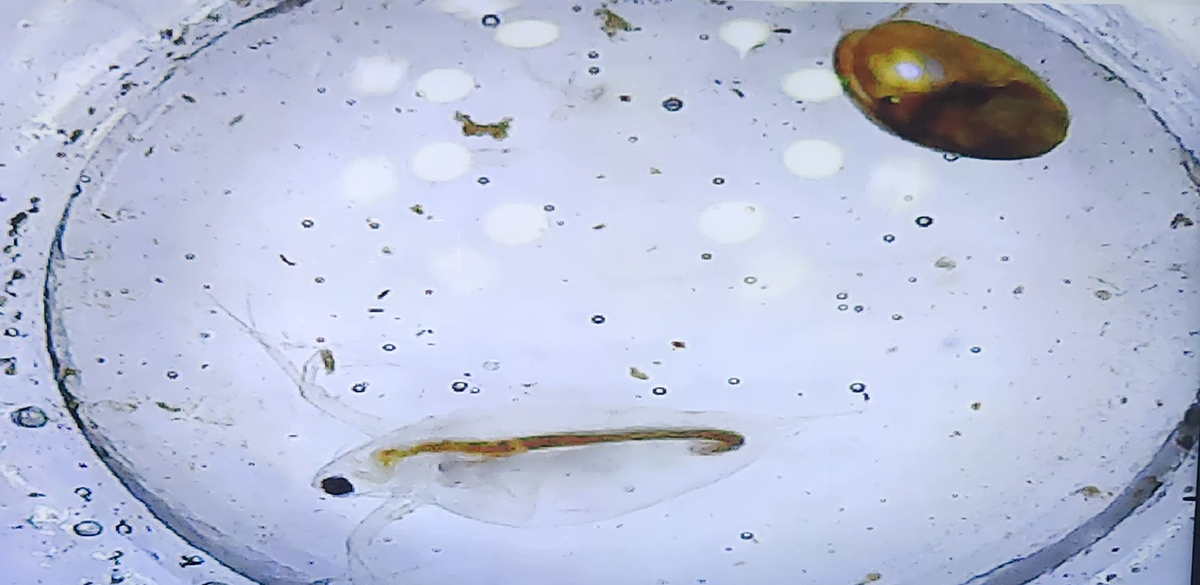
Scud are another species easily identified through movement. Scud are bottom-dwelling crustaceans (they look like a comma), that move as side-swimmers! You can watch the little legs on one side of the body propel them around. Come to one of our programs to hear the sound effect I give this motion. They are a good food source in the water, and help consume algae and other materials as detritivores.
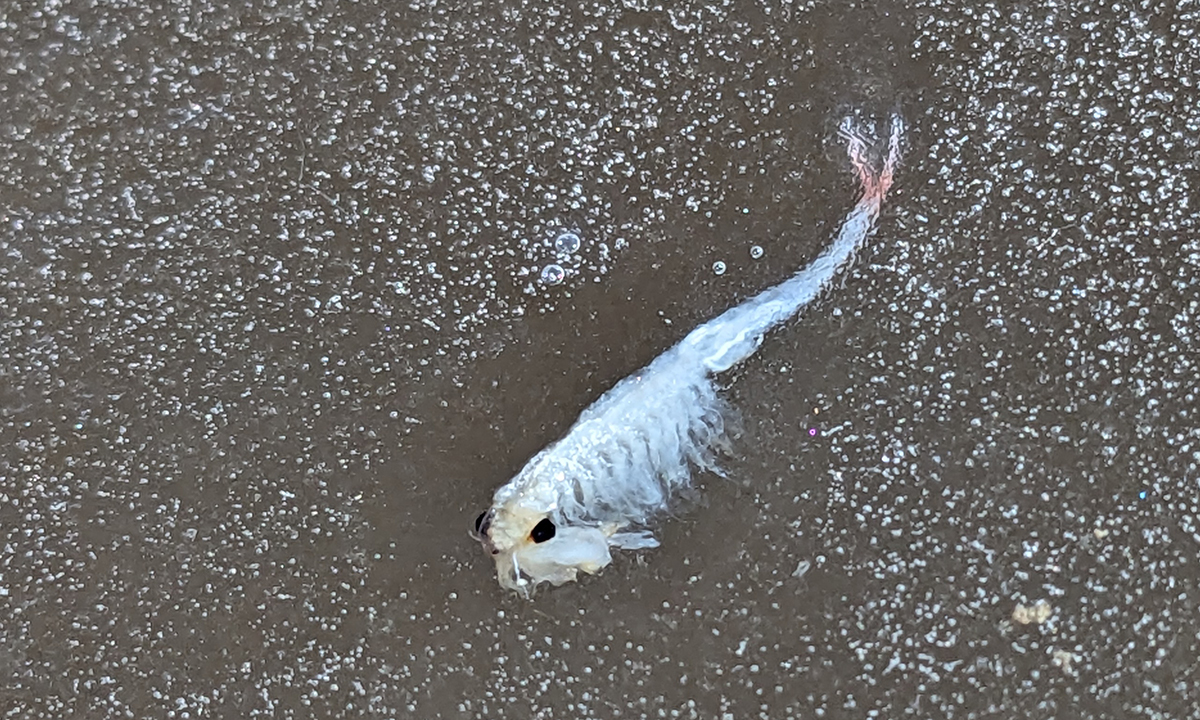
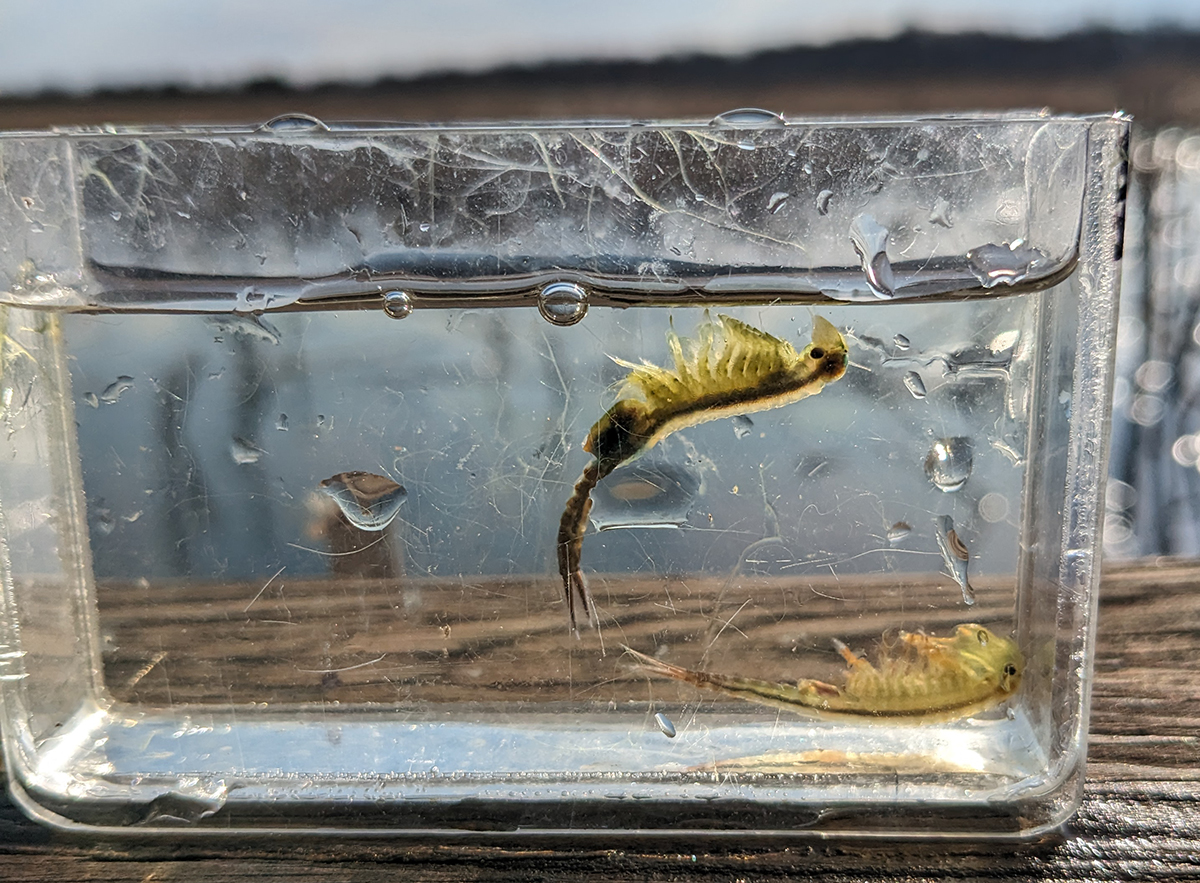
Now, a species you probably have heard of: fairy shrimp! Fairy shrimp swim upside down on 11 sets of ‘swimmerets.’ These assist in taking in oxygen as well as movement, pushing them into the loop-di-loops that are so mesmerizing to watch. The males are easy to pick out in the water- they look like they’ve got a big helmet head! The “helmet” is actually an enlarged clasping second antennae. Females have a large brood pouch (egg sac) below the ‘swimmerets.’
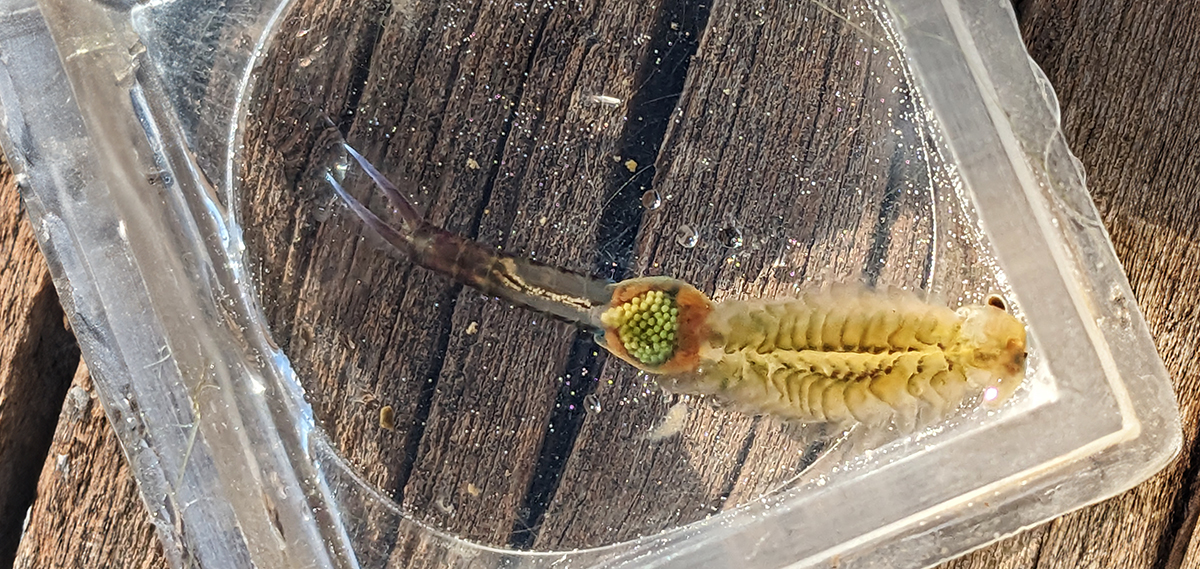
In the summer when the vernal pools have evaporated the fairy shrimp eggs need to dry out, rehydrate, freeze and then thaw into the next season’s water. They need to be ready to go as soon as the water is ready, as by late season there are too many predators to avoid! To their detriment, sometimes this means being frozen in the midwest second winter.
There are many types of predacious diving beetles and they are ferocious at any stage! You can observe their flattened hind legs that are rowed in tandem as they hunt through the vegetation. They often surface tail-first, in order to grab another bubble of oxygen to take on the next diving hunt! They will capture live or dead insects and use piercing mouthparts to suck out body fluids- think you with a caprisun.
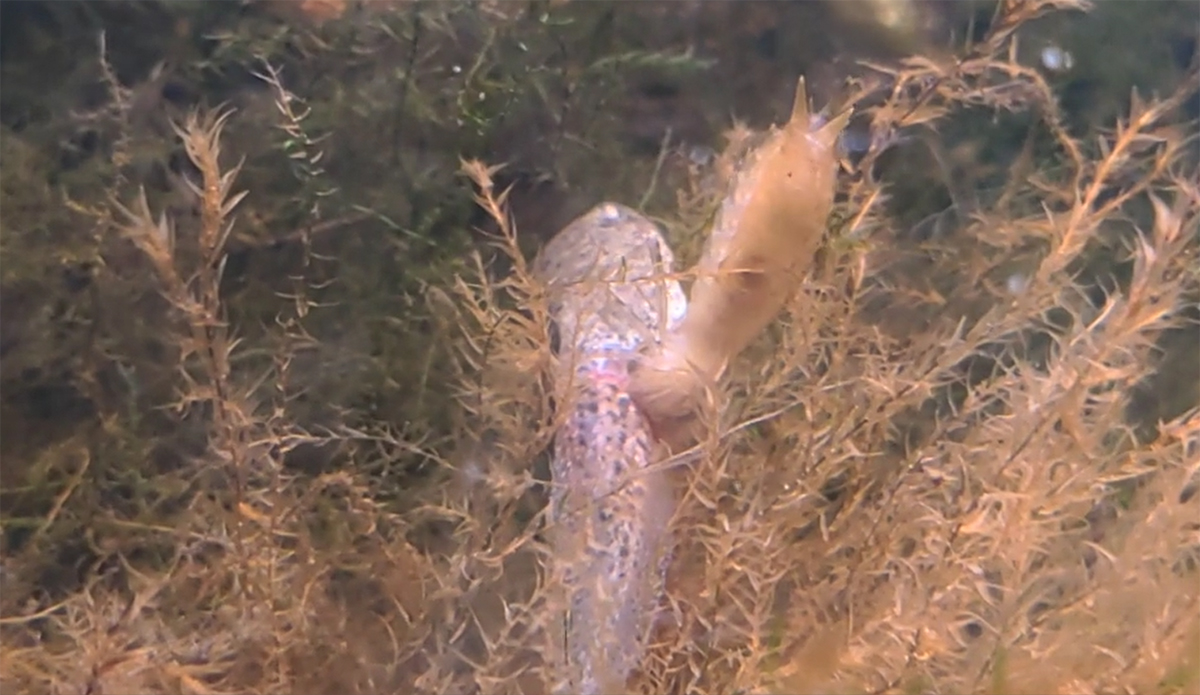
As a naturalist, I always invite questions on my hikes as I know a lot of random fun facts. If prompted for a generic fact, I often give one on dragonflies! In my opinion, they have some of the most interesting character traits and features. The larvae especially are a lot like great white sharks. They are one of the top predators, and will eat about anything they can get in their mouth! As you can see from the picture below, they hunt above their weight class as featured by this darner dragonfly eating a green frog tadpole! It’s not just that they’re sneaky predators – they have an extendable jaw that shoots out and hooks into their prey for an easy catch. With every species in a vernal pool speed running their life cycle, there’s a lot of easy prey to be found.
If I’ve managed to ensnare your focus this far, and you are interested in learning more- please join one of the vernal pool programs around the park district! We recommend joining a naturalist, instead of journeying out by yourselves. One, because we like to impart fun facts. Two, because we want to make sure we are being as unobtrusive and respectful as possible to the vernal pool resources. These critters have to go through generations of cycles in freezing conditions, stagnated waters, high predator concentrations, contamination and more in order to make it to the next season. There’s more to these hidden worlds than salamanders (although I agree they’re cool too)!
I’ve mostly noticed frogs and salamanders in vernal pools, so learning about the less obvious critters really opened my eyes to how much life these temporary habitats support. It’s amazing how such small pools can sustain such diverse ecosystems.
Great article! Maria has taught me so much about vernal pools and we are lucky to have her as a knowledgeable naturalist in our park district. Highly recommend joining on a vernal pool program to learn about the amazing critters that live under the water.
Thanks! That was very informative!