
GORDON MITCHELL
Land Management Coordinator
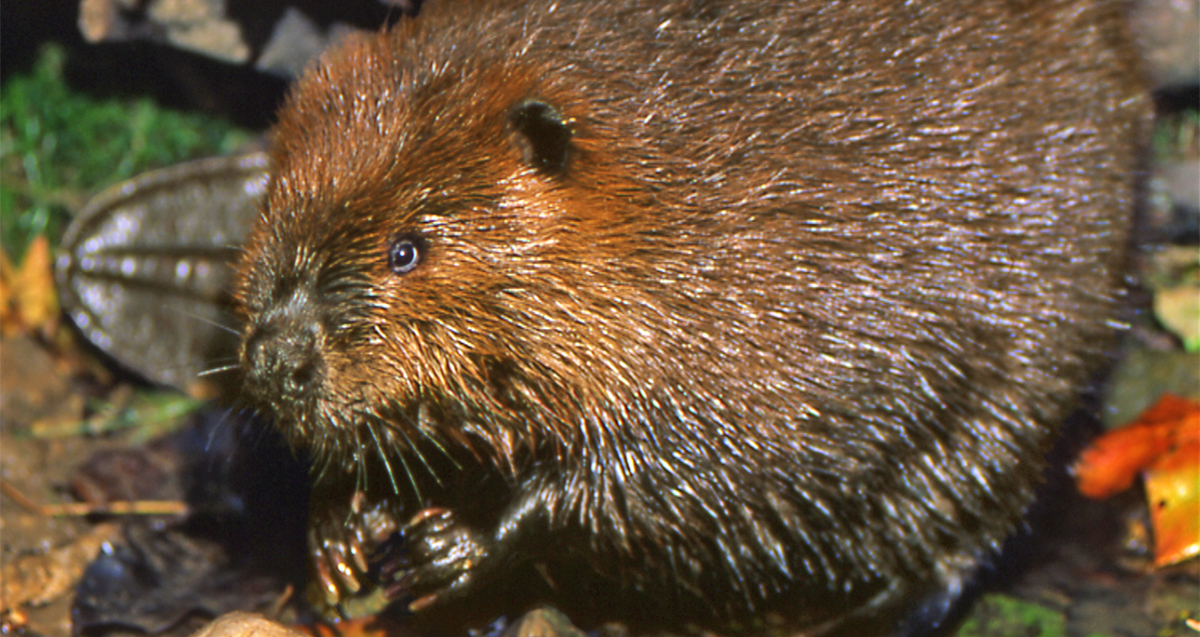
Long before the United States was established, many Europeans traveled this country in search of pelts to export to Europe. Although many mammal species were sought for their fur, the most favored species was the American beaver (Castor canadensis Kuhl).
The generic name, Castor, is from the Greek word, kastor, which is “beaver.” The specific epithet, canadensis, is “of Canada,” where it was first recorded. The common name, beaver, is from the Anglo-Saxon word, beofor. Other common names for this species are bank beaver, Canadian beaver, castor, castor cat, and flat-tail. Some of our Native American tribes had their own names for this species. Delawares (Lenapes) called them Amochk, Miamis called them Amehkw, Shawnees called them Amaghqua, and Wyandots (Hurons) called them Soo,taie.
American Beavers are members of the Order Rodentia. Their fossils go as far back as the Oligocene Epoch of the Paleogene Period, which started about 33 million years ago. They are the largest species of rodent in North America, and can weigh up to a hundred pounds. Larger beavers can be more than 3 feet long, not including their tails, which are perhaps their most well-known feature. Their tails can be as long as 21 inches, up to 6 inches wide, and about 1 inch thick. They are soft, black, scaly, hairless, leathery, flat, broad, and oval- or paddle-shaped. Beavers use their tails for fat storage, for temperature regulation, for communication, and for balance when the beaver is walking or is gnawing upon trees. Contrary to popular belief, they are not used for hauling or for slapping mud.
They have a thick insulating layer of fat under their fur, which is short, sleek, and heavy. Their fur consists of an outer layer of long, shiny, coarse, sparse, waterproof guard hairs and an inner layer of short, dense, fine, gray, insulating hairs. Their colors may vary but are usually dark reddish brown or yellow brown upon the back and the sides, and are lighter upon the abdomen. Some black (melanin), white (albino), and silver colors have been reported. They molt once a year. Their fur is in its prime during late winter and early spring. Their paired, scented musk sacs or “castors,” located near the base of their tails, secrete a yellowish brown oil, castoreum, that waterproofs their fur. This oil also gives the fur a smooth, shiny, glossy appearance.
THE BEAVER DIET
American Beavers are strictly herbivores. Their diet consists mainly of the cambium, sapwood, bark, leaves, buds, roots, and shoots of shrubs and trees. These plant parts are rich in protein and in carbohydrates. They prefer alders; American bladdernuts; aspens, cottonwoods; poplars; beeches; birches; cherries; maples; oaks and willows. They locate their food by smell and may travel up to 300 feet on land in search of a meal. They can eat up to 20% of their body weight every day. They have specialized microorganisms within their digestive system for digesting the bark and the cellulose wood fibers. When eating the inner bark, they use their forefeet to turn the branches.
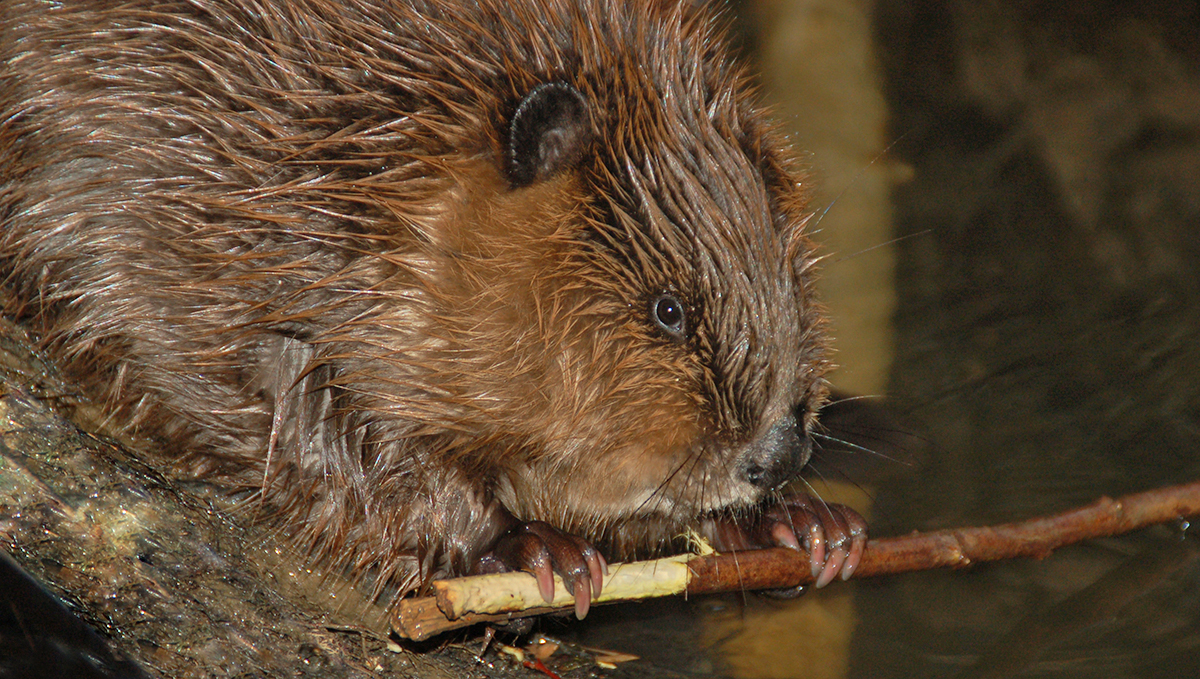
They eat other plants as well. During summer, they prefer succulent, tuberous roots, rhizomes, and stolons of various aquatic and semi-aquatic plants. Some of these plants are arrowheads, bur-reeds, cattails, duckweeds, pondweeds and water lilies. They may also eat cornstalks, grasses, sedges, rushes and legumes.
During fall, their most active season, they are actively building interwoven piles of small trees, logs and branches underwater for winter consumption. These stockpiles may be 3-10 feet high and 20-40 feet in diameter. They usually poke the sharply chewed bases of the stored trees into the muddy water bottoms for stabilization.
TREE DOWNING
A beaver’s most prominent teeth consists of two sets of upper and lower, long, sharp, dark orange enameled incisors. These incisors are continuously growing throughout the beaver’s life and must be worn down through gnawing. And they do a lot of gnawing! Beavers down trees by gnawing around the trunks and biting out the wood chips, which may be as much as 6 inches long. They prefer soft wood trees with trunk diameters of 6 inches or less. A beaver can down up to 300 trees per year. They can down a half-inch sapling in one bite and a 6-inch-diameter tree in 10 to 20 minutes. They down most trees during fall and winter, before the spring sap runs.
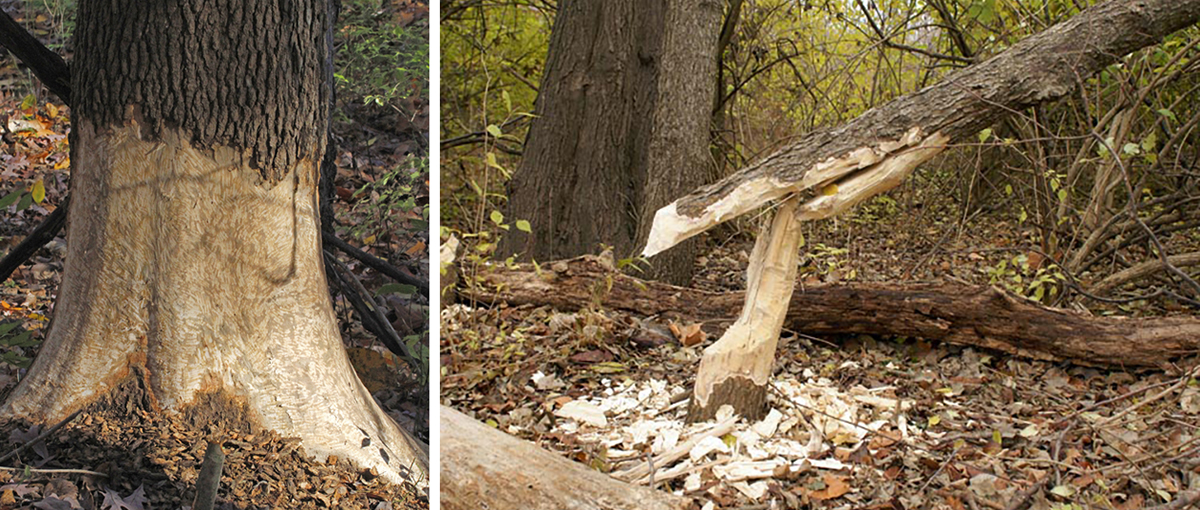
Although green wood is at least a third heavier than dead wood, they still prefer the green trees. Green wood can be easily bent and shaped. Dead wood is too brittle and is too rotted. Beavers have little or no control over the direction of the tree’s fall. Unfortunately, some trees have fallen on the beaver. They down larger trees closer to water. After the tree has fallen, they trim the branches for use in building dams. They prefer transporting branches about 3- to 6 feet long and about 1- to 2 inches in diameter.
BEAVER DAMS
Beavers are most famous for building their dams. They are the most skilled builders within the animal kingdom, and second only to humans for altering their environment. Their dams are composed of woven sticks, branches, saplings, reeds, leaves, grasses and stones. After their completion, they are caulked with mud. However, these dams are not completely watertight.
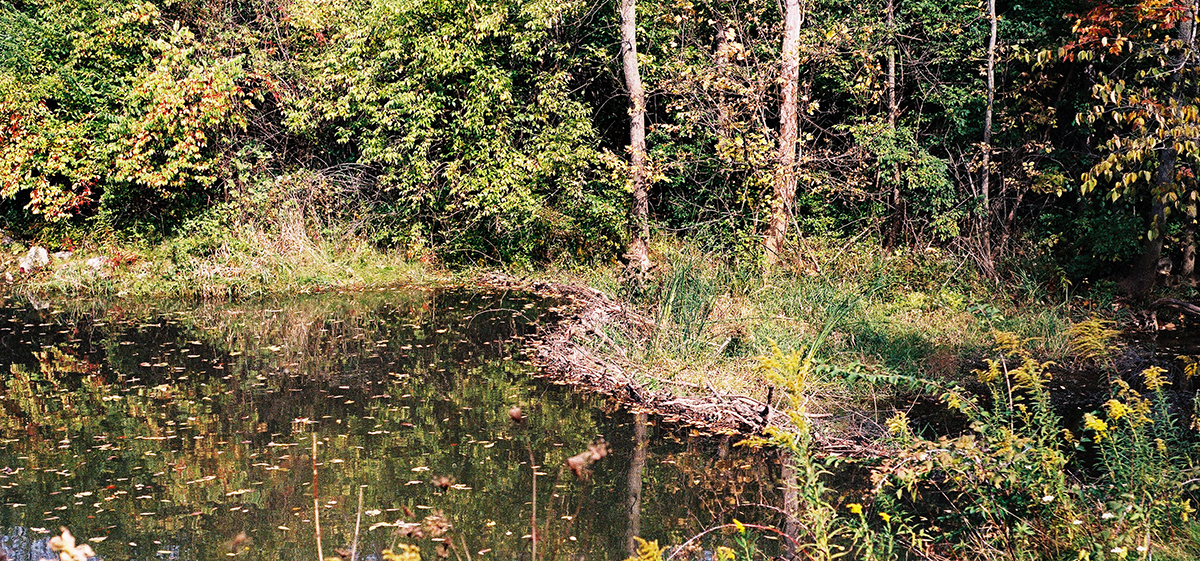
They are usually built in slow-flowing streams and upon a foundation of stones and mud. They are initially built upon their upstream sides. Their designs may vary. If the stream is fast moving, the dam may bow upstream. If the stream is slow moving, the dam is straight. If there is a risk of flooding, beavers may build a temporary spillway or passageway. They may build several smaller dams to ease the pressure upon the main dam.
These dams can vary greatly in size, sometimes rising over 10 feet high and extending to several hundred feet long. All dams are wider at their base than at their top. These dams are kept in constant repair. Beavers dislike the sound of running water. All beavers residing within the vicinity may assist with repairs. Subsequent generations may repair and may even add to the dam.
These dams alter landscapes and create new wetland habitats that are both beneficial and detrimental. These wetlands reduce soil erosion; reduce flooding; and provide habitats for aquatic mammals, waterfowl, shorebirds, fish, aquatic insects, and aquatic vegetation. The newly-deposited silt sets the stage for plant succession. But these beaver-created wetlands can also slow stream flow; flood farm fields, timber stands, and highways; and increase silt deposition. Beaver dams also affect water quality. The water below these dams is often cleaner than the water above them.
If their food supply becomes depleted or if the pond has completely filled with silt, the beavers will abandon their dams and move elsewhere. These remaining dams can still last for several more years before they decay.
BEAVER LODGES
After the dams are built and there is standing water, beavers build their lodges. These lodges are either surrounded by water or are touching land. The lodges have one or more concealed entrances that are located about 2-3 feet below water level. These entrances are about 5-10 feet long and are about 1½-2 feet in diameter.
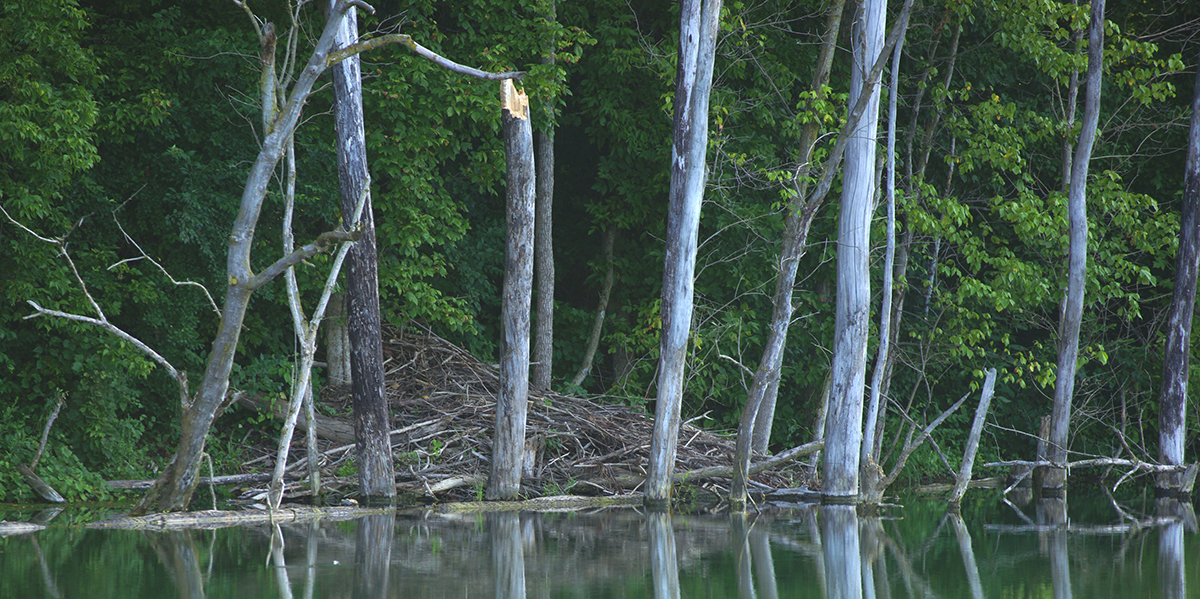
Beavers build their lodges of sticks, twigs and mud. During winter the mud freezes to the consistency of concrete. The lodges are dome-shaped and conical, a shape that can easily resist high winds and heavy snowfalls. Each lodge is about 4-10 feet high and about 12-40 feet in diameter. These lodges may be enlarged over the years. The inside is composed of one or two large central chambers, which can be about 2-3 feet high and about 6-8 feet in diameter. The upper chamber is used for rearing the kits.
The lodge has thick walls near the base and thinner walls near the top. They build air vents for ventilation near the top. The floors of upper chambers are semi-dry and are scat-free. The upper chamber is drier than the lower chamber. They are lined with wood chips, shredded bark, grasses, sedges, and mosses. These lodges are well insulated. The inside temperature rarely falls below 32 degrees F, even if the outside temperature falls to minus 40 degrees F.
Because beavers are nocturnal and crepuscular animals, they usually build their dams and lodges from dusk through the first half of the night. They spend most of the day within the lodge. During a rainstorm, they may also remain within their lodge. However, they can sometimes be observed during the day, especially in summer. Other animal species may also use these lodges. Canada geese may use them for nesting sites.
BANK BURROWS AND CANALS
If streams are fast flowing or there is inadequate foliage, beavers may burrow into stream banks with their clawed forefeet. These ‘burrows’ curve upwards to above the water level, although their entrances are usually under water. These bank burrows consist of a tunnel about 10-50 feet long and about 12-18 inches in diameter, which usually ends with a large chambered den about 2½-3 feet wide and about 1½-2 feet high. Some beavers may have both lodges and bank burrows. However, the bank burrows are usually built for summer use.
Beavers also dig out canals in low areas to haul large logs and branches to their dams or lodges, to reach their feeding areas on land, and to escape from their predators. Some of these canals may also be used to divert other streams. These canals may be 1-4 feet wide, 2-3 feet deep, and may extend for hundreds of feet from the shorelines. Beavers repair and extend these canals as needed, and they may be used by several generations.
COLONIES
Beaver dwellings are shared by colonies of multigenerational families. These families may consist of parents, newborn kits, and yearlings. Up to 12 Beavers may share the same lodge. However, only one or two beavers may share the same bank burrow. Families are territorial and will defend them from other beavers. Depending upon the availability of food, their territories may vary from 10-75 acres and do not overlap. One square mile may have one or two colonies. One mile of waterway may have one colony.
They mark their territorial boundaries with scented mounds, paddies, or piles. These scented mounds may be 1-2 feet high, 3 feet in diameter, and are composed of sticks, grasses, reeds, and mud. They deposit their pungent castoreum upon these mounds from their scent glands. Castoreum has over 50 different molecules, which make each scent unique to that individual. If a beaver detects another scent within its territory, it will investigate.
Beavers are monogamous and mate for life. The female selects the locations for the lodge and provides social stability and continuity within the family. If the male dies, the female waits for another male to arrive. If the female dies, the males may abandon their territory. Depending upon the latitude, breeding season is usually November to March. After a gestation period of 90-120 days, the kits are born around April to June. The mother gives birth to one litter per year. Each litter has about one to nine kits.
Kits are born fully furred with their eyes open and their teeth erupted. They are about 1 inch long and weigh about 8-24 ounces. After one to 24 hours they can swim within the vicinity of the lodge. After one week they are skillful swimmers. In two to three weeks they can eat vegetation. They stay within the lodge for about one month and are weaned in two to six months. After one year they may weigh 11-26 pounds. During this time, both parents care for the young. When traveling with their parents, these kits may ride upon their parents’ backs, tails, or forepaws. After two years they leave the lodge and the territory. They may travel up to 12 miles to find a new residence. After two to three years, they can breed.
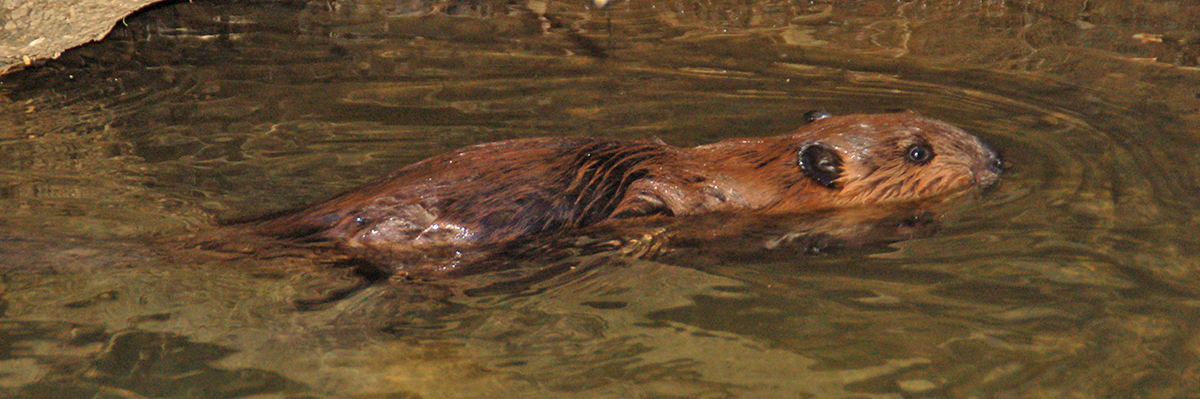
Beavers are skilled swimmers. They use their webbed hind feet for power and their tails for both power and steering. They can swim at speeds up to 6mph. Their forefeet are usually held close to their chest. This is to hold any objects or to push away any debris. When swimming, only their heads are visible. Their foreheads, eyes, noses, and napes are the only parts exposed. When underwater, a translucent nictitating membrane covers their eyes, special valves cover their ears and nostrils, and a skin flap covers their mouth leaving only their incisors exposed. They can remain submerged for up to 15 minutes by slowing their heart rates and by reducing the blood circulation to their extremities. Their enlarged lungs and livers can take in more oxygen and can tolerate more carbon dioxide . If swimming under ice, they get their air from air pockets under the ice.
BEAVER PREDATORS
Beavers have their share of predators, including coyotes, red foxes, black bears, bobcats, cougars, gray wolves, river otters, minks and wolverines. Hawks and owls may also attack the kits. Whenever there is danger nearby, the beaver slaps its tail loudly upon the water as an alarm for other beavers. This slapping sound can be heard for over a mile.
OTHER USES OF THE BEAVER
Beaver pelts became the backbone of the North American fur trade, which was big business for almost three centuries. The beaver fur trade began to decline after about 1840 but beavers continued to be trapped, and were nearly trapped to extinction by about 1930. They have since made a major comeback through strict trapping laws and through reintroductions.
Native Americans and European settlers also used the beaver castoreum in both perfumes and medicine. It contains salicylic acid, which is also found in aspirin. The castoreum was also used for baiting traps. It is still exported around the world today, mostly from Canada.
Other parts of the beaver had commercial uses too. The tails were used as ornamental leather for both pouches and purses. Their furs were used for coats, jackets, robes, trim, and top hats. The fat was used for preventing or for treating asthma, convulsions, dysentery, epilepsy, frostbite, light-headedness, muscle spasms, rheumatism, strokes and toothaches. The skin was used for treating bedsores, colic, and consumption. The meat was valued for its taste.
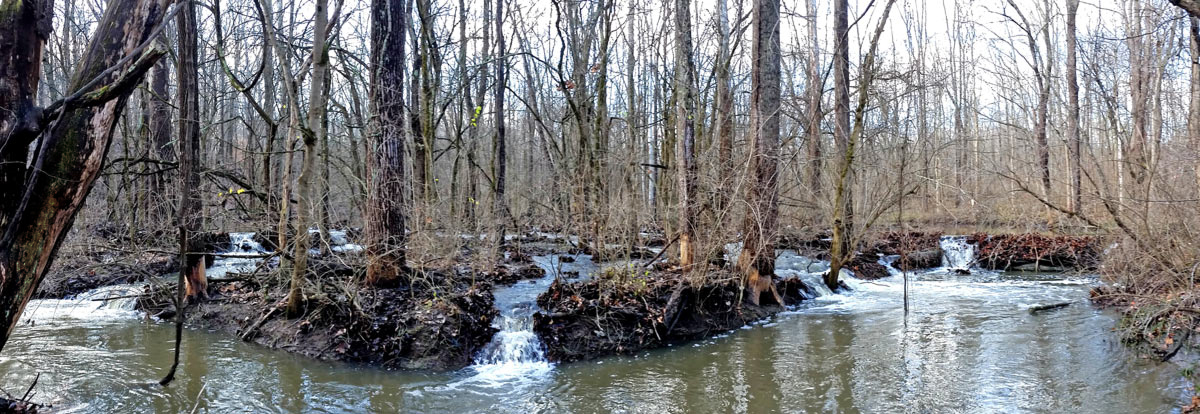
Currently mourning the removal of our Glacier Ridge beaver dam! They’re very productive animals. I read somewhere that even playing background audio of running water will jumpstart the beaver into construction mode.
In what metro parks can visitors see beavers or their handiwork?
Linda, there have been sightings of beaver and their work at Battelle Darby Creek, Blacklick Woods, Blendon Woods, Highbanks, Prairie Oaks, Sharon Woods and Three Creeks. Other parks with rivers or streams may also have beaver. As beaver are nocturnal animals, a walk by a creek at around sunset will give you the best chance to see them, but their handiwork can be seen in the day if you know what to look for.
Beavers are one of my most favorite animals and I didn’t know that they are in Sharon Woods (thank you for mentioning the parks in one of the posts!). Now that there’s a little list I’m definitely going to venture out to the parks more often in hopes to spot one of these wonderful (and cute!) animals in the wild.