Craig Biegler
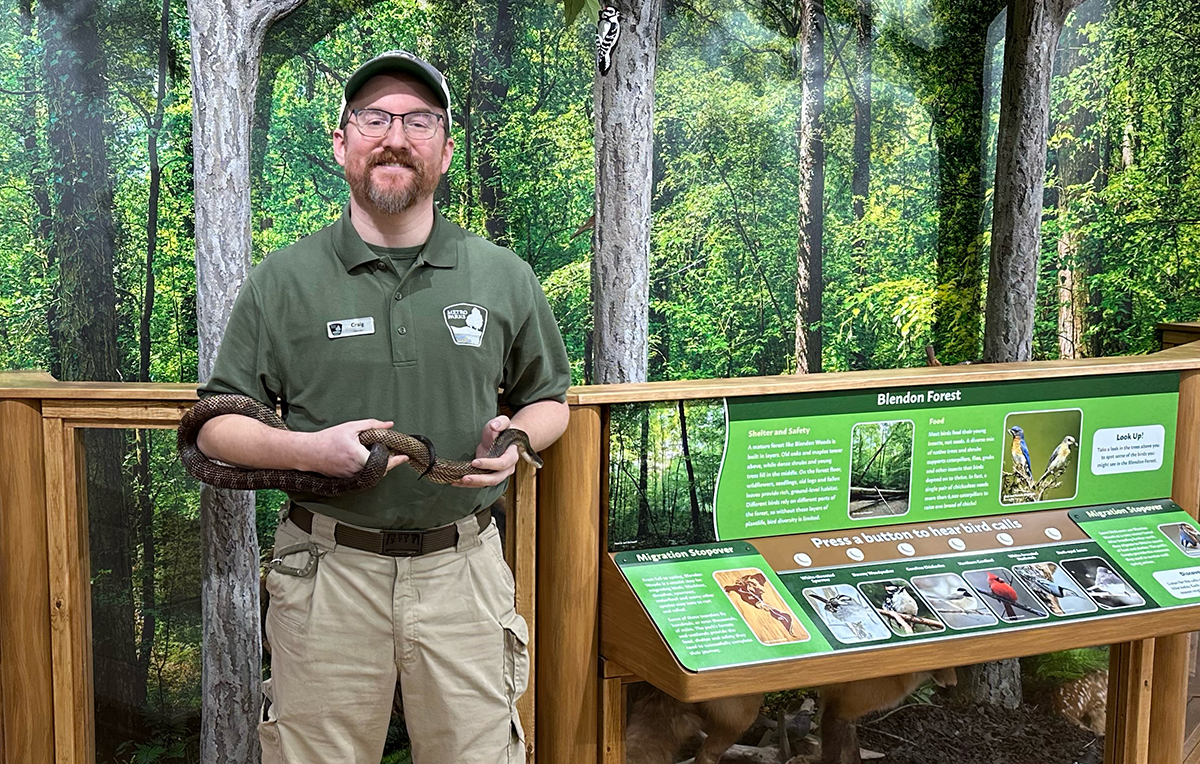
Naturalist, Blendon Woods
Craig Biegler is talking with Communications Coordinator, Virginia Gordon
About me
I grew up in Upper Arlington and went to programs at various Metro Parks as a kid. I especially liked going canoeing on Big Darby Creek with my dad. I was always interested in nature. My dad is a birder and would take me with him on long walks in the parks. He was looking for birds, but I developed my own interest, in creepy crawlies. I was fascinated by the insects, spiders and bugs that I could see everywhere.
As well as Battelle Darby Creek Metro Park, my parents took me to Highbanks and then also Glacier Ridge, after it opened in 2002. I loved being out in the woods. It was always a part of my life. As a student at Upper Arlington High School, my childhood interest in nature was solidified after I did week-long workshops at Ohio State University’s Stone Lab, at Put-in-Bay on Lake Erie. It’s a wonderful freshwater biological field station and their workshops gave college credits. I did workshops in both my sophomore and junior years of high school. We explored the Lake Erie islands and coastline looking for fish, insects, reptiles, and other wildlife.
When I realized that my love of being out in the field and finding things was something that might be the basis of a future career, my heart was set on working in nature. I studied at Denison University on their biology program. In my second year I did a research project surveying moths at the university’s biological reserve. I spent the whole summer catching moths. It was a great experience, but I discovered that the main focus of Denison’s biology program, going forward, favored pre-med studies. I wanted my focus to be solidly on the natural world, so I transferred to OSU’s Forestry, Fisheries and Wildlife program.
We did lots of field trips at OSU, identifying woody plants and trees and memorizing all their scientific names. I was still very much interested in insects, but knowing more about the plants they needed for their life cycles stimulated my interest. Other field trips included camping, electrofishing and birdwatching.
BEETLES
I had an internship with the Maria Mitchell Association on Nantucket Island in 2007. I had a great time there. I split my time between field research and working in the natural science museum. A major focus of my research that summer was on an endangered species of beetle, the American burying beetle, which was downgraded to ‘threatened’ a few years ago. These beetles are the largest species of carrion beetle in North America and can grow to an extraordinary length of almost two inches. This federally endangered species gets its name because they bury dead animals in the ground, and then lay eggs on the corpse. As the eggs hatch, the brood feeds on the flesh of their animal host. These hosts could be as large as a pigeon, and would be birds, rodents or other small mammals.
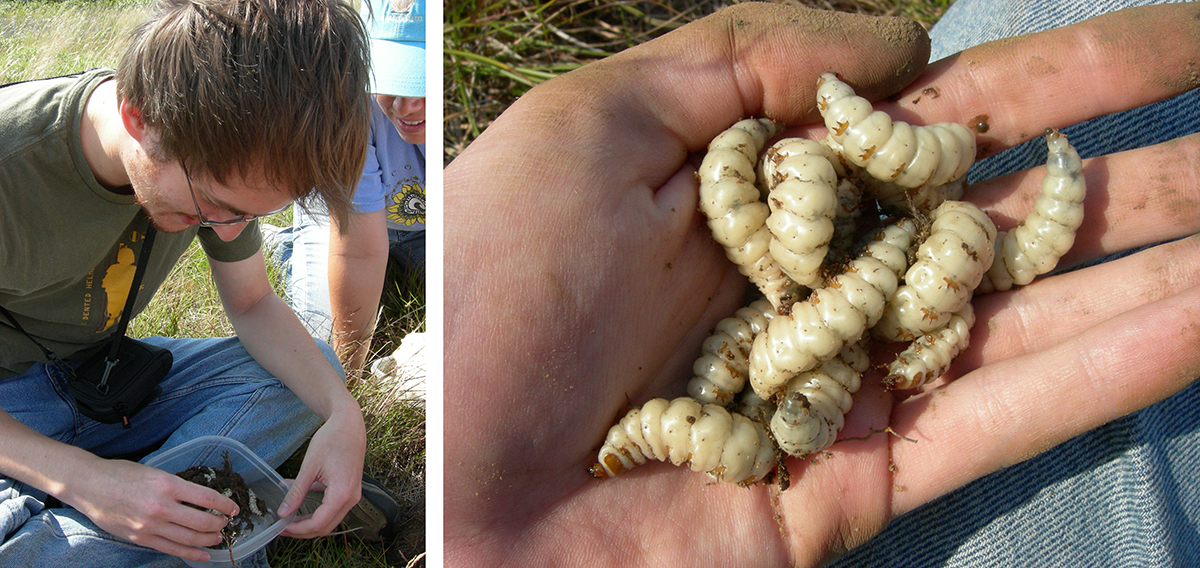
These beetles used to favor the passenger pigeon for burying and sustaining their broods, but this widespread species went extinct in the early 1900s, because of excessive hunting. The American burying beetle lost a core source of its reproduction cycle. Changes to landscapes created greater opportunities for larger scavenger species, such as racoons, who sought the same species of dead animals. A contest between a beetle and a racoon is no contest at all.
The species has been sustained on Nantucket Island in part by its isolation, but also because the people on the island supplement their food by putting out animals such as dead quail. It was a fascinating project. We have some species of burying beetles in Ohio, but they’re not as big as the American burying beetle. There is a reintroduction effort underway in southern Ohio, but there are still many challenges to overcome before the American burying beetle can survive without our help.
After graduating from OSU in 2009, and while seeking jobs, I did another summer internship at the Kentucky Reptile Zoo. The zoo was near to Red River Gorge, where many people go for the rock climbing. The Kentucky Reptile Zoo thrives because it extracts venom from rattlesnakes and other venomous snakes, which it sells to medical research companies, to make anti-venom and other medical drugs. But my main job at the center was education. It was something of a revelation for me. I hadn’t done much education work before and certainly not talking to a crowd. I had been very shy as a kid and really didn’t like public speaking. As a kid, I had watched my dad teach his high school classes. He’s a history teacher, and he obviously enjoyed talking about subjects he loved and knew so much about. I didn’t think I could ever do that, and yet talking to people that whole summer unlocked this for me as something that I realized could be fulfilling for me as an element of a career. I did several talks every day about turtles, snakes and alligators.
FIRST JOB
The nature field is a hard career to get into after just graduating. There are lots of seasonal jobs and unpaid internships around, but finding a full-time position was something I struggled with. After coming back home from the summer internship in Kentucky I continued my search for work, and got my first job out of state. I got an animal keeper job in the insect building of the Omaha Zoo in Nebraska. I was there for about nine months but it didn’t satisfy me. There was no educational component to the job, and after my experience in Kentucky I really missed that. The desire to teach and educate had become important to me. I also missed my family and friends, and especially my girlfriend, Sallie. We had been friends in high school, then started dating in college in 2007. She’s been a part of my life ever since. Sallie had stayed in Columbus and the long-distance relationship was difficult for both of us.
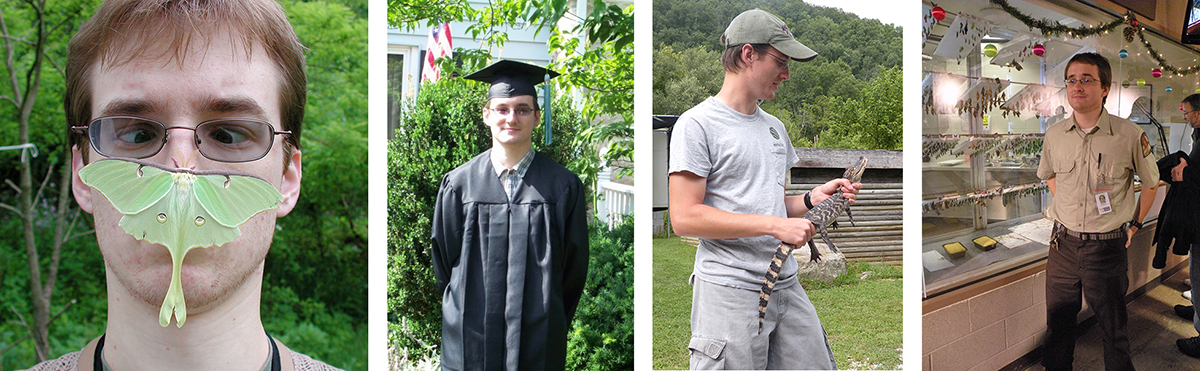
In spring 2011 I got a naturalist internship position at Metro Parks, working at Highbanks. I worked in the nature center and helped naturalists with programs, and looked after and fed the nature center animals. As I wasn’t in school any more, I was kept in the internship position longer than usual and learned a lot. I came back and did the same internship at Highbanks in 2012. At the same time, I worked an evening position at the Columbus Zoo, helping with their camp-ins. It was mostly scout groups, on an overnight education stay. Working full days at Highbanks, then all night and early morning at the zoo was a tiring and sometimes frustrating business.
Then luck took a hand. Near the end of 2012, both the naturalists at Highbanks left at the same time. It took a while for new naturalists to be appointed, so I was kept on as a seasonal at Highbanks over the winter. It was just me and the nature center attendant keeping the center running and still offering programs. It gave me an opportunity to impress Metro Parks managers and show what I could do, and it led to me getting a part-time naturalist position at another park, Blacklick Woods, which I started in February 2013. I was there for two years and it was a great experience. I learned a tremendous amount about planning programs and managing a nature center. But by then I had two young kids at home and I was desperate to find full-time rather than part-time work.
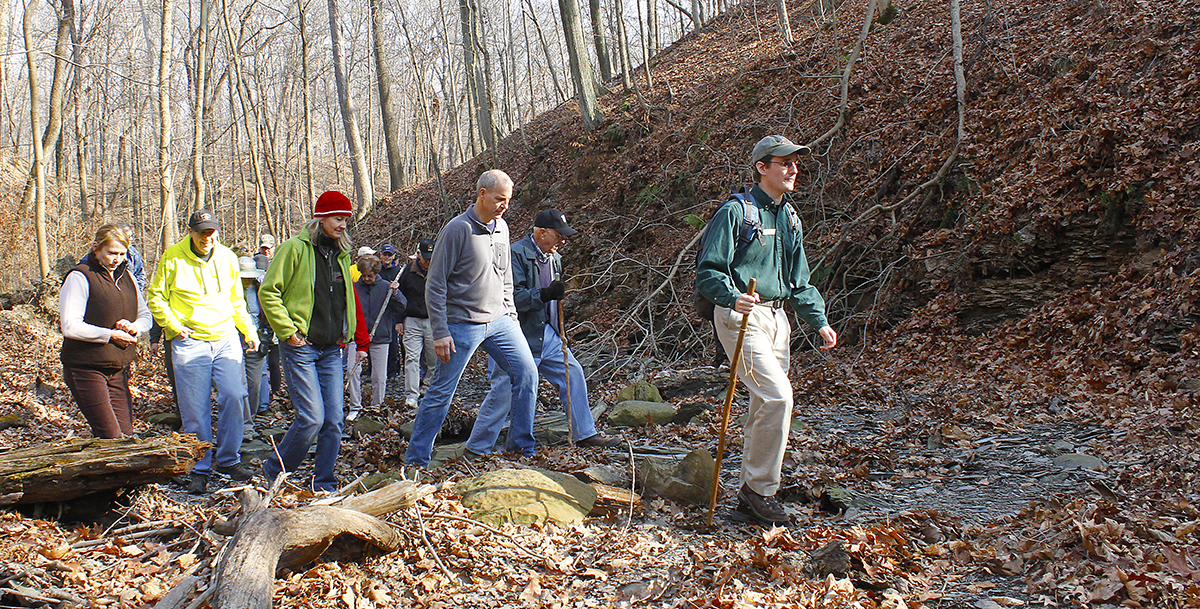
An opportunity for full-time work finally presented itself. Highbanks had recently re-opened its nature center after a major renovation, with the addition of its geology wall, model of a giant sycamore, and lots of interactive exhibits. And so I interviewed for a full-time natural position at the park. The staff knew me from my internships and we already knew we worked well together. I got the job and started as a full-time naturalist at Highbanks in December 2014. I worked at Highbanks until spring 2017. Sallie and I had moved from Upper Arlington and lived on the west side of Columbus. When a naturalist position at Battelle Darby Creek came open it was very tempting, as the commute to work would be much shorter.
The park has an enormous nature center, with indoor classrooms and a living stream. I found that my position tended to anchor me more to the indoors than I liked, with fewer opportunities to lead programs outside in the park. It was still very rewarding, but I couldn’t stop myself from applying for my present position, of full-time naturalist at Blendon Woods, when it opened up in November 2022. I knew that the nature center at Blendon Woods was earmarked for a major renovation. Having missed out on the actual renovation of the nature center at Highbanks, I wanted the opportunity to put a little stamp of my own onto the development at Blendon Woods. I became part of the team that would brainstorm ideas about the renovations, talk to the public about what they would like to see, and consult with planners and designers about the development. We’re all very proud of the development to date, and have just reopened the nature center to the public after construction work and installations.
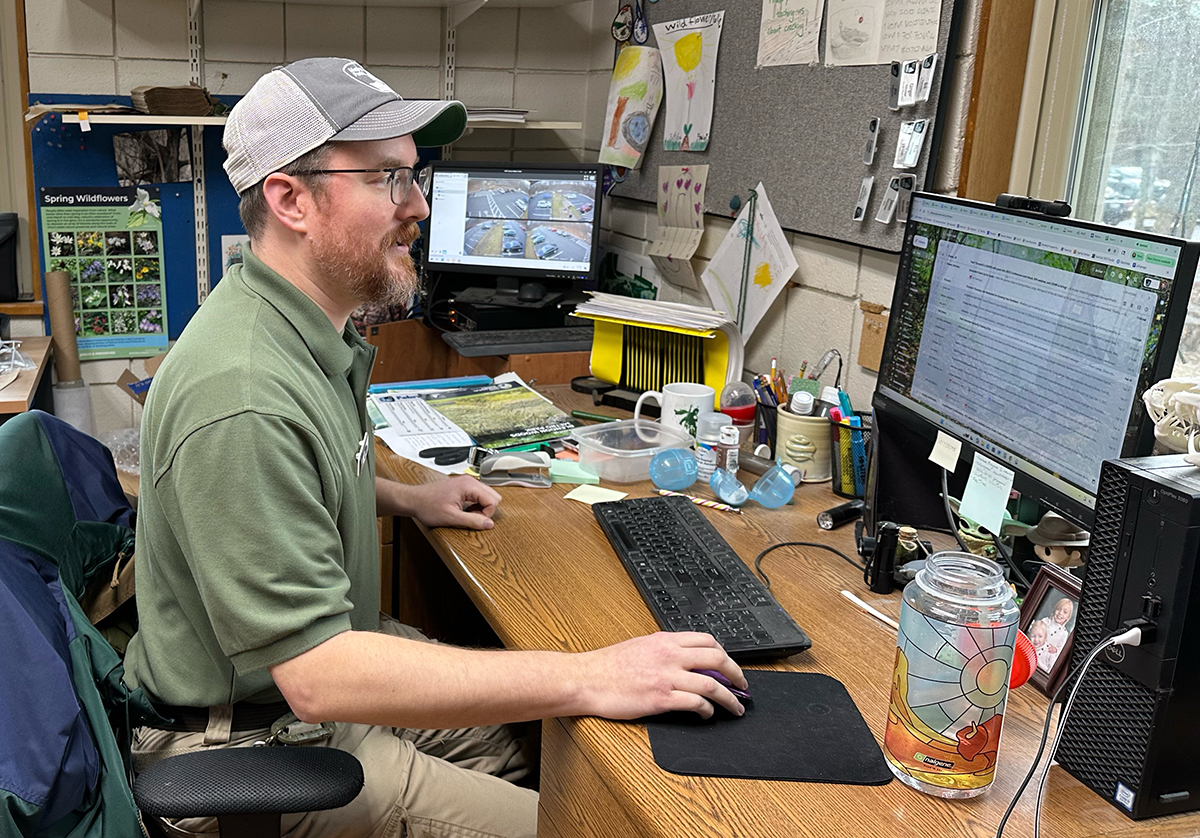
We wanted our exhibits in the renovated nature center to be much more immersive, and wanted people to feel like they were entering a natural space, rather than a building. Many of our exhibits are now three-dimensional, and are no longer restricted to hanging on a wall. There are crawl-throughs for kids as part of the interactive exhibits, and more room for our animals. We knew that people wanted to see more animals in the center and we now have more space for our water turtles and box turtles. The new enclosures, attached to the outside of the existing building, include room for birds of prey, which we hope will be filled soon. We also have a custom-built butterfly house. We are still making modifications to it, but by spring we’ll use cocoons that have been overwintering in the nature center and grow lots of plants and flowers to sustain colonies of butterflies in the house.
Blendon Woods has a long history of raising and releasing monarch butterflies at the park. We will still have monarchs at the new butterfly house, but also other species such as the various swallowtails, like the giant, black, spicebush, and maybe even the tiger and pipevine swallowtails. We will also be raising giant silk moths like the luna moth and polyphemus moth.
BIRDS FROM WOOD
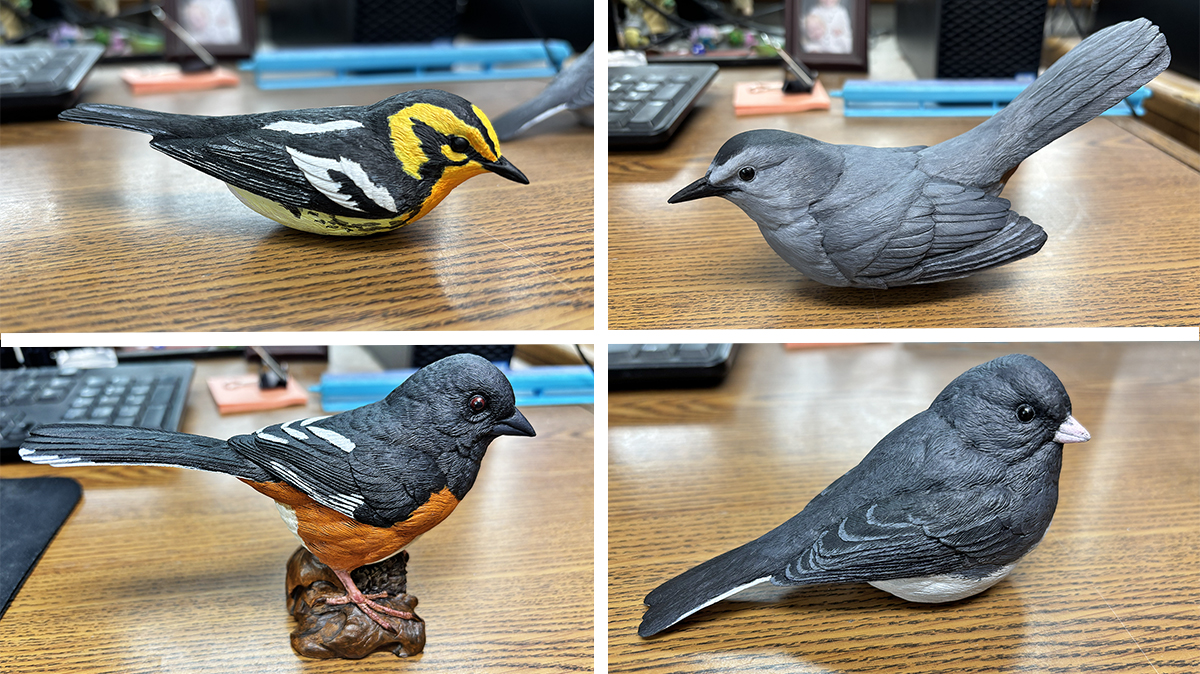
Blendon Woods has always been known as a big park for birding. We wanted our bird exhibits to include more songbirds, which are so prominent in the park. But it’s getting harder to find taxidermied songbirds, which are delicate and difficult to mount. But lately we have discovered people that carve birds out of wood, which are 100 percent like the birds as to shape and feathers. Molds can be made of the wood carvings and plastic versions are made of the moldings, which come to us and we then paint them here at the nature center. So far, I have painted a junco, nuthatch, Blackburnian warbler, catbird and towhee, to add to our exhibits. I really enjoy being involved in that work. It’s very satisfying to see the final result. The painting for a single bird model can take two or more days.
MY PHOTOS IN THE EXHIBITS
I have really got into photography over the past few years, and I’m proud that some of my photos have been accepted to be part of the renovated nature center exhibits. My favorite, of my own photos, is one of a monarch caterpillar. I also have photos of a hover fly, a rat snake, and an emerald ash borer in the exhibits.
REFLECTIONS ON MY TIME AT METRO PARKS
I’ve loved being an educator here at Metro Parks for about 15 years now. I have done countless programs and my interactions with members of the public and also my fellow employees has been so rewarding. My favorite thing to do is to lead a talk about things that in some people might invoke fear or disgust, such as snakes, bats and insects. I like to help expand or change people’s perspectives about these animals.
Moths and caterpillars sometimes inspire a sense of disgust in many people, and they’re often thought to be drab and uninteresting. But moths are so diverse, and although most of them are small there are also many large and very colorful species. Luna moths are a prime example, being large and usually a vibrant green color, with purple and yellow edging. As a species, they are also very calm and let people get up very close to them. They are great ambassadors that can change people’s minds about insects, and I look forward to sharing them with our visitors in the new butterfly house.
Working with the nature center animals is also a big part of my job. I find that all the animals have distinct personalities, such as our box turtles. One of them is shy, and another one is very outgoing and has no fear of people. I love to communicate about them, and explain that the shyness of one box turtle relates to its lived experience and a strong instinct to hibernate.
WORKING WITH VOLUNTEERS
Another very rewarding aspect of my job is the work I do with our volunteers. We have around 70 active volunteers at Blendon Woods and they’re all incredibly dedicated people, and always willing to donate their time. I also worked closely with volunteers at Highbanks, and have made very good and long-lasting relationships with many of them. They come from many different walks of life, but they all share a dedication to support us in the work we do as naturalists and educators.
The primary part of my job is about educating. We don’t do many classroom-style classes here at Blendon Woods, although I enjoy those when they do happen. But what I enjoy most of all is leading a class out on one of our nature trails, where we find things, sometimes unexpectedly, which gives me a chance to talk about the find, whether that be wildflowers, birds or insects.
A MEMORABLE INTERACTION THAT STIRRED OLDER MEMORIES
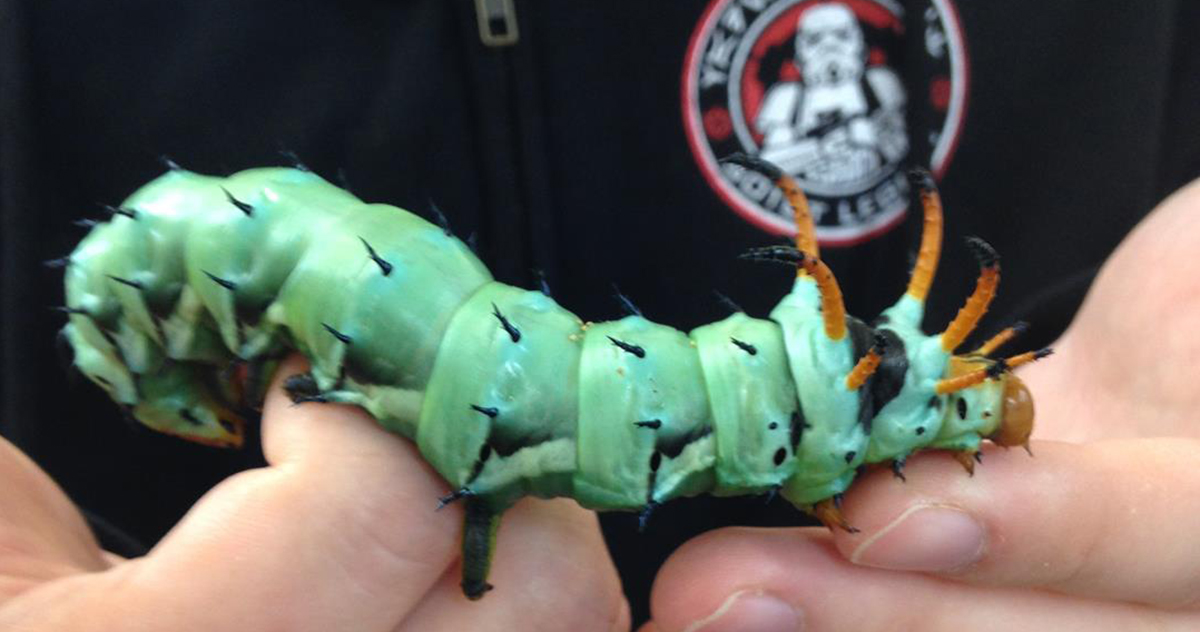
When I was 19-years-old and thought I knew everything – what teenager doesn’t – I went to a Bugstravaganza program at Chestnut Ridge Metro Park. Someone had brought in caterpillars to show. The guy had a plastic tub with these turquoise caterpillars with bristly orange horns on them. He said they were native to Ohio and that they live in the tops of walnut, sweetgum and hickory trees. I was gob smacked! I couldn’t believe what I was seeing. Most caterpillars grow to 2 inches long at most, but these beauties were between 5 and 6 inches long! I immediately fell in love with these hickory horned devils and thirsted to know more about them. They’re my favorite animal in the world and they provoked my interest in moths.
Fast forward now, to a dragonfly program I did here at Blendon Woods last year. We went out into the park to search for dragonflies and to interact with them. I caught one, and a boy about 10-years-old was next to me, staring intently at the dragonfly. I identified it as a widow skimmer dragonfly. I asked the boy if he would like to help me to release it from the net. The dragonfly settled on his hand for a few seconds before it flew away. I could see a spark in the boy’s eyes, as he connected with a creature normally out of our reach. It made me think back to that Bugstravaganza program and the similar spark in my eyes that day as I first encountered the hickory horned devils. When I reflect back now, I think that if I hadn’t gone to that Bugstravaganza program, I quite possibly wouldn’t be doing what I’m doing now.
MY FAVORITE PARK ACTIVITY
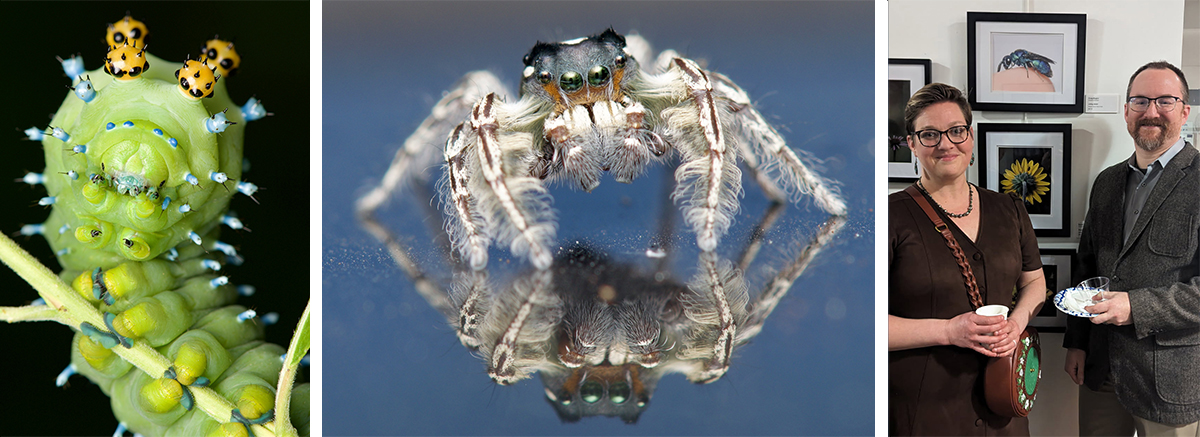
In my spare time I take my camera and go into the wooded trails at Battelle Darby Creek and here at Blendon Woods. I’ve becoming particularly interested in macro photography, and getting very close-up looks at insects. I spent a lot of time doing that. I sometimes use my photos in programs here at the park, and share them with friends and family on Instagram. I had a couple of my photos accepted into the current Our Nature in Focus exhibition at Scioto Audubon’s Grange Insurance Audubon Center. The exhibition, of photos taken in any of our 20 Metro Parks, is open right now through March 29. My favorite photo of mine is of a cecropia moth caterpillar. I encountered it while out on a camping trip and saw it on a willow bush. It adopted a weird-looking pose, as if rearing itself up. It’s a tactic it uses to try to scare off birds that might threaten it. It tried to scare me off, and I beat a retreat… once I’d got a great photo of it.
Traveling – places I’ve been, places I’d love to go
LAKE ERIE AND OTHER NEARBY TRIPS
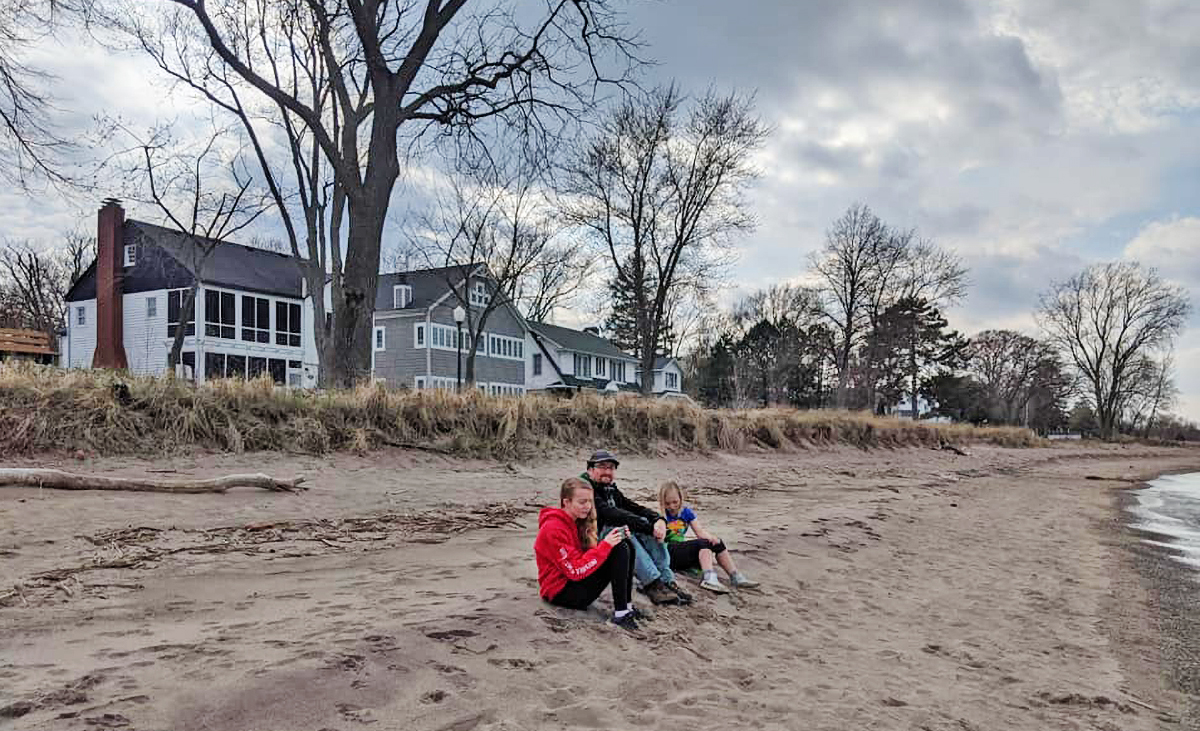
My family owns a house in Huron, very near to the lake. It’s been in the family for more than 30 years but it isn’t lived in all the time. We have more than four generation of my family who have used the house as a quick holiday retreat. We like to go up there for a week, or even just for a few days sometimes, to get away from real world pressures. There is a private beach on the lake, open just to people in the neighborhood. One of the fascinating things we often get to see on the beach is washed up eroded glass. There used to be a number of glass making factories on the lake and many bottles and other glass artifacts accidently hit the water. It’s fun to find glass with rare colors, such as greens, whites and pale blues, and sometimes red or a striking dark blue.
We like to take our kids to as many interesting places as we can. We went to Mammoth Cave, in Kentucky, a massive underground cave system, and then had a trip to New York a couple of years ago. It was very hot, walking around Manhattan. We took respite from the heat and went to the Natural History Museum to see the dinosaur skeletons. We also loved going to an off-Broadway production of Little Shop of Horrors, my favorite musical. They had a wonderful animatronic puppeteer who brought Audrey II, or Twoey, to blood-curdling life.
OUT WEST
Back in 2017 we enjoyed a two-week trip out west. We flew to Las Vegas, then rented a car for a fantastic road trip, taking in the Grand Canyon, Monument Valley, Bryce Canyon, Yellowstone Park, and the Grand Teton National Park. We drove for hundreds of miles through Nevada, Arizona, Utah, Idaho, Wyoming and Montana. We also went to Oregon and northern California in 2021 to see the giant redwoods and visit San Francisco.
A VOLCANIC ERUPTION
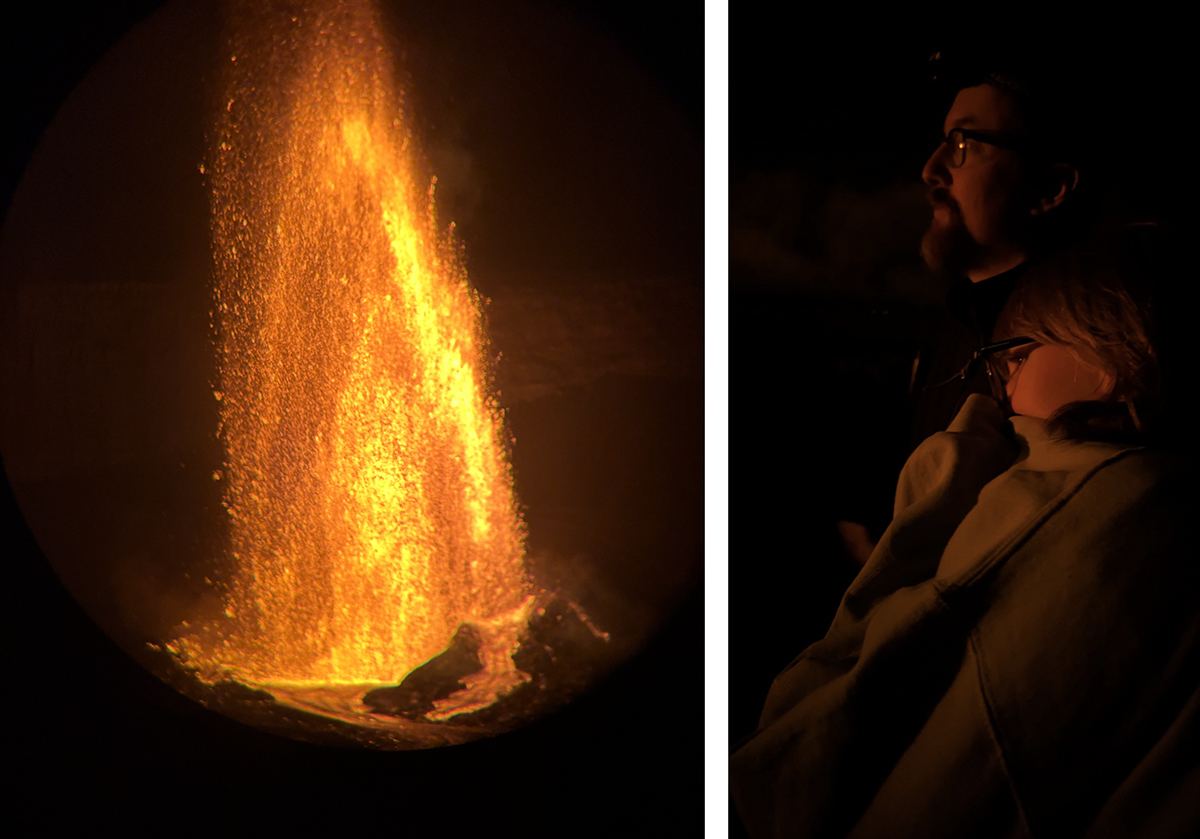
Last year we went to Hawaii. Sallie’s brother lives there, on the big island. When we arrived, he told us that Kilauea was erupting and that we simply had to see it. It’s a periodically-erupting volcano, so we drove up there in the dark of night and spent more than an hour just watching the lava erupting thousands of feet into the air. We saw this fantastic sight from about one and a half miles away. It truly was the most impressive thing I have ever seen. Sallie’s brother had been right to insist that we head out to see the spectacle right away. The volcano stopped erupting the very next day.
COSTA RICA
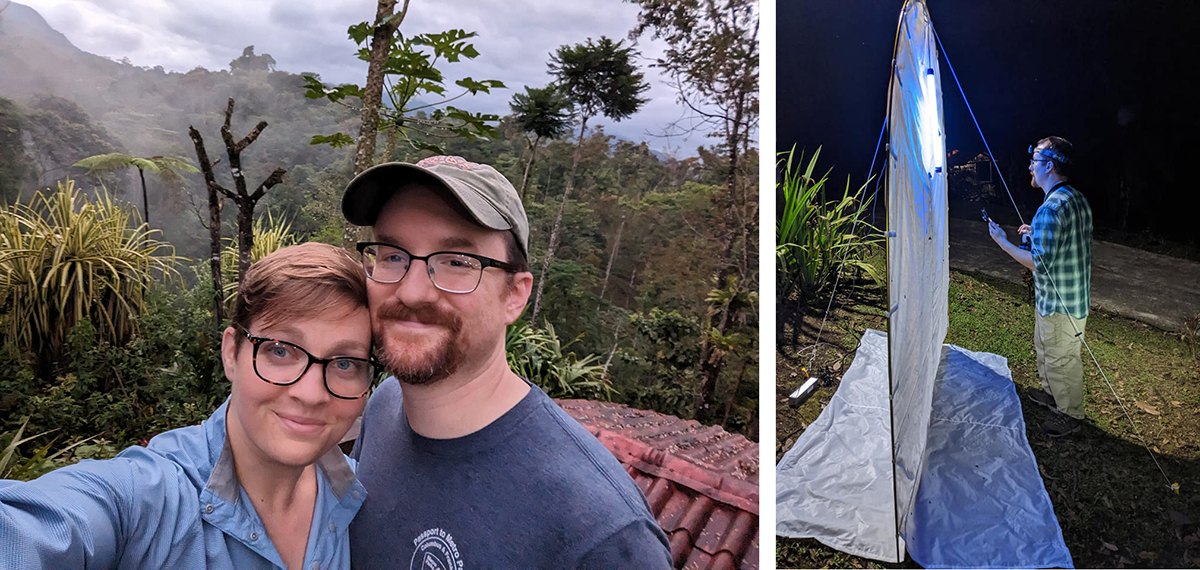
We’ve been to Costa Rica three times. The people there are very dedicated to protecting their rain forests, wildlife and oceans. We would always see the most amazing nature there, including sloths, wild parrots and hundreds of insects that vary so astonishingly from insects here in Ohio. On our first and third visits to Costa Rica we stayed in hotels and spent time hiking trails in the rain forest. But for our second visit we booked a stay with an artist and scientist who had set up her own work station deep in the interior. It was a wild trip, far off the beaten track and through very rugged terrain. At a certain point we could go no farther by road and had to continue on foot, with our luggage strapped to horses. It was an extraordinary trip and very tiring. On the same trip, we also managed to do a boat trip to the country’s southwest peninsula, which is a national park. It’s reminiscent of a lost world and you are not allowed to enter and walk anywhere without a guide. We saw a number of crocodiles there, and also a tapir, which is the largest land mammal in both Central and South America, weighing up to 650 pounds and more. They are a pig-like animal, but as big as a cow. In some countries it is also called a mountain cow. We saw one just rolling about in the mud, which they do to keep themselves cool.
We love it so much that we will definitely go back to Costa Rica again, although I would also like to visit Ecuador and see the Galapagos Islands and the Amazon Rain Forest.
More about me
STAR WARS
One of the big things about me, outside of work, is that I’m a member of the 501st Legion, which is a worldwide Star Wars costuming organization. Here in Ohio, our local unit is called the Ohio Garrison. We dress up as Star Wars characters and do charity work, going to events, fundraisers and children’s hospitals. The kids in hospital seem to like the ‘bad’ characters as much, if not more than the good ones. I have two costumes that I wear regularly, that of Boba Fett, a ruthless bounty hunter who is neither a good guy or a bad guy, in a strict sense. I also dress as the Mandalorian, who is a morally ambiguous character who mostly does right by the downtrodden and the innocent. I sometimes wear another costume too, that of a TIE Fighter Pilot. The Ohio Garrison gets many requests for appearances, sometimes 30 or more a month. I try to attend at least one charity event a month. We regularly make visits to Columbus and Dayton Children’s Hospitals. Sometimes we’re allowed onto the wards to interact with children directly and have conversations with them, or sometimes we just have to wave to kids through windows. It provides a nice distraction for sick kids and their visiting families.
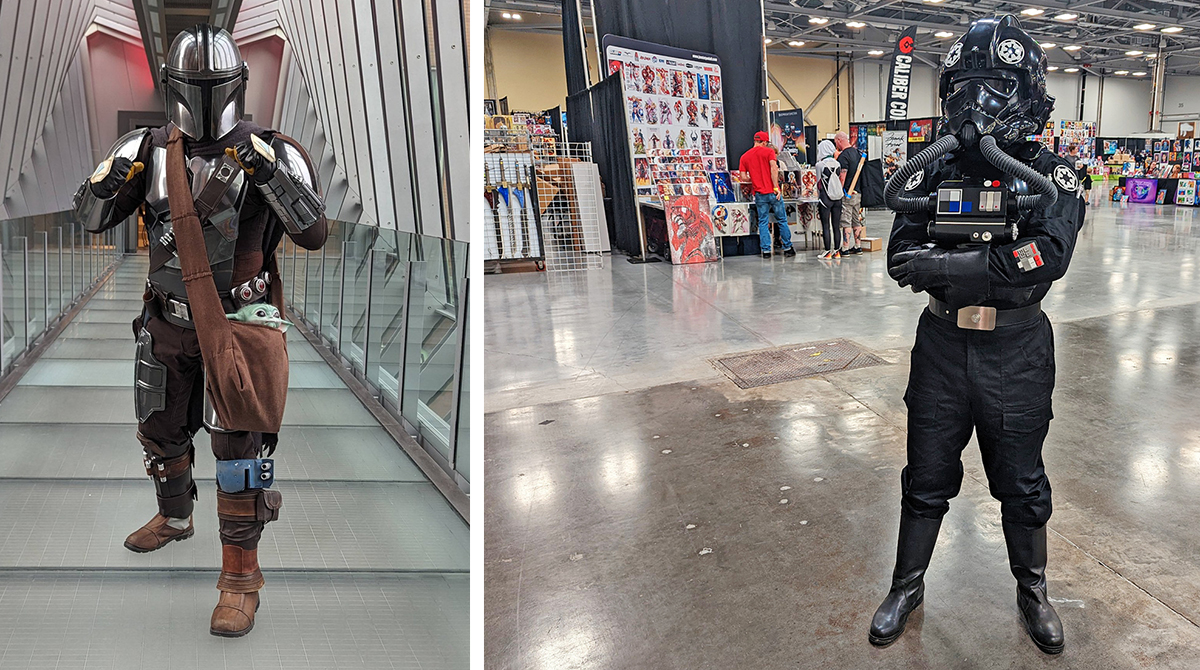
Craig in a couple of his Star Wars costumes. As the Mandalorian (left), carrying his apprentice, Grogu, and as a TIE fighter pilot (right).
We have about 200 members in Ohio and we make our own costumes. I like the helmets worn by my Star Wars characters because they provide me with a degree of anonymity. The helmets are made from plastic and I paint them myself. Sallie has joined the club too and goes dressed as a Snow Trooper, which is the cold-weather version of the standard stormtrooper costume.
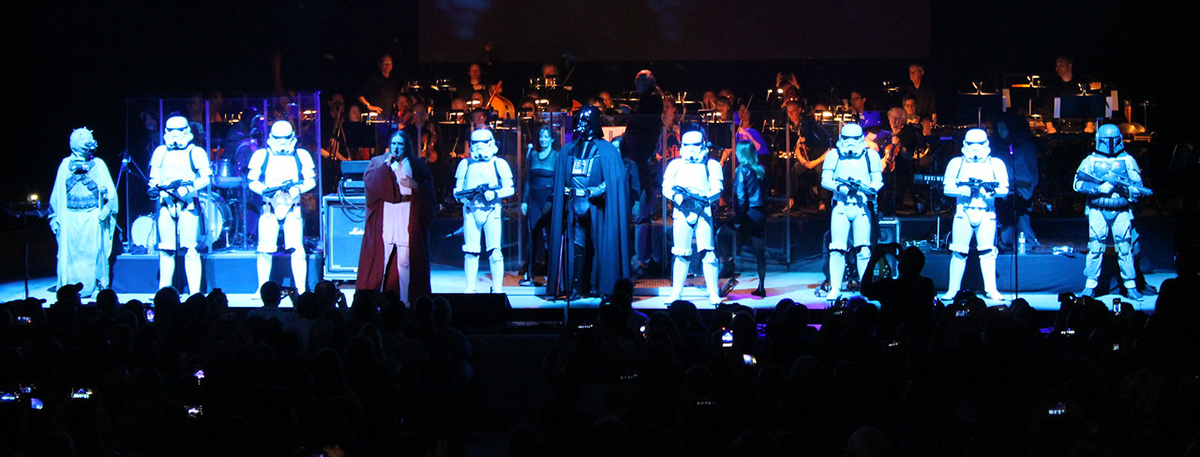
When Weird Al Yankovic goes on tour, he asks members of the local Star Wars costume clubs to be part of his show and to dance on stage to one particular number that he has made famous. The song is called “The Saga Begins.” It’s sung to the music of American Pie, but he’s changed the lyrics to tie in with a plot from a Star Wars movie. He’s a huge Star Wars fan. I’ve managed to do the dance as part of Weird Al’s show one time so far, and would love to do it again. Being a part of the show requires a lot of rehearsal time in uncomfortable conditions, especially for only being on stage for a few minutes. However, walking out on stage in front of thousands of screaming fans and performing with a beloved icon like Weird Al makes it all worth it.
VOLUNTEERING FOR INSECTS
For a number of years now I have volunteered to work with the insect collection at the Ohio State Museum of Biological Diversity on west campus. I do that once a week or sometimes every other week, going in on Thursdays for two to three hours. The museum isn’t open to the public, apart from a once a year public open house. I work to identify specimens in the museums collection of more than 4 million species of insects. Often they come to the museum as part of donations and come without an identification.
INSECTS AT HOME
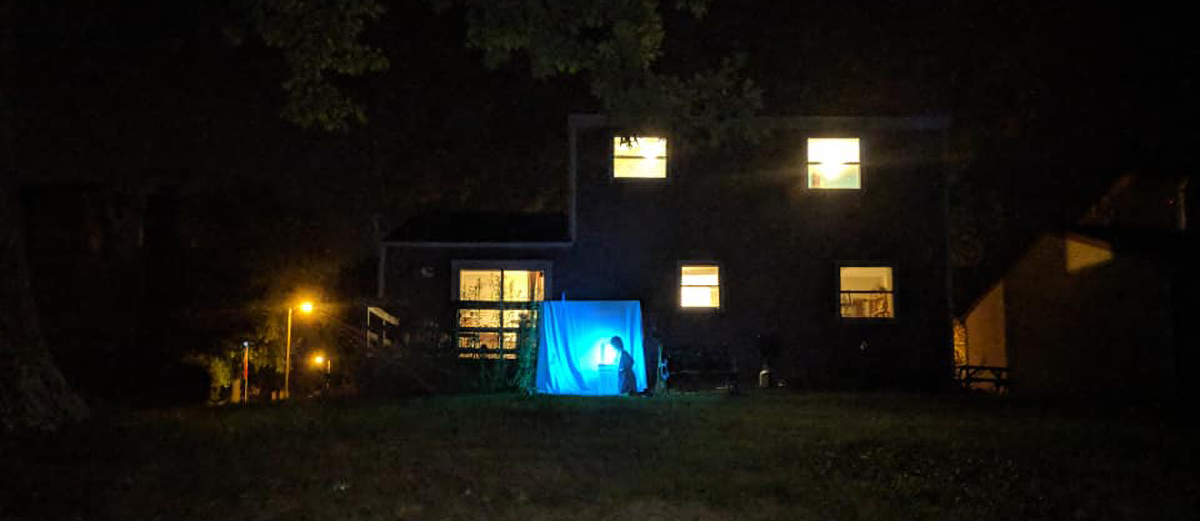
I have developed a habit of documenting the insects and other animals I find living in my own yard at home. So far I have more than 800 species on my list. Of these, 715 are insects or spiders, and the rest are birds, mammals, etcetera. The insects I have most enjoyed finding in my yard are the tree hoppers, which are very small insects but which have almost absurd looking ornamentations and protrusions on their little bodies. They’re related to cicadas and some of them are brightly colored. I plant a lot of native plants in my yard, to keep the insects happy and to invite new species to join us. It’s also a help with my macro photography habit.
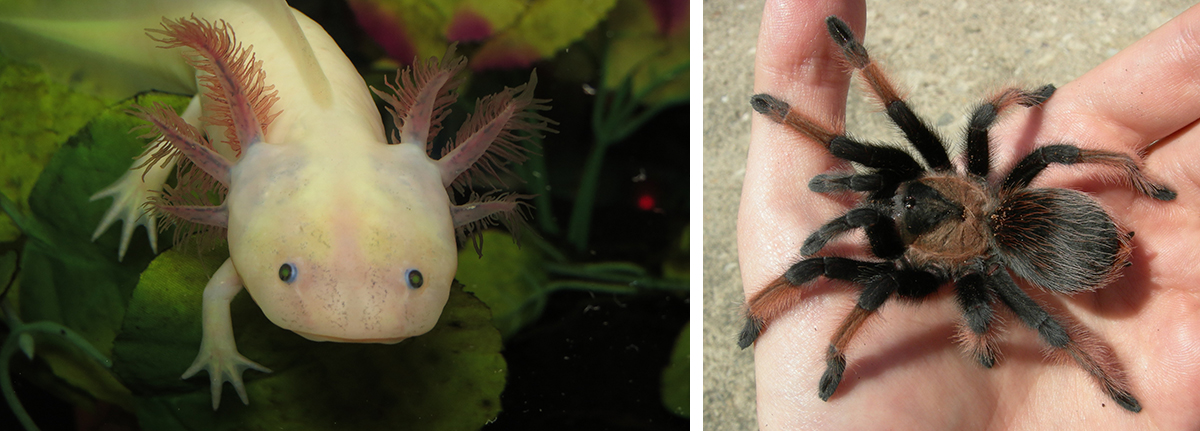
I also have three tarantulas and a scorpion that share our house with us. The oldest tarantula is more than 15 years old now. They can live up to 30 quite easily. We also have an axolotl in the house with us, an exotic salamander that is fully aquatic. It’s like a fish and lives in an aquarium. We call her Opal. Some axolotls are fluorescent, and we have a black light at home. When we shine the black light on Opal, she changes color from white to fluorescent green.
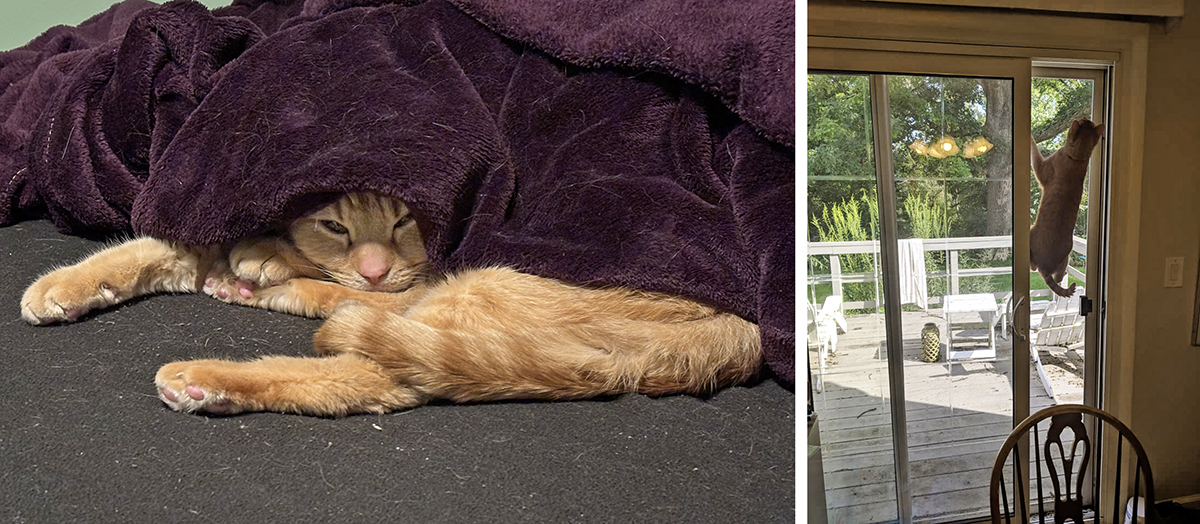
Our beloved cat, Jones, died very recently. He was named after the cat in the first two Alien films, and like his fictional namesake, Jones was a survivor. We all miss him dearly.
My favorite food and desert
I’m not very picky about food. My favorite food is pizza, and my favorite pizza, by far, is made at Marconi’s, a restaurant in Huron. The restaurant has been there for as long as I can remember. Their pizzas have a crispy edge, but softer in the middle, and they put cheese on top of the toppings, which I think is what makes it so special. My favorite toppings are pepperoni and black olives.
I have a sweet tooth. I like dark chocolate and I also love ice cream. Mint chocolate and raspberry chip are my favorite flavors. Graeter’s sell really tasty versions of both of these.
My favorite entertainment
I love movies, both at the theater and at home. I especially like science fiction, fantasy, monster films, a big movie spectacles. I love the Star Wars series as a whole, but The Empire Strikes Back is probably my favorite film of them all. I also loved the Lord of the Rings movies. They came out when I was in high school and college. I had already read the books, which I loved, and thought the films did a great job of representing the books. Other favorite films include Jaws, The Shawshank Redemption, and The Abyss. I think The Abyss is a very underrated movie. It has just about everything. It takes place, for the most part, at the bottom of the ocean and includes action, romance, politics and science fiction. No one will ever make a movie like The Abyss again. It was directed by James Cameron and filmed almost entirely underwater. They used a nuclear reactor that had been commissioned, built, but which never became operational, and filled it full of water to do the bulk of their filming.
I don’t do as much reading as I used to, but I am working on an ambition of mine to read everything ever written by Stephen King. He’s a prolific author, and has published in excess of 80 books. I have read 61 of them so far. The Stand was the first of his books that I read. My dad recommended it to me. It’s about a pandemic that kills off about 90% of the world’s population. I read it before Covid and right after high school. There is something I find very compelling about his writing. Some of his books I haven’t liked as much as others, but I never find him boring. His characters are so well written and they stay with you long after you’ve finished reading. I find The Dark Tower series among my favorite books of his.
I became a huge fan of the TV series, Lost. People became obsessed with it, trying to unravel the mysteries and the secrets. It grabbed my interest more than any other TV show has ever done. People tried to find answers to such weird questions as to why there was a metal door embedded into the ground with no handles, but a window to look through, and why a polar bear was living on a tropical island. Some people thought the ending let the show down, but I thought the ending was great. On our trip to Hawaii we toured the area where the series was filmed.
I love Craig’s photography. Especially the cecropia moth caterpillar. It was on display at the BDC Nature Center and I wish I had the disposable income to buy it. Bugger looks like he’s from a different planet.
I am a volunteer at Battelle Darby Creek Metro Park and got to know Craig when he was a naturalist there. I wasn’t fully retired yet in my chosen profession, but as a volunteer, I looked up to Craig as a mentor because of his knowledge and dedication to conservation. He inspired me and I knew when I fully retired i wanted to spend as much time as possible at Darby and to this day, I still remember all of his teachings and inspiration. Craig is truly the best of the best 😁
I am a volunteer at Battelle Darby, and I got to know Craig while has he was here. One thing he has not mentioned, but I loved, is he is a storyteller. He belongs to a Columbus storyteller group, and I recommend Craig anytime you need good stories. The stories all start the same, “this is a true story which may or may not have happened.”