LOGAN DUNN
Assistant Resource Manager
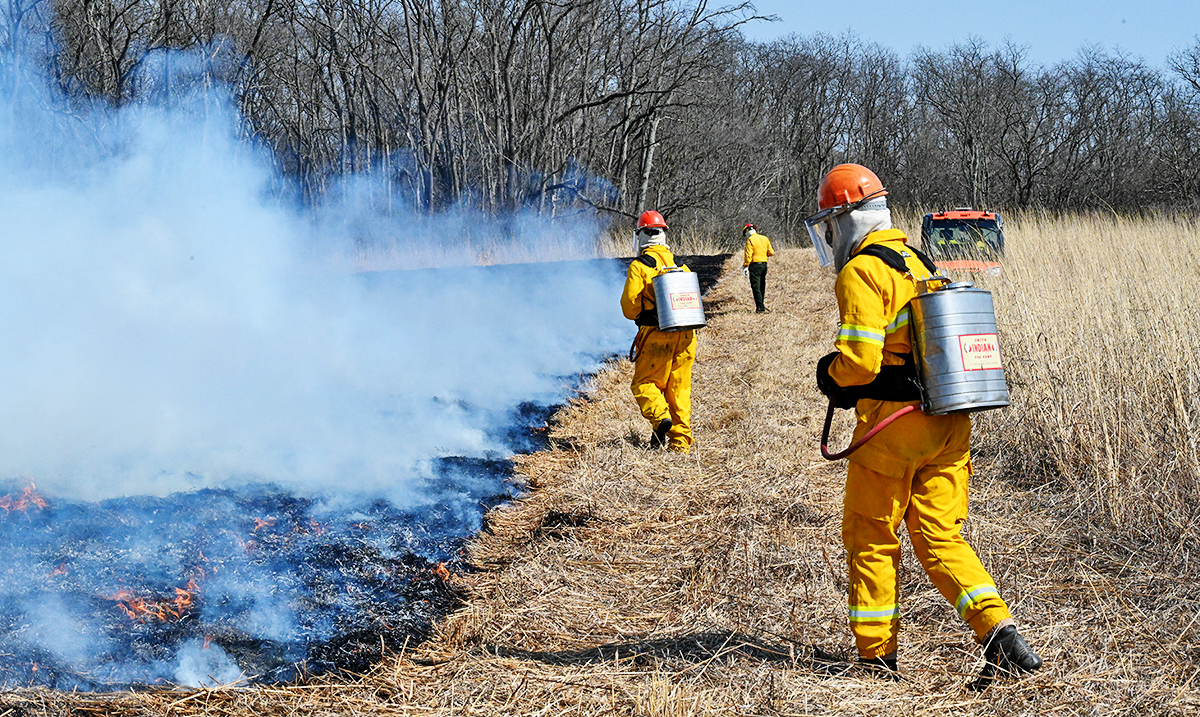
Every spring and fall Metro Parks conducts prescribed burns at a number of our parks. The use of prescribed fire maintains a healthy prairie ecosystem by removing the build-up of dead plant material, allowing for strong new growth, and it also releases nutrients back into the soil to support plant growth and retard much of the woody encroachments that can happen over time. Most of our prescribed burns take place at Prairie Oaks and Battelle Darby Creek Metro Parks, which have the largest prairie areas at any of our parks.
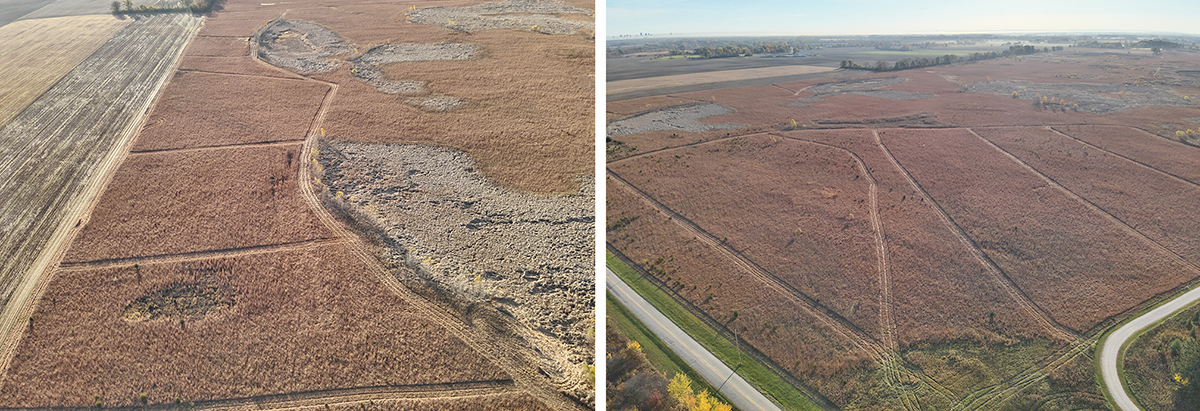
Have you been to either of these parks and come across a mowed path, often several tractor passes wide, and thought to yourself, what in the world is this? Well, it’s a firebreak! When performing prescribed burns, it’s important to have in place strategic and appropriate firebreaks. These firebreaks help slow the fire down once they’ve reached the edge of the prairie section being burned, also known as a burn unit.
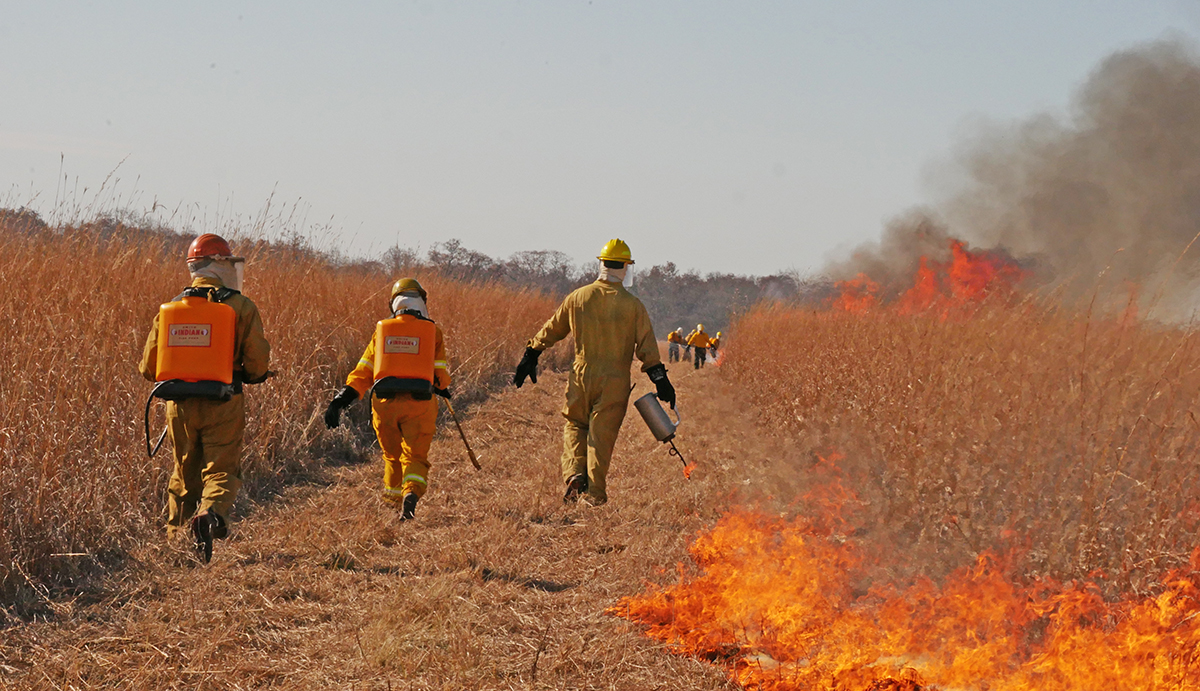
By slowing the rate of speed, flame length and intensity, these firebreaks are designed to prevent fires from getting out of control. Some of our burn units are designed with permanent firebreaks in mind, something that isn’t ignitable or provides insufficient fuel to maintain a fire ignition or a current fire’s intensity, such as a trail or a mowed lawn. These permanent firebreaks save us a substantial amount of time when considering the number of acres that we have to potentially burn and manage, which can reach to more than 1,000 acres.
Non-permanent firebreaks are those that are created with a mower or brush hog. The process consists of mowing three mower widths (approximately 18-20 feet wide) around the border of our burn unit. The flames of the prescribed burn are not able to reach across the firebreak and ignite sections of prairie outside of our original burn unit.
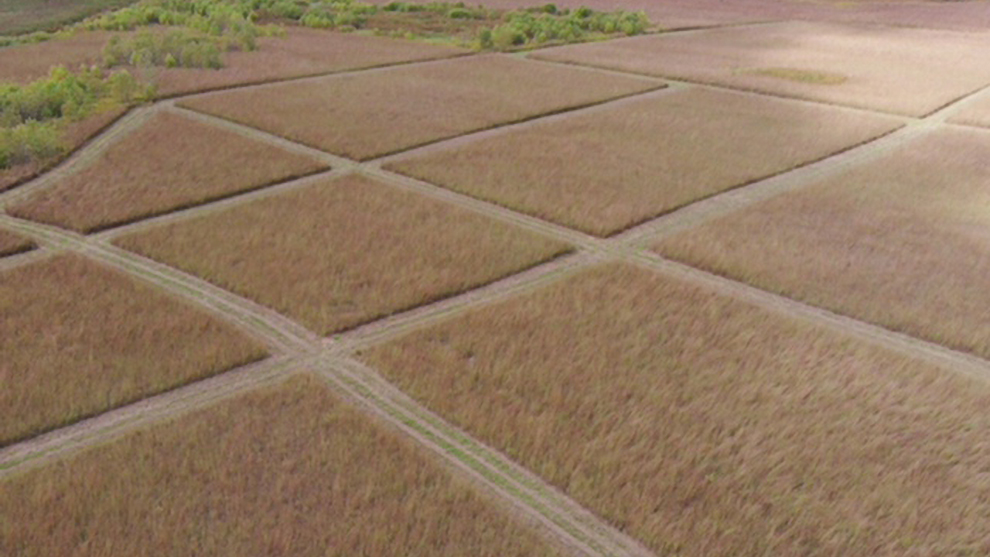
Inside the burn unit, we often create a series of additional, smaller firebreaks, typically two mower widths, or 12 feet across. This allows us to shut down a burn prematurely if our weather conditions or other parameters are out of prescription for that burn, but also allows a small enough gap for the fire to jump across if we deem the conditions to be favorable to continue on. A prescription is a set of conditions that must be met in order to ignite a prescribed burn for that day, such as wind direction, wind speed, relative humidity, mixing height, staff requirements and much more. The mixing height is the maximum height that smoke from the fire will reach before it disperses. This can be calculated accurately according to atmospheric conditions on the day, a combination of wind, humidity, air temperature and air pressure.
It’s important for these prescriptions to be met, or you run the risk of something going awry when you ignite your prescribed fire. Structures such as a boardwalk, a viewing platform or nesting boxes are also something to consider when putting in firebreaks. Ample space must be given around the structures so as to not jeopardize the integrity of the structure or risk burning down the structure itself.