
TIFFANY GUO
Seasonal Naturalist
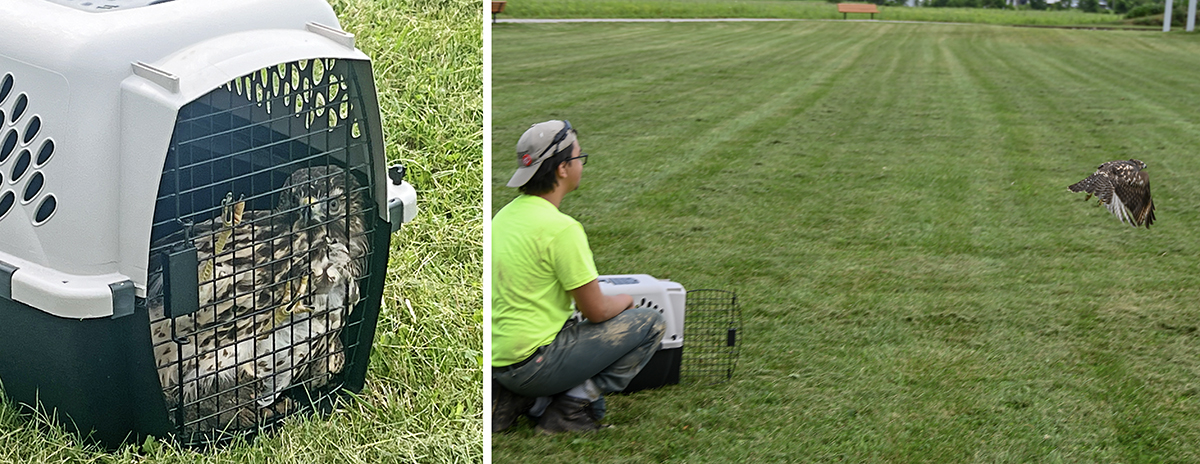
A recent morning at Glacier Ridge Metro Park took flight with a unique spectacle, as maintenance workers, park rangers, and naturalists gathered at the Wind and Solar Lot to witness the release of a recently rehabilitated red-tailed hawk by the Ohio Wildlife Center (OWC). OWC is a nonprofit organization that leads wilderness rehabilitation efforts and educational programs including late night hikes and cryptid bonfires.
The red-tailed hawk is considered the most common raptor in North America. Protected by the multi-national Migratory Bird Treaty Act (which prohibits hunting or possession of native US migratory birds), this bird of prey is crucial for controlling rodent and insect populations. Its knack for hunting is sharpened by magnificent eyesight— estimated at eight times the acuity of a typical human and able to see all the colors we can, plus an ultraviolet array. Equipped to spot prey within a mile-long radius, this bird dives at speeds of up to 120mph to hook small animals with its talons, tearing flesh with its beak. It’s not particularly picky, and will eat a varied carnivorous diet including squirrels, snakes, fish, and much more.
OWC volunteer Katie Orsini placed the kennel containing the red-tailed hawk onto the grass, as we closed in to get a better view. The bird’s feathers were reminiscent of very late sunset. The bird poked a bright yellow claw through the metal grate, eyes of neither fear nor excitement but what looked more like plain annoyance. Finding that he came with no official name, head maintenance worker Brian Scheiderer designated him Freebird, nodding to the Lynyrd Skynyrd rock song.
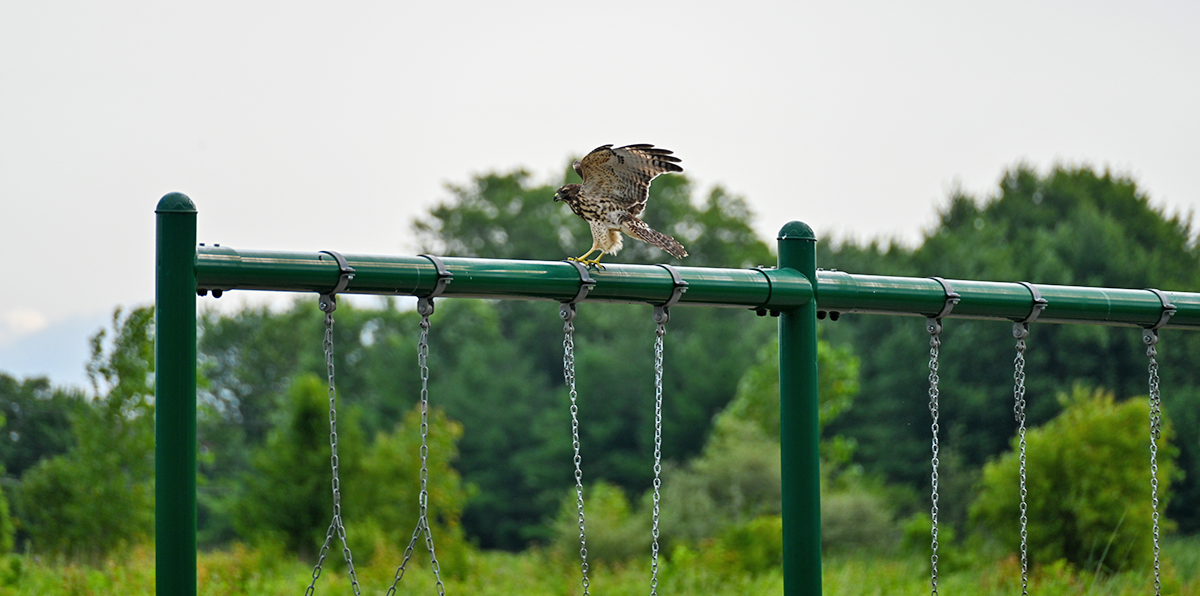
As we stepped back, the metal grate swung open. Freebird paused for a moment before hopping out onto the grass to survey his surroundings. Instead of soaring into the distance, he glided low to perch atop the Wind and Solar Lot swingset. Orsini attributed this to fatigue, not a lack of ambition: “He’s exhausted… they fly around in 50-foot cages, so we were all running around on ladders with our nets this morning, trying to catch him.”
Freebird was taken into the care of OWC as an orphan with his parents likely deceased. Often forming monogamous pairs, red-tailed hawks nurture and feed their young for multiple months before their nestling can debut as an independent. This particular bird was found in a dehydrated state and seemingly hadn’t been cared for in multiple days prior to the rescue. He was admitted back in May and transferred to pre-release conditioning in early June, where OWC specialists trained the animal in developing the necessary capabilities for success in the wild. At the time of release, Freebird was determined to have obtained the necessary muscle power and locomotion, waterproofing of feathers, and ability to catch prey to integrate among his fully-wild counterparts.
Still loitering on the top of the swingset, Freebird towered over the songbirds around him. After mingling with a group of small red-winged blackbirds, we finally watched our tame red-tailed giant soar up and towards the horizon. As a semi-migrant species, populations of red-tailed hawks in Ohio will often travel south for the winter and return in the early spring to the same general area. Others will simply remain in the state year-round. To our liberated bird of prey, a trailing mahogany comet, Park Ranger Rachael Knierim offered: “Enjoy the parks! Or…” — shrugging— “wherever you end up.”