MELANIE FOWLER
Resource Management Technician
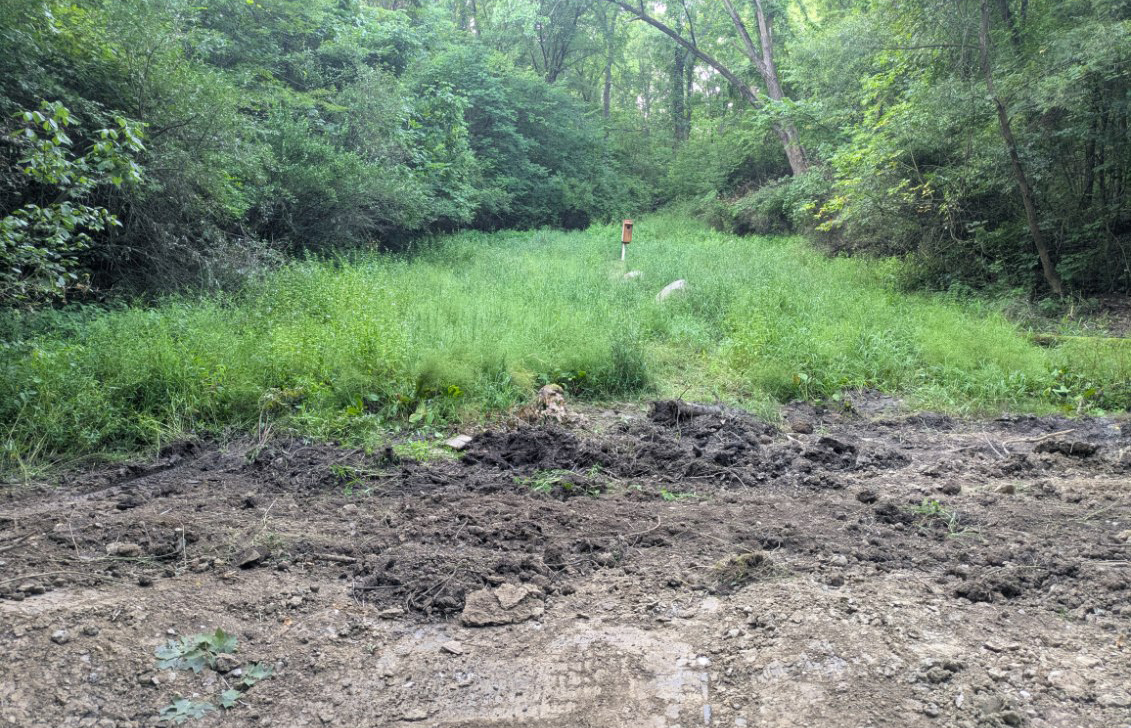
Over the past few months, some of the Resource Management staff repaired failing berms at the wetlands along the Spring Creek Trail at Sharon Woods, and at the west annex of Rocky Fork, off Harlem Road. Wetland berms are raised, sloped barriers of compacted earth, constructed on the edges of wetland cells. They play an important role in helping to retain water in the wetland. Water control structures are often utilized within our berms to allow us to manipulate water levels, which helps us to improve wildlife habitats, for example by creating additional mudflats for shore birds, and vegetation for migrating waterfowl.
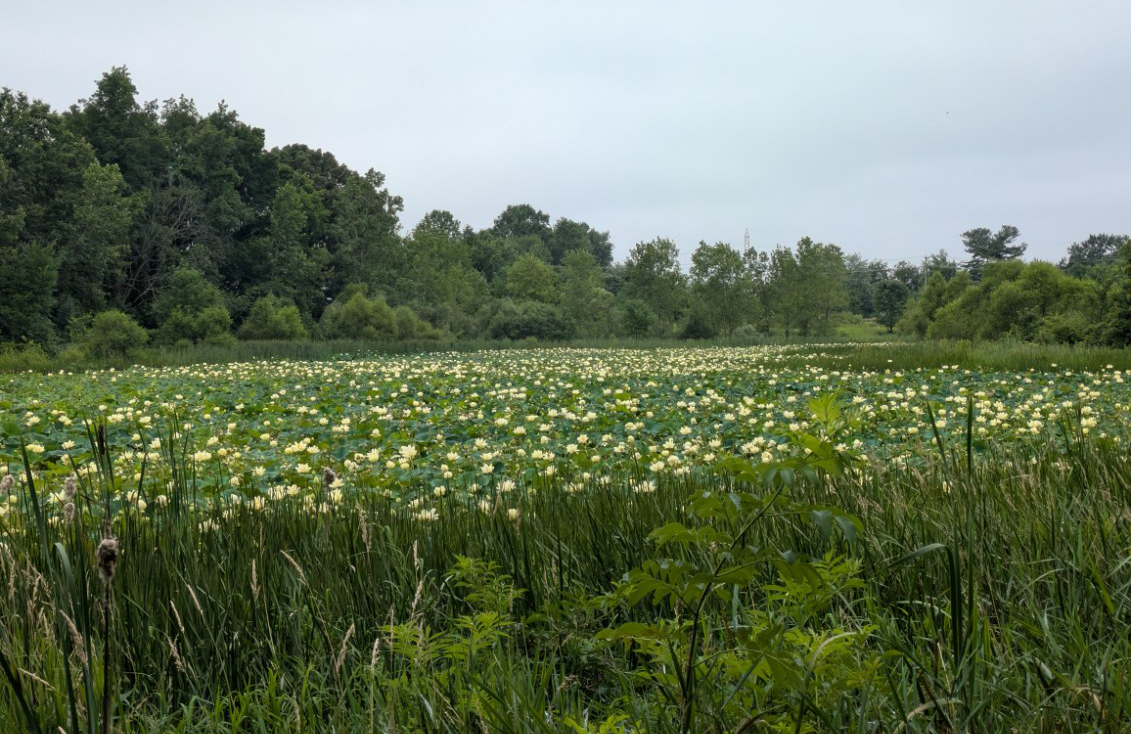
Wetlands are one of the most important habitats we have in our parks. Not only do they serve as critical habitat for a wide variety of fish and wildlife, they also help improve water quality, and reduce flood risks. Because wetlands have shallow water, high nutrient levels and high primary productivity, they are vital to many species of fish, amphibians, reptiles, aquatic insects, breeding birds, and even mammals for reproducing and raising offspring. Wetlands are also important stops for migratory birds along their migration journey.
Over time, woody vegetation had taken over the berm at Rocky Fork. The growing roots had penetrated the berm, which created pathways for water seepage and caused internal erosion. This compromised the structural integrity of the berm, causing it to leak, leaving the water level in the wetland much lower than intended.
The fix was simple: cut down every tree and shrub on the berm, and remove all of the roots. While that seems like a lot, we were fortunate to have the help of our handy dandy forestry head, which made quick work of the tree removal. We also rented an excavator for digging the roots out of the berm, and then packed the voids with clay. It went smoothly, and no one got any equipment stuck, I swear!
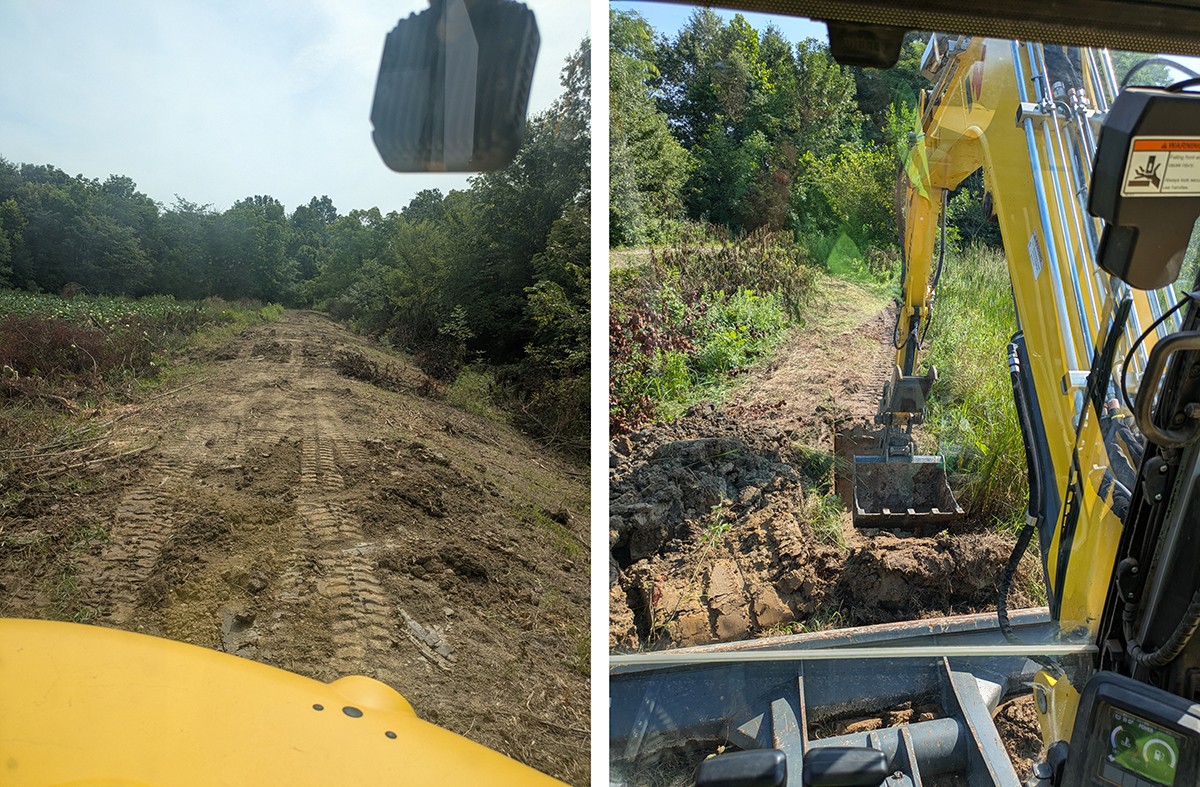
The wetland at Sharon Woods included a concrete dam structure to control the water level, but over the years, the water eroded away all of the soil around the dam, rendering it useless. To remedy this, we simply built an entirely new berm out of clay and bentonite (a type of clay that swells on contact with water, creating a self-sealing, low-permeable barrier). We created a swale in the new berm that leads to the old spillway. We had yet another excavator to distribute, pack, and shape the new berm.
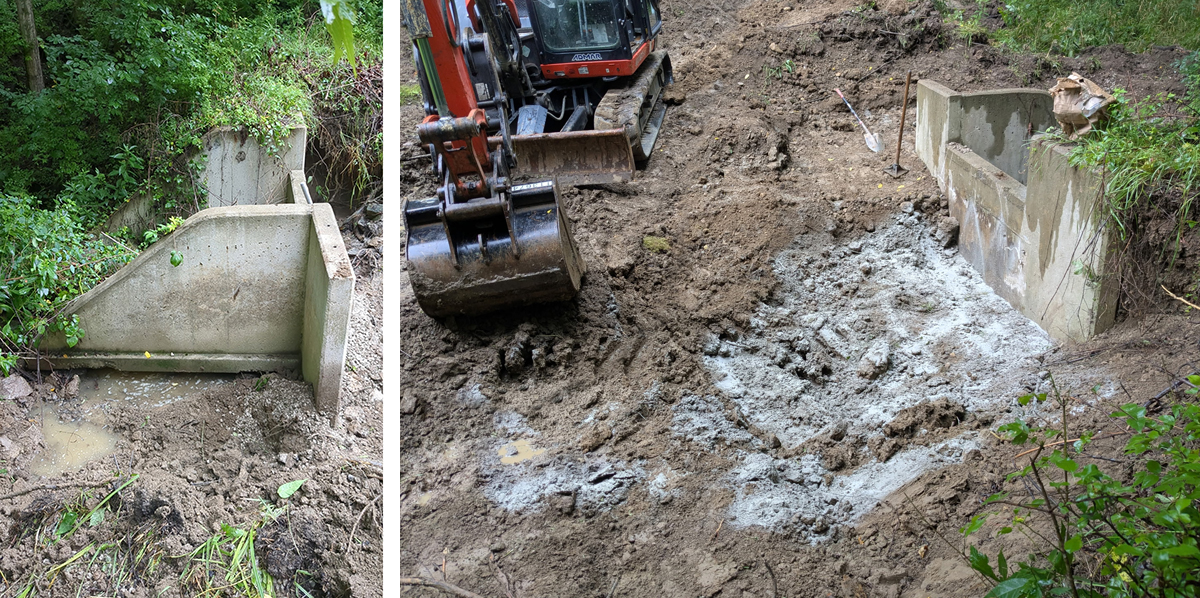
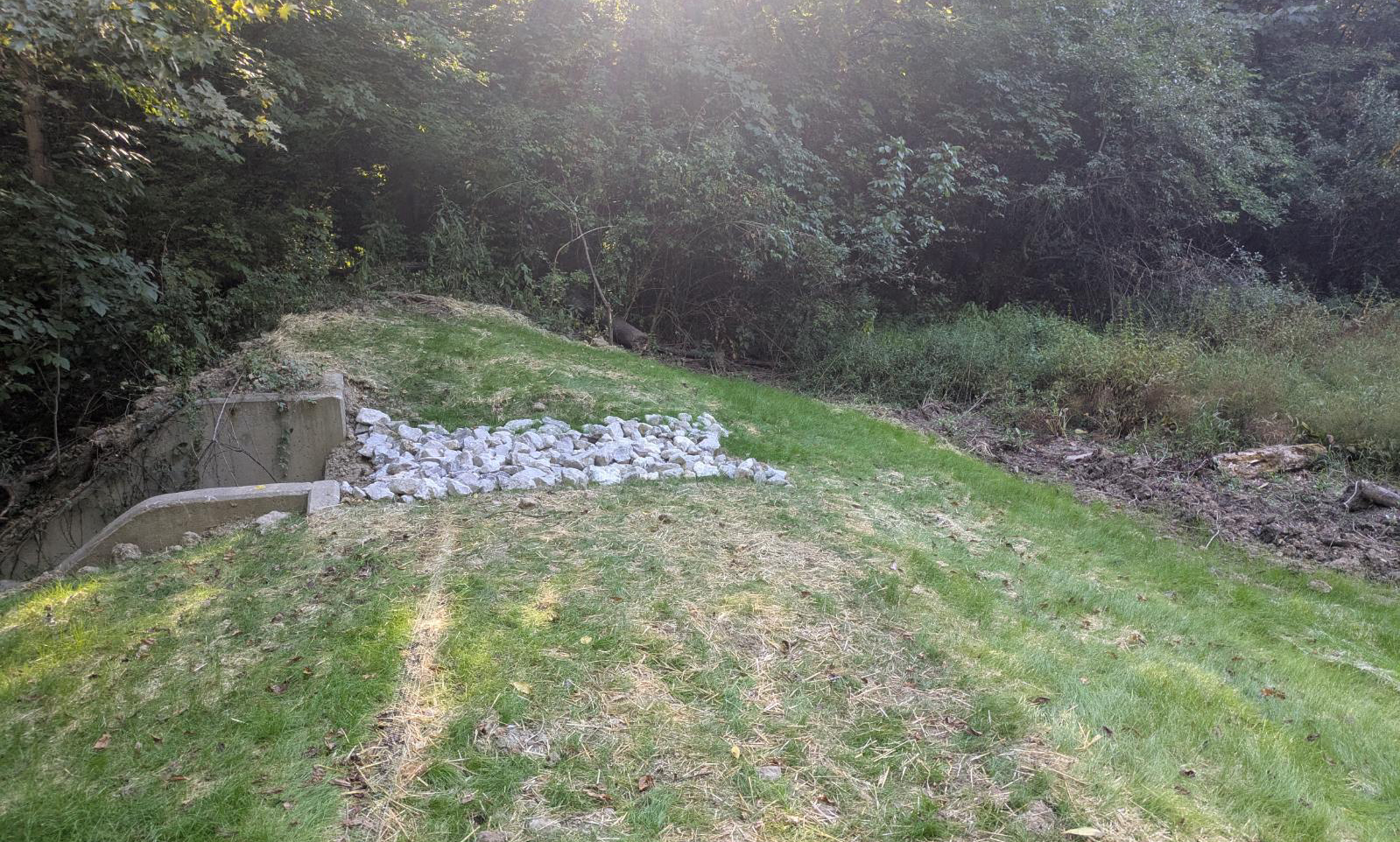
While the Rocky Fork wetland still held some water before the repair, the wetland at Sharon Woods hasn’t held much water in quite some time, so we are looking forward to seeing it in the spring! If you want to see it too, head down the Spring Creek trail from the Apple Ridge picnic area. You can also check out the Rocky Fork wetland once the parking lot construction is done.
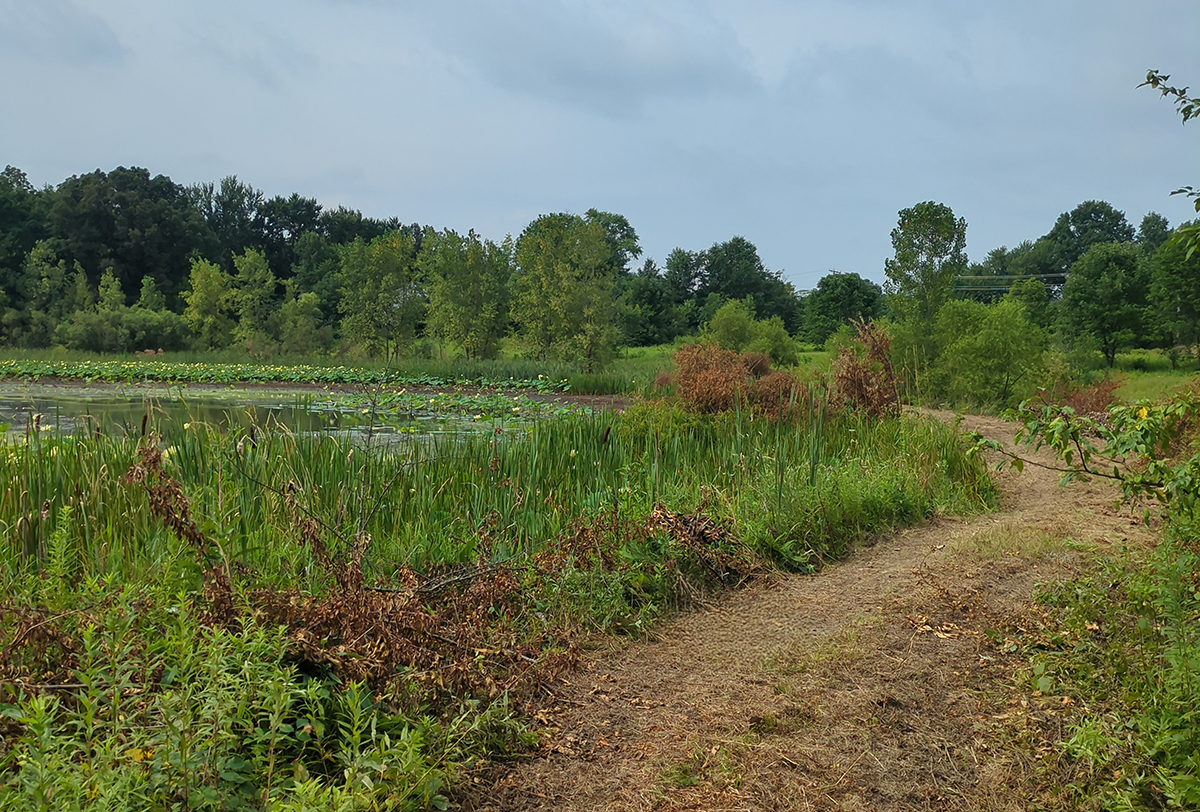
And finally, our resource management team would like to give a big shout of thanks to all the staff who lent a hand or equipment for either of these important projects!
we’ve been curious about the need for the dam project. Good article!
Two deer were enjoying the dry pond area this morning