Olivia Garas
Land Management Coordinator of the North End Parks
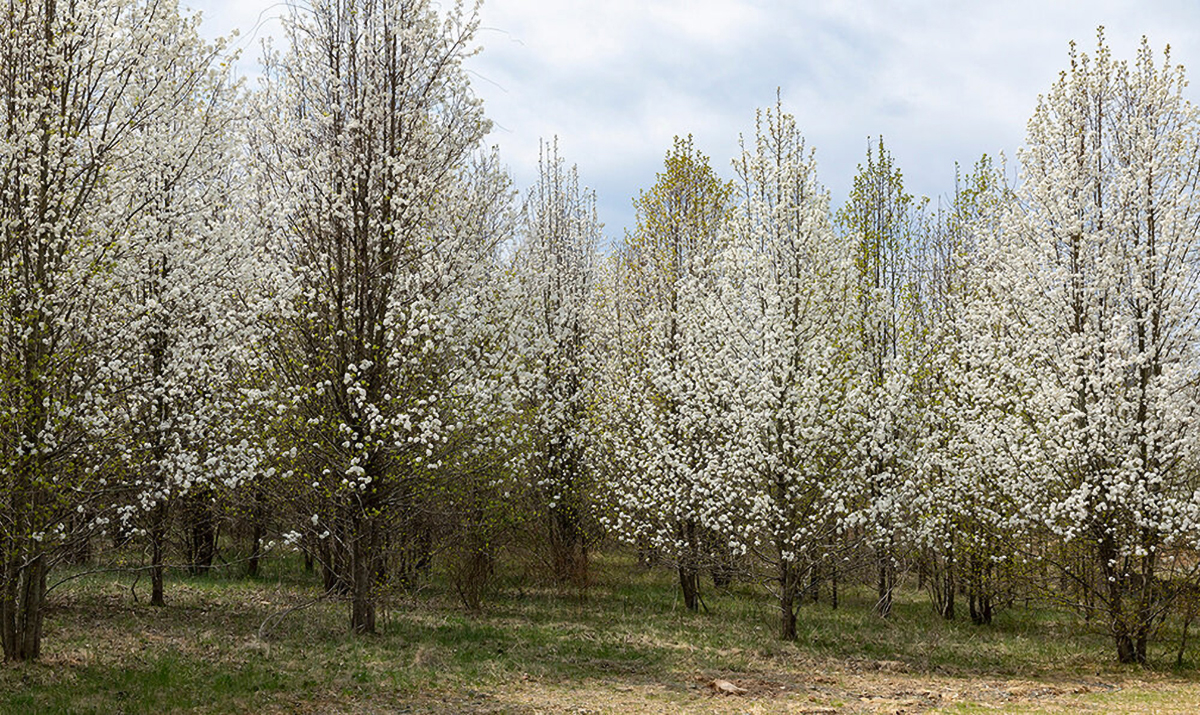
One of the most important jobs we have in Resource Management is removing invasives. There are so many different plants found in Ohio that are invasive, many of which were introduced because of their aesthetic value or heartiness. In the horticulture world, when selling to consumers, this is a great quality for plants to have, but many of them are not found naturally in the regions they are sold in. The problem arises when those plants escape from peoples yards into natural areas and take over, often at the expense of our native species. One such plant is the callery pear tree, or Pyrus calleryana. This tree is one of the hardest plants for us to eradicate because so many people have them in their yards around our parks. They grow very quickly, and produce a lot of fruit that keeps their spread rampant. Although they are now illegal to sell in the state, the damage is done and they have found their way into nearly all of our parks. Which means a complete and utterly overwhelming amount of work trying to manage them!
In many of the parks found in the north end of the district, callery pear is found along roadways, boundaries, fields and forests. Sometimes in these areas it is easy to cut them down and leave them where they fall. For other areas they have to be completely removed or chipped. For example, along a trail or roadway and in many fields where we use a brush hog, our large rotary mowers. This extra step takes a lot of time, and if the trees are large, extra hands. If only there was some way we could snap our fingers and watch them disappear!
We have found a way for that dream to come true… sort of! Since last year the Columbus Zoo entered a partnership with Metro Parks. This partnership allows them to remove unsightly and damaging woody invasive species from our parks, and in return they receive a delicious and valuable food source for their animals. The cutest solution to two big problems!
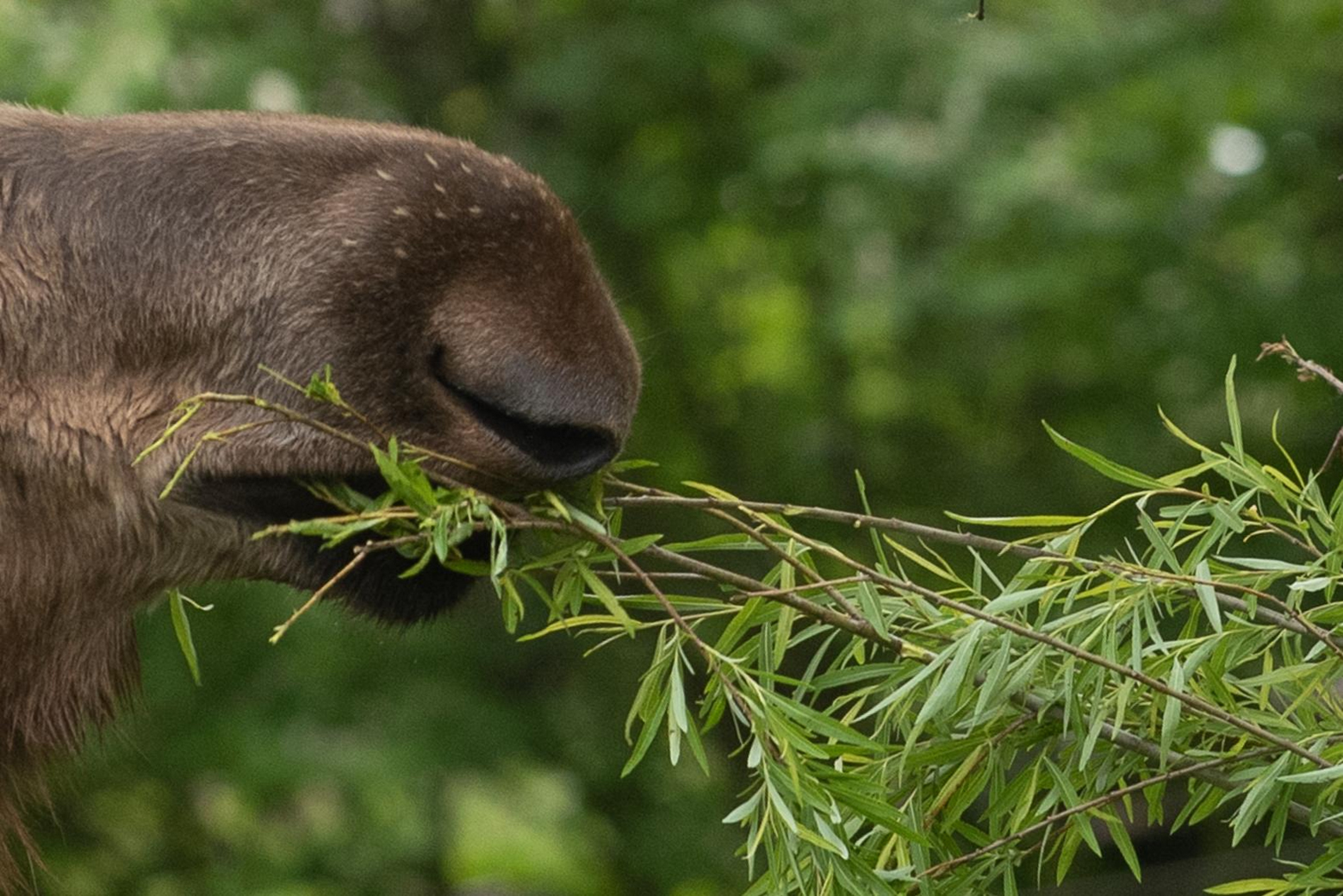
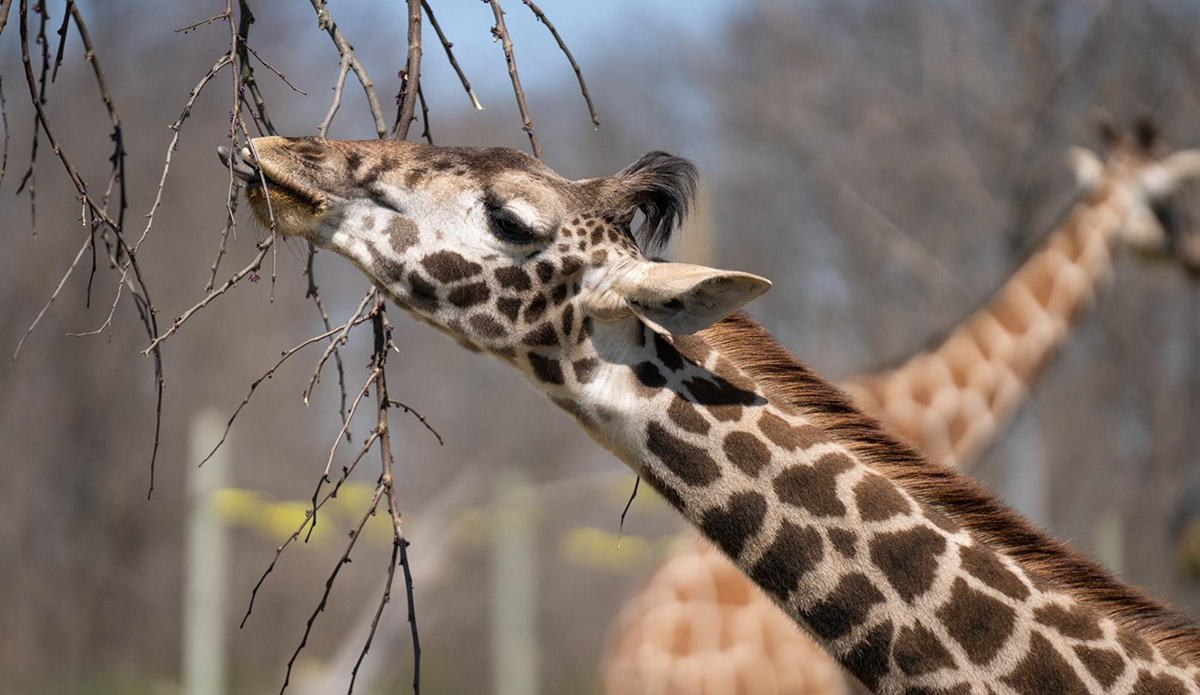
Many animals at the Columbus Zoo have special dietary requirements that they can’t live without. A lot of them are found in other parts of the world and it is difficult to match their diet exactly. Callery pear is a great substitute for the giraffes, elephants, porcupine and moose, to name a few. A good portion of these animals are very large and require a lot of browse material to maintain their health. The Zoo is required to obtain 19,100 linear feet of browse a week for their animals. To put that into perspective, that is equivalent to 3.6 miles of browse if you stood every branch end to end. That amounts to about 1 million linear feet a year. About 40% of this browse is provided by AEP, however, the rest they have to hunt for and collect themselves.
You would think a task that large would require a whole team of people cutting and processing callery pear trees… but the Zoo has a team of only two skilled arborists to tackle the job.
You could see why this partnership is a huge win-win for both organizations. The duo split up, each with a chainsaw, a truck and a trailer to bring back as much browse material as they can. I have been working and coordinating with them since August 2025 to accomplish both of our goals. I am often coordinating with Dave, one of the two collectors on the Zoo staff. Dave started his work at Highbanks Metro Park, clearing most of the callery pear from the north boundary of the park along Powell Road. Since he started, he has collected about 56,000 linear feet of browse from Highbanks, which is roughly 11 miles of callery pear! I go out and help when I can, but generally he is out there rain or shine, cutting and hauling it all away to feed the animals. Although they prefer larger trees to complete their quota, they take anything from saplings to very mature adult trees. I quite literally point my finger at a stand of pear and it disappears!
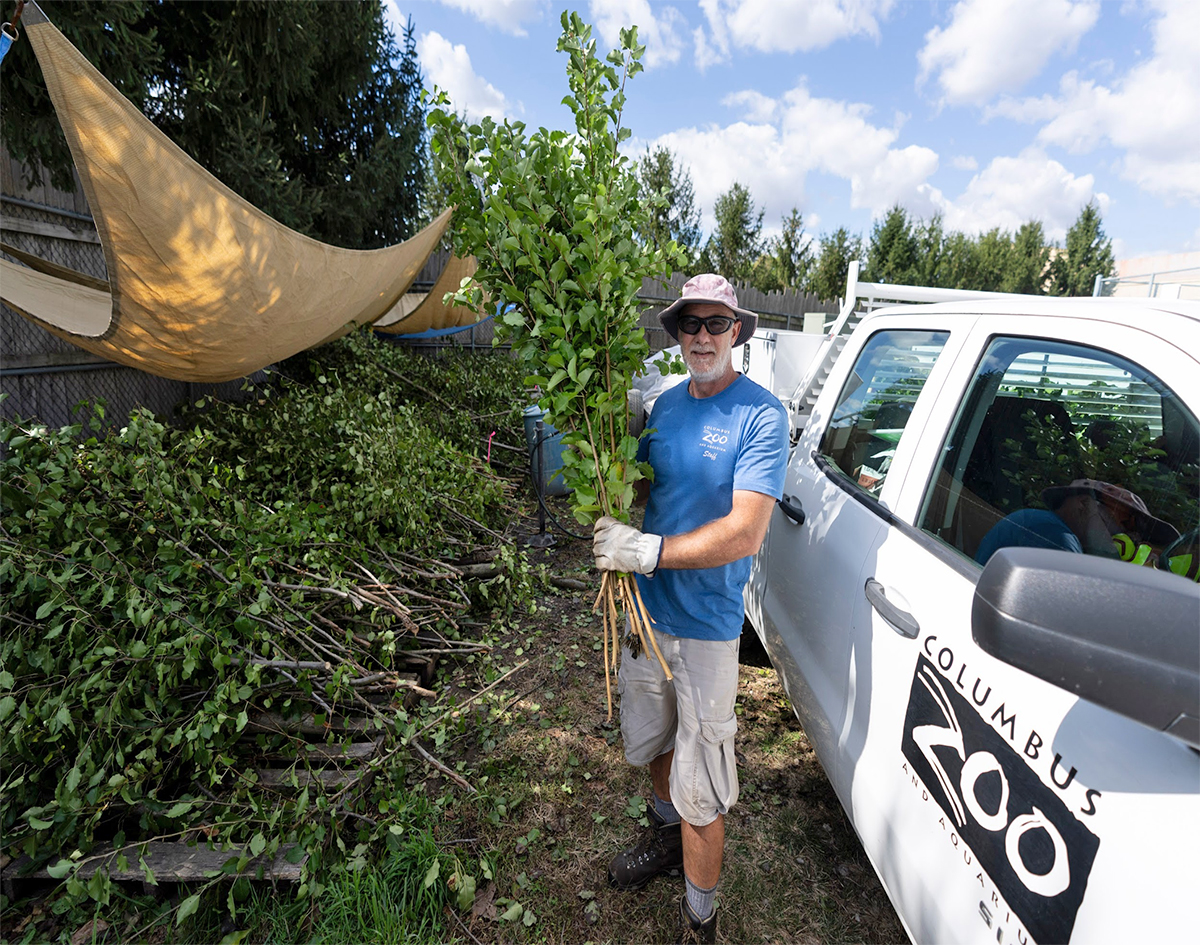
All jokes aside, cutting down callery pear trees is not quick or easy, and the zoo arborists work very hard to deliver what is taken from the parks. They collect year round, as the bark and buds of the callery pear are rich in nutrients in the winter months. Vines and anything that could be harmful to the animals are removed from all the browse they collect. Dave is extra mindful of our goals as a parks system as well and takes the time to mark every stump he cuts. When he has cleared an area, I come through and cut the stumps again and treat them with a herbicide that kills the roots. This is essential to be sure the trees don’t come back.
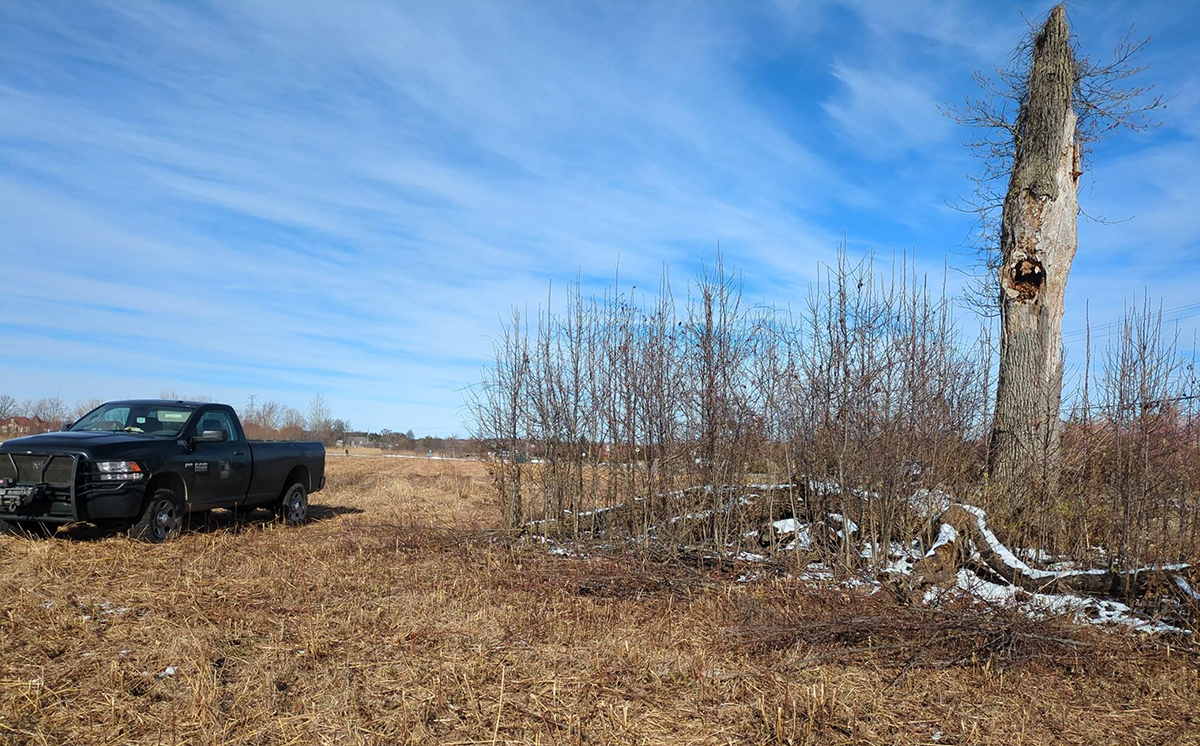
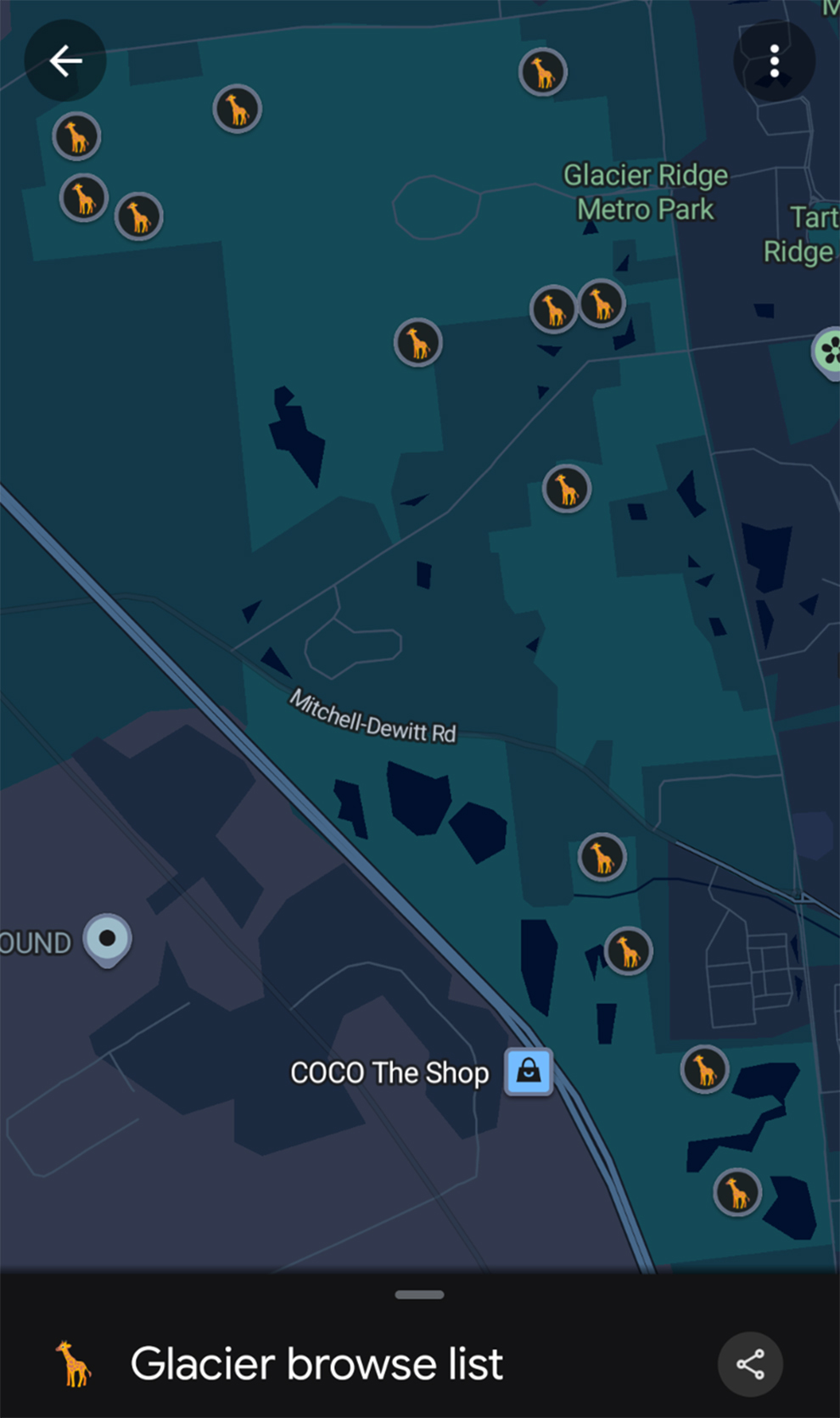
Work has since moved on to Glacier Ridge Metro Park, where the arborists are clearing callery pear along a few of our boundaries. Eventually, when a lot of callery pear is cleared out of Glacier Ridge, they will move on to other parks. Not only are we beginning to make a dent in our callery pear tree problem in those priority areas, we are also feeding animals at the same time. Now when I see an area with a lot of callery pear trees, I see an opportunity to feed the moose, elephants and the giraffes.
It is a relief that, with so many callery pear trees in our parks, we have a creative and sustainable solution to maintain them. It helps us not only because we are removing callery pear, we are able to focus our attention on other species that need to be maintained as well. It’s like having an extra teammate on Resource Management! I look forward to our continued work and collaboration with the zoo, and to Dave’s hard work that has been a huge help to our team.
Next time you see a stand of callery pear trees in the parks, think of the giraffes!
Love the idea of turning routine park maintenance into something that directly benefits wildlife—it’s such a smart example of circular resource use. Repurposing what would normally be waste into food for giraffes really highlights how conservation, sustainability, and community partnerships can work together in practical ways. It makes you think differently about what we call “trash.”
This article was very interesting. Thank you for sharing all that goes into feeding our zoo animals. It is wonderful that you can make use of our local invasive species and partner with the zoo.
What an incredible partnership and innovative way to get rid of an invasive species AND help feed our zoo animals!
All the energy required for this project is incredible! Glad the invasive resources can be utilized.
This article needs to be posted in news papers or various medias to alert everyone about this. A great job!
I’m a docent at the Zoo so I know how important browsers to many of our animals. I’m also a big fan of native plants and I detest those Callery pear trees! This is a wonderful partnership. Thank you, Dave and the Metro Parks. (I would love to share this with fellow docents.)
Olivia-well written and timely. A blog with a double header: taking care of an invasive and helping animals at the same time. Very informative. Looking forward to more.
Great article Olivia, with positive news about this collaboration resulting in a win all around. Thank you Olivia, Dave, and others involved in effort.
I think he was at Emily Traphagen park this past summer.
I have about 10 large callery pear trees in my yard that I’m willing to give to the zoo to feed the animals. 🦒
Interesting!!!
About a month ago I stopped at a park residence, knocked on their door . In the field adjacent to the office is a huge stand of them. At the time I did not know what they were .
The Ranger filled me in on what they were and how invasive they are.
My thought now goes to those invasive honeysuckles that are everywhere. I’ve been fighting them for years.¹