
Cody Berkebile
Senior Naturalist, Blacklick Woods
In winter, many songbirds migrate south to find warmer weather and available food. The birds that remain in Ohio mostly eat seeds and nuts, frequenting bird feeders for an easy meal. Colorful cardinals and blue jays stand out amongst the drab and dreary Ohio winters and then there are the little brown birds scurrying about on the ground – our native sparrows. Sparrows have a reputation for being plain and boring but the reality is they are a diverse and beautiful family of birds. Let’s meet some of them.
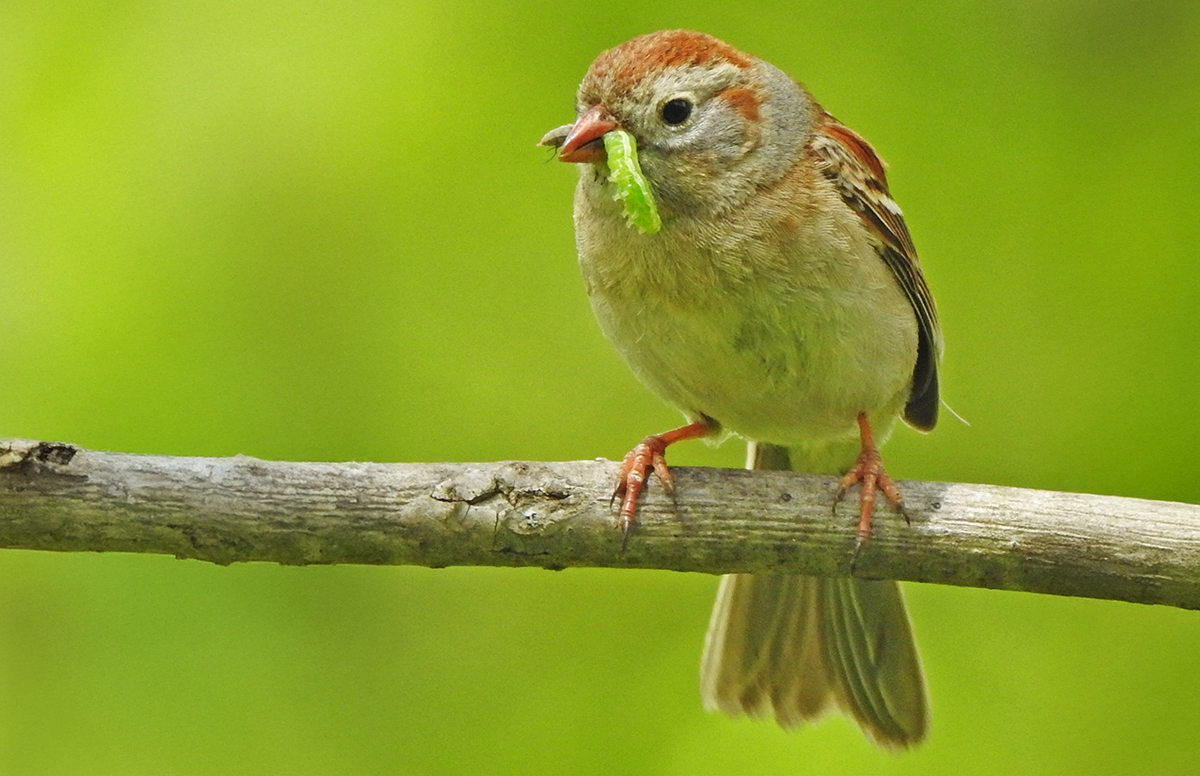
Field Sparrow
This small sparrow can be found in Ohio year round. They are mostly gray faced with a rusty-colored crown and eyeline and also a white eye-ring. Their belly is plain gray with no streaking but their back has streaks of a similar rust color that is featured on their heads. Perhaps their most unique feature is their cute pink beak and pink legs, which distinguish them from some of our other sparrow species. Look for this sparrow in old-fields, where they will eat small seeds from grasses and flowers.
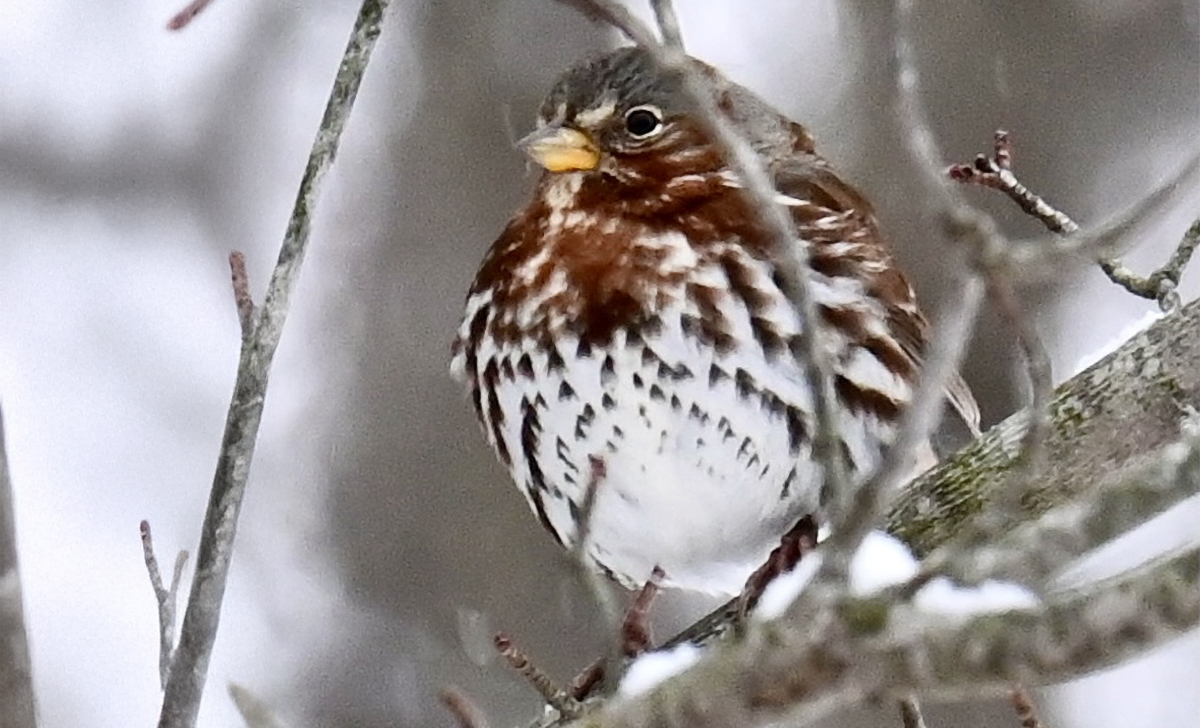
Fox Sparrow
Fox sparrows are large and chunky for a sparrow and have a unique rusty-red and gray coloration with heavy streaking across the breast. This sparrow primarily breeds in the northern forests of Canada and Alaska during summer, but spends its winters south of the border. Some of these individuals will choose to spend the winter right here in Ohio. They forage on the ground using a distinct hopping-scratching method to look for seeds buried in the leaf litter. Look for this sparrow hopping and scratching under shrubs on the edge of forests or underneath bird feeders.
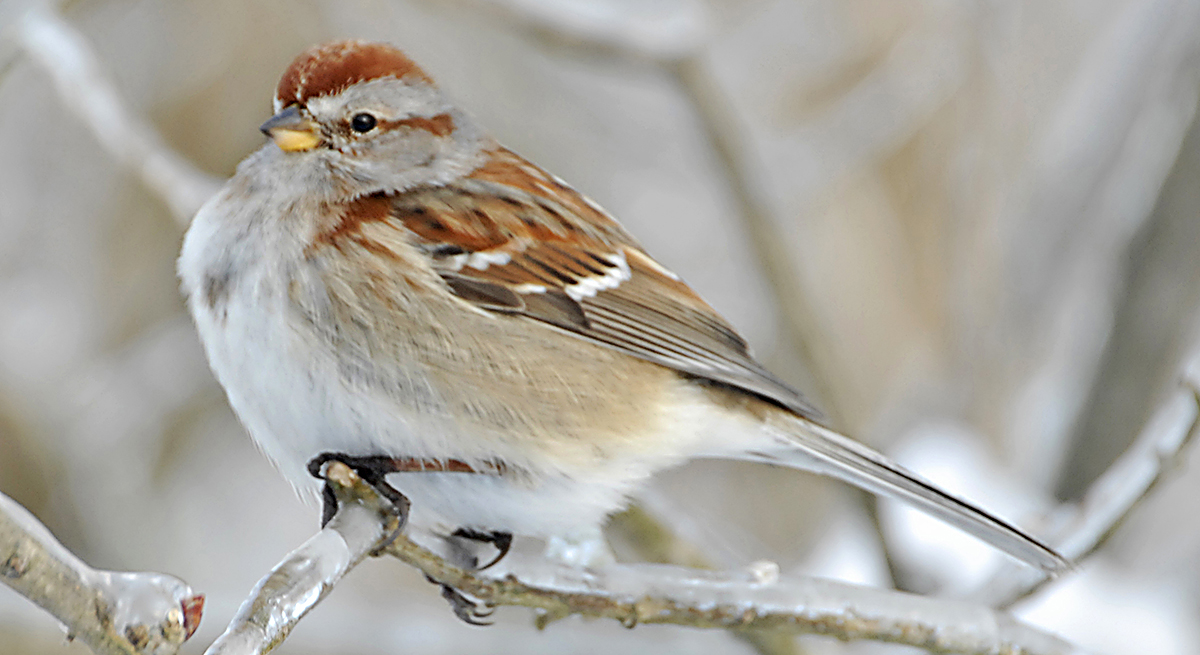
American Tree Sparrow
Winter is the only time to find this sparrow in Ohio. Despite their name, tree sparrows are most often found in weedy fields or can be seen busily searching for seeds on the ground underneath feeders. This sparrow has a long tail and is often described as ‘plump,’ which may be due to the cold weather they are often found in. Birds will fluff up their feathers in cold temperatures to retain more of their body heat. The tree sparrow has a rusty colored cap and eyeline, similar to the field sparrow, but it also has a bi-colored bill and a central spot on their chest that sets them apart from other sparrow species.
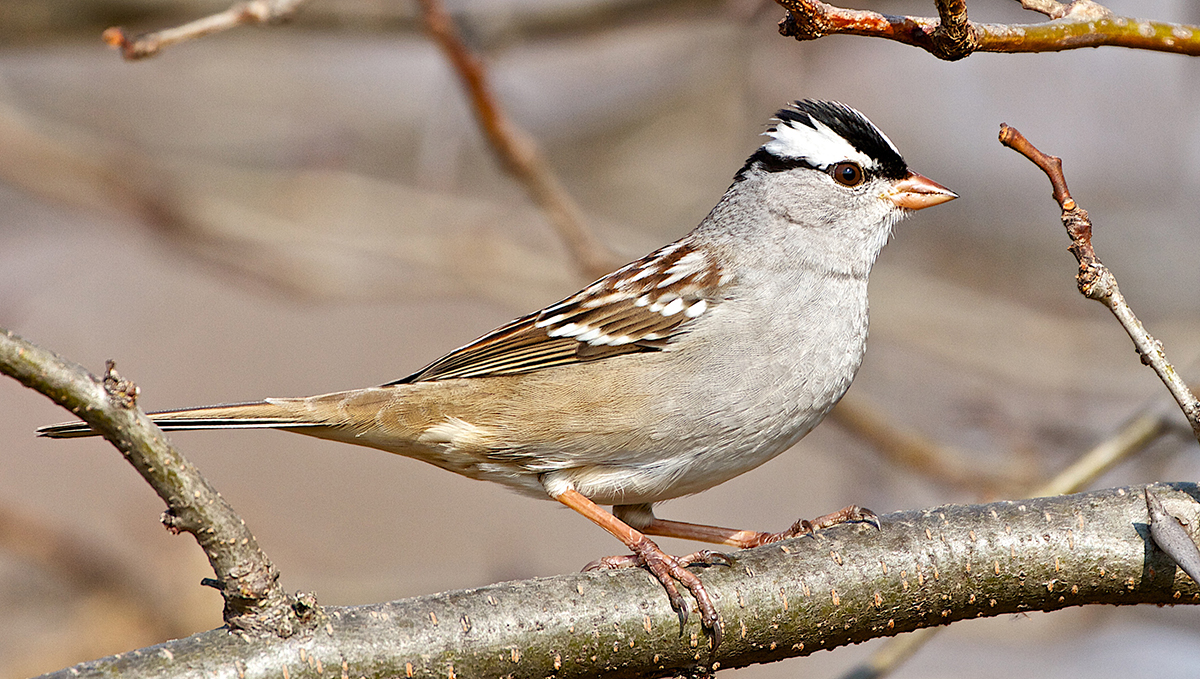
White-crowned Sparrow
In the eastern United States, white-crowned sparrows are primarily winter visitors. This large, gray sparrow has a long tail and a remarkable head. It often looks as if the bird is wearing a black and white striped helmet. Juvenile white-crowned sparrows have the same pattern on their head, but the stripes are brown and gray instead of black and white. Look for this sparrow in overgrown fields and along roadsides. It can also be found foraging on the ground near bird feeders.
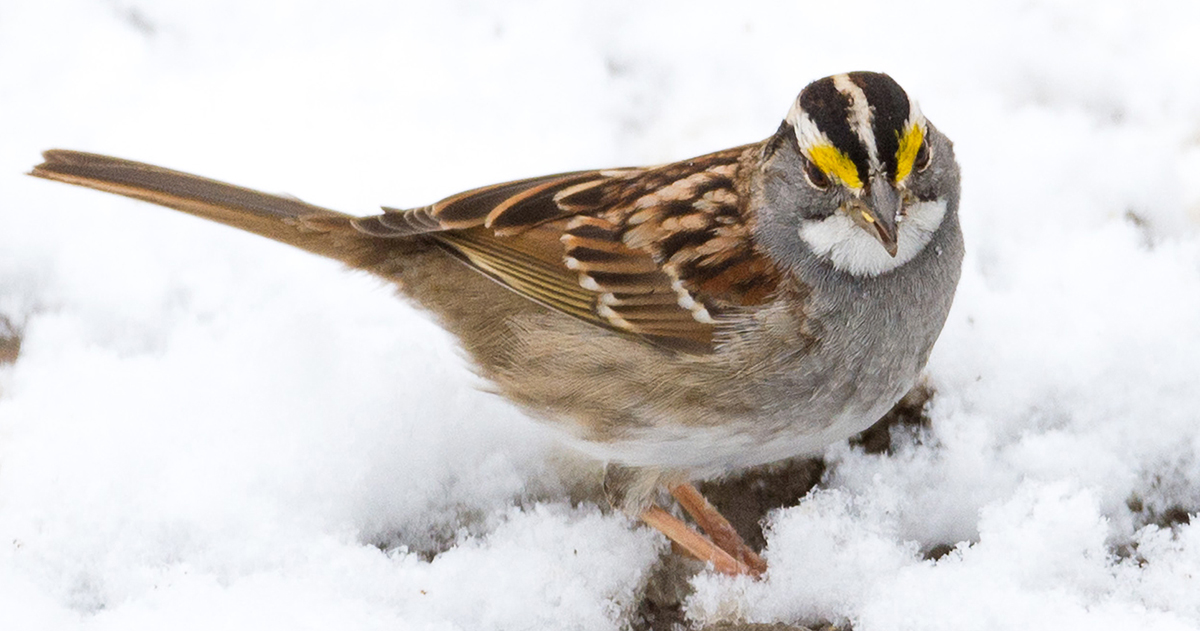
White-throated Sparrow
Often confused with the white-crowned sparrow, this winter sparrow has similar striping along the head. One key difference is that white-throated sparrows have yellow lores, or bright patches of color near the eyes. While many birds do not sing in winter, you can often hear the soft song of white-throated sparrows as they sing oh-sweet-Canada. This is a sparrow that readily visits bird feeders, where they can be found feeding on the ground. They are also commonly found in forests and edge habitats, where they will search for seeds in the leaf litter.
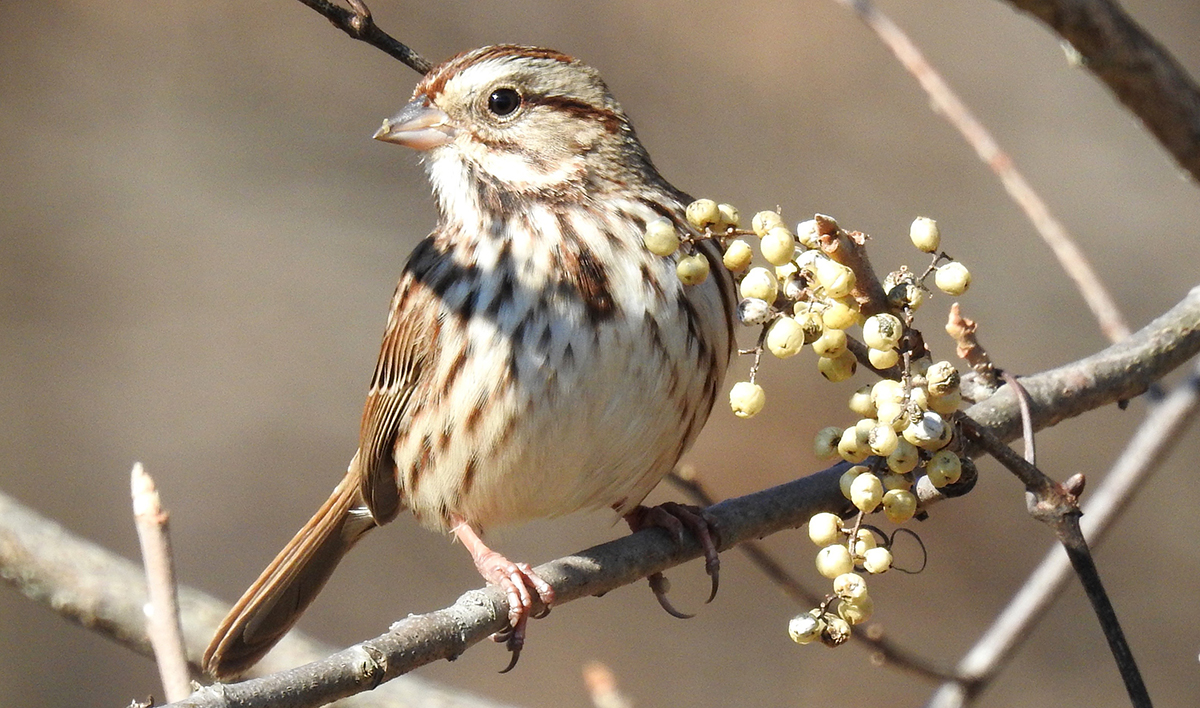
Song Sparrow
This medium-sized, streaky sparrow can be found in Ohio year round. They are overall brown and gray with prominent brown streaks on their breast that often converge into a single brown spot. This sparrow eats a varied diet, focusing on insects in summer but also eating seeds and berries year round. Song sparrows can be found in a variety of habitats, including grasslands and agricultural fields but also in open forests and suburban areas. Look for them perched on small shrubs or on top of tall grasses to sing their song or find them foraging on the ground for food.
Wonderful article with terrific photos! Thank you!
Love to watch the sparrow birds out my office/den window. They brighten any winter’s day.