
GABBY POWER
Environmental Educator, Inniswood
It’s the most wonderful time of the year! That’s right, springtime! Nothing quite compares to the sights and sounds of spring as the earth comes alive after a long, dreary winter. Sights like skunk cabbage, harbinger-of-spring and snow trillium erupting from the frosty ground imbue a sense of renewal and vitality throughout the forest. The crisp morning air and sunrise brings the melodic songs of birds anxiously hoping to find a mate. Melting snow contributes to the calming sound of water flowing through creeks and streams and filling vernal pools. As the air begins to warm, insects take wing and can be heard buzzing near early-blooming plants, such as vernal witchhazel, as they sip nectar and forage for pollen. These small changes can be easy to miss, but one sure sign of the arrival of spring is the welcoming serenade of Ohio’s amphibians.
Frogs and other amphibians spend the winter in torpor, an involuntary period of slowed metabolism triggered by low temperatures, which allows for energy conservation. When temperatures rise just enough in the early spring, male frogs will begin calling for a mate. The timing of amphibian song is directly related to species, as well as air and water temperatures, and can fluctuate depending on those factors. In recent years, frogs have been heard calling in our parks as early as the first week of March. As temperatures rise and day length increases, more and more species will join in on the chorus. Each species has its own unique call that other individuals of the same species are able to recognize. This is important because different species of frogs can breed in the same body of water.
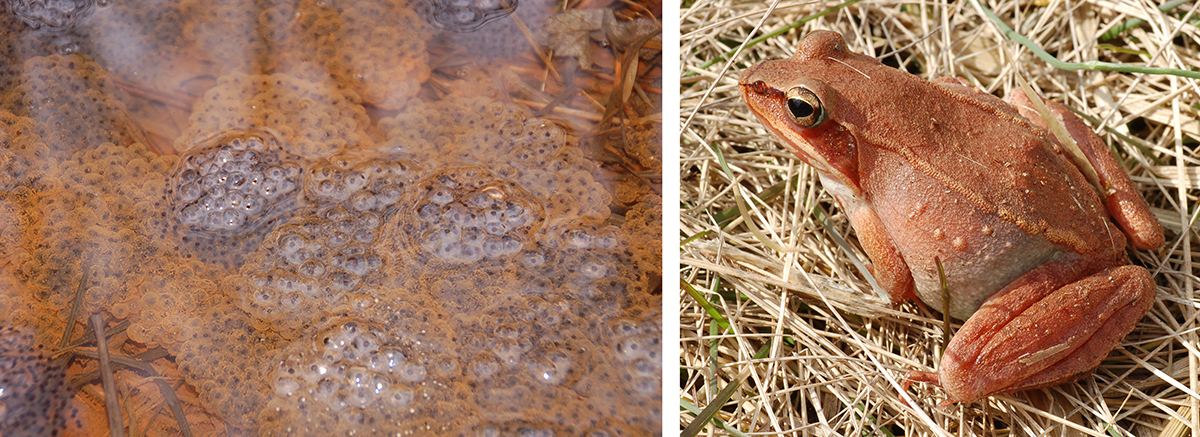
A few species of frogs in particular are early risers, coming out to breed even when there is still ice present on the water. This includes wood frogs, as well as two species of tree frog, the spring peeper and the western chorus frog. Although not commonly seen or heard, the wood frog, Lithobates sylvatica, is the earliest of Ohio amphibians, beginning to call as early as February. Their warbling croak is almost over as soon as it starts as they quickly work their way back to the forest floor in about a week’s time. This black-masked, brown terrestrial frog breeds in woodland vernal pools, laying up to 1,500 eggs per clutch.
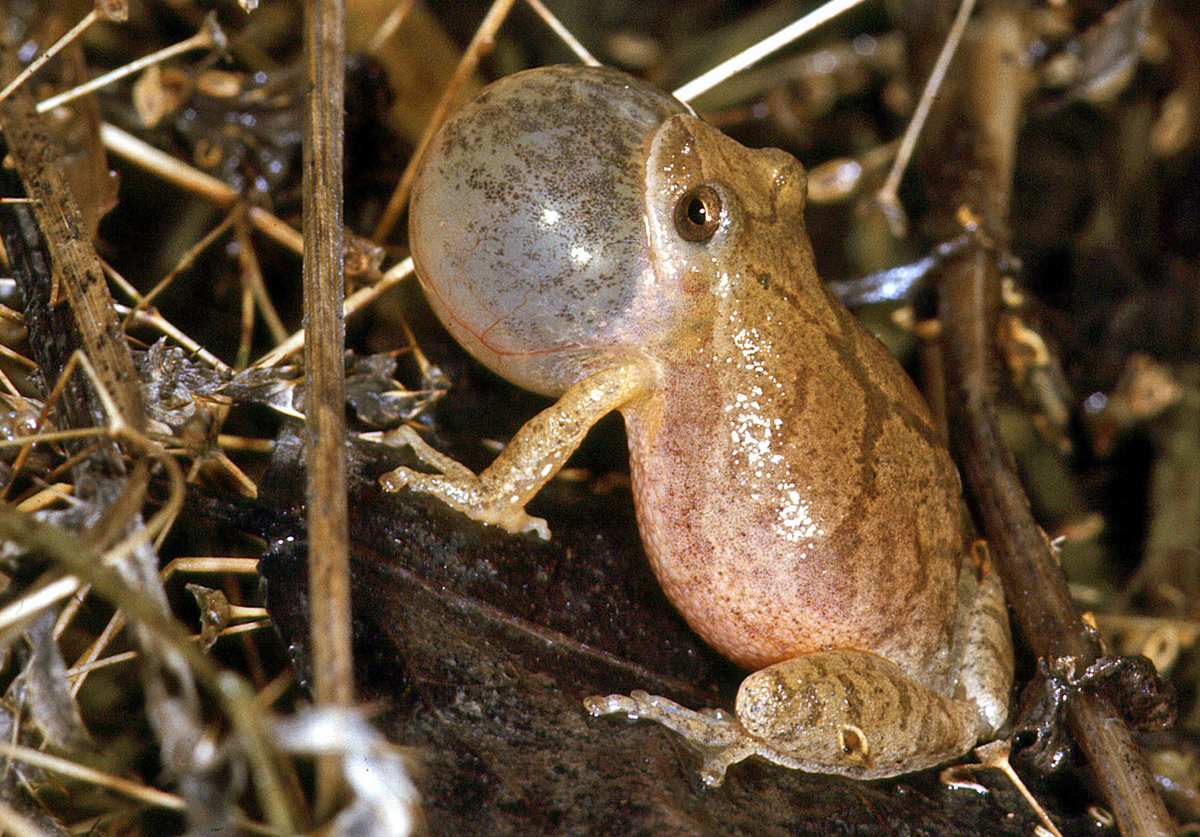
Both the spring peeper and the chorus frog are relatively small, with adults reaching lengths of about one and a half inches. Although similar, they can be distinguished by their markings and the calls they make. The spring peeper, Pseudocris crucifer, can be easily identified by the dark “X” on its back. Just like its common name would suggest, it makes a peeping call that sounds similar to a baby bird. Males will often sing in trios. The whistle-like peep is made around 20 times per minute, although the faster and louder the call, the more likely it is for the male to be chosen by a female. Between 300 to 1,500 tiny eggs are laid on underwater vegetation.
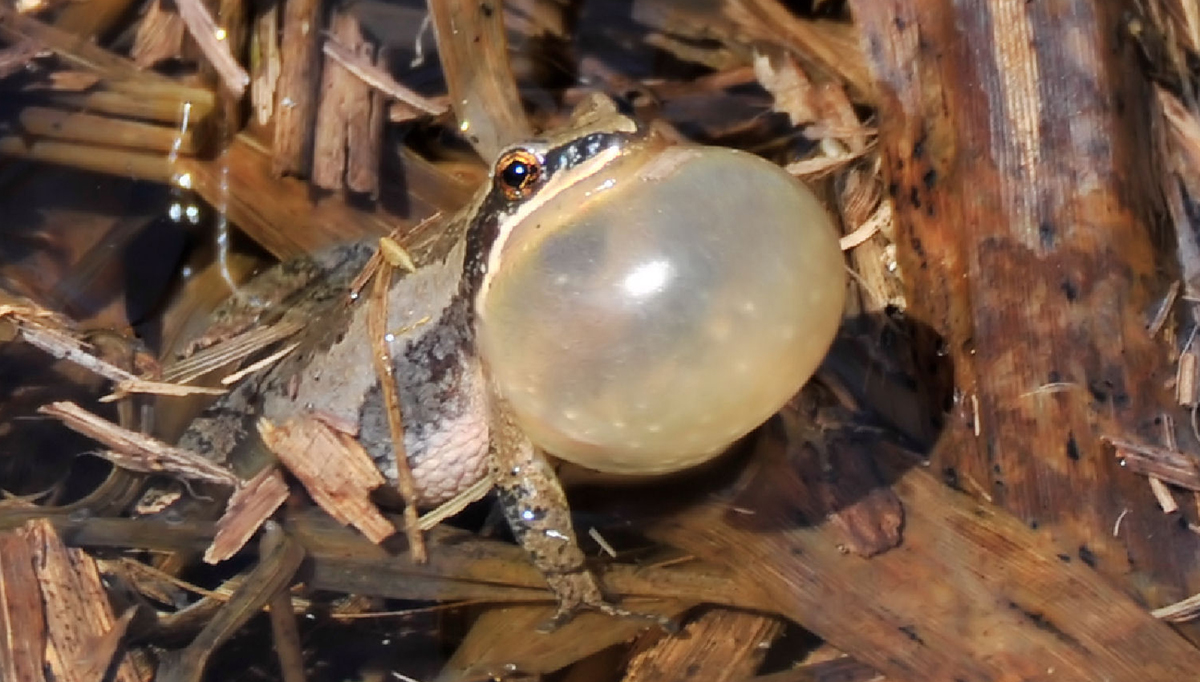
Western chorus frogs, Pseudocris triseriata, can be recognized by the three dark stripes that run from their nose down their back. Their call can be described as the sound made when running a finger across the edge of the teeth of a plastic comb. Eggs are laid in loose, irregular clusters of 20 to 70 eggs each, totaling up to 1,500 eggs.
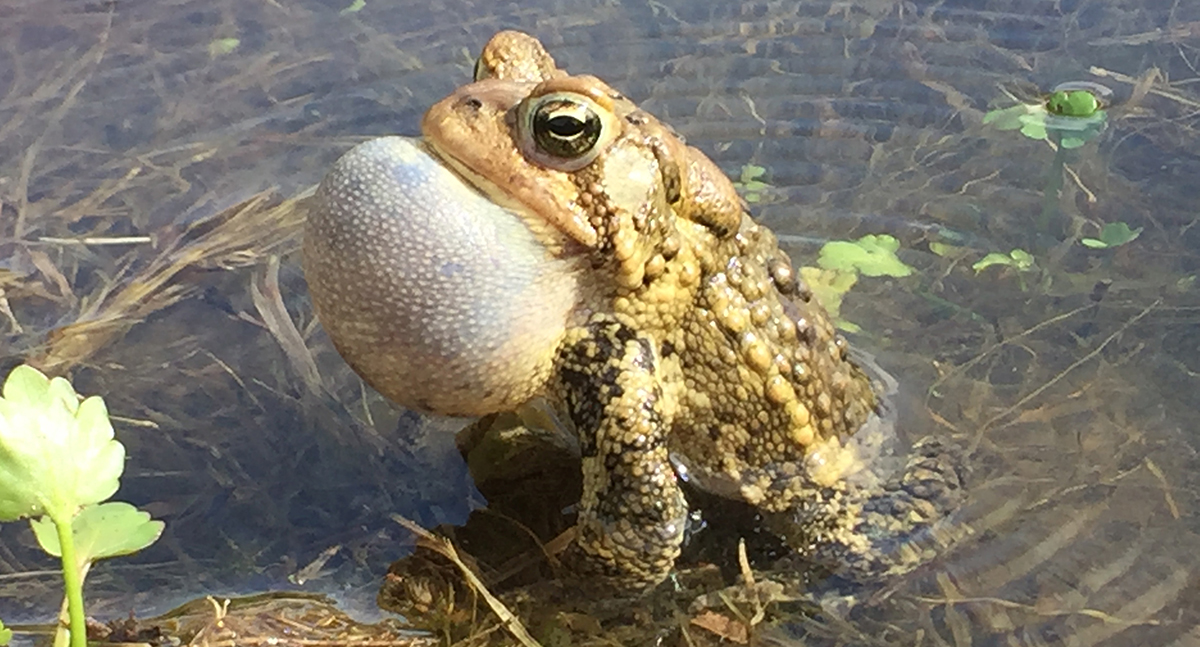
By early April, American toads, Anaxyrus americanus, will join the orchestra with their high pitched musical trilling. Males, which can be identified by a dark patch on the throat, arrive at potential breeding sites earlier than females. Once there, they will select their ideal location in the breeding pool, and begin to call in the females. The trilling call lasts from between four to 20 seconds. After the female arrives, she will determine which toad to mate with depending on the quality of both his trill and his defended territory. Eggs will then be laid in two spiraling rows containing 4,000 to 8,000 eggs. By mid May, toads will move back to forest floors and garden beds, and tiny black tadpoles can be seen in areas with shallow water.
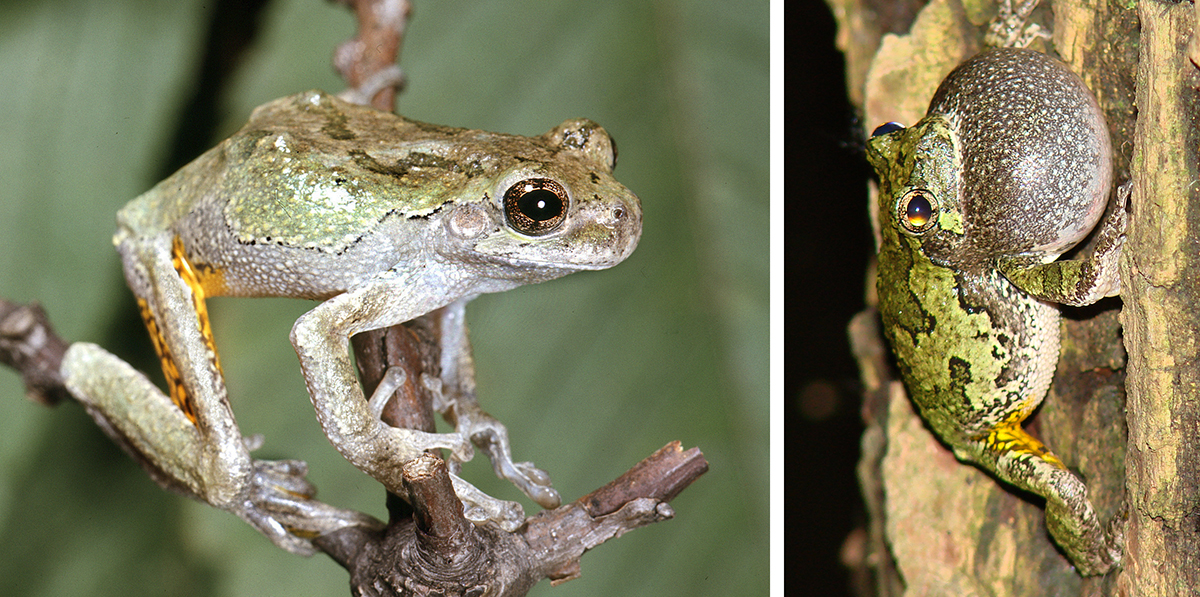
Mid April brings with it the one- to three-second trilling song of gray tree frogs, Dryophytes versicolor. During the breeding season, they will begin the day by calling from high up in the trees, and will make their way down to the water later in the day. Around 1,800 eggs will be laid in a raft at the surface of the water. They will then move back to the trees where they will stay camouflaged, feasting on invertebrates. Gray tree frogs will continue to sing throughout the summer, especially before and after rain.
If you’re hoping to spot and listen to these amphibians, spring is the best time to do so as they will become much quieter and inconspicuous after the breeding season ends. Visit one of the many wetlands or vernal pools in the Metro Parks to experience the wonders of springtime for yourself.
Very informative! Thanks!