Elaine Hall
Assistant Resource Manager
Any good naturalist keeps a phenological calendar. A phenological calendar is a record of the timing of recurring natural events such as when flowers bloom, birds migrate, and insects emerge, all tied to local weather and climate rather than fixed calendar dates.
For our resource management team we keep the phenology of our invasive plant species and when it’s time to effectively manage and eradicate them. For example, keeping an eye on when the callery pear buds are about to explode or when teasel rears its ugly head.
Nearly a month early, our team has already started tackling poison hemlock and wild parsnip.
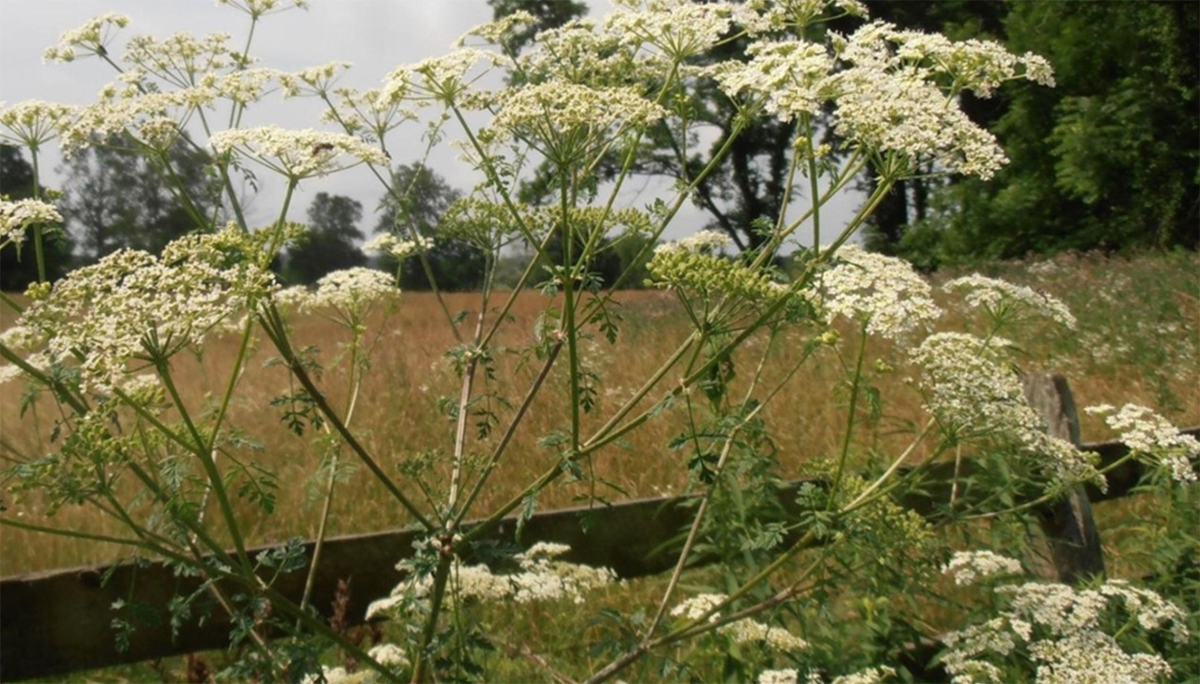
Poison hemlock (Conium maculatum) is a highly toxic, invasive biennial plant that has become widespread across Ohio. Once relatively uncommon, it is now a serious and growing threat in landscapes, roadsides and agricultural areas. Timing of management for this invasive species is essential for success.
Poison hemlock is considered one of the deadliest plants in North America. All parts of the plant—roots, stems, leaves, flowers and seeds—contain toxic alkaloids that can cause respiratory failure and death if ingested. Toxins can enter the body through ingestion or mucous membranes (eyes, nose). It does not typically cause skin rashes, but handling is still dangerous due to accidental transfer.
Poison hemlock follows a biennial life cycle. In early spring in its first year it grows as a rosette, a cluster of leaves, near the ground and overwinters this way. While it’s easy to overlook and miss patches or singular plants at this stage, it is also the easiest and most effective time to control poison hemlock before it starts producing seed.
In its second year it bolts, rapidly growing 6-10 feet tall, and begins to flower. Once plants are flowering control is largely ineffective for preventing spread. Flowers yield thousands of seeds capable of remaining viable for four to six years. Which means long-term management.
Control methods can consist of both mechanical and chemical application. Herbicides are the most effective and safest approach, and what our resource management team focuses on as we battle invasive intruders trying to cover hundreds of acres across the district. Hand-pulling, while wearing gloves, long sleeves and eye protection can be an option to manage very small infestations. Mowing, tilling or other methods of cutting such as with string trimmers or saws all have very limited effectiveness, and are not recommended due to the toxins’ ability to aerosolize.
Because of the persistent seed bank, it’s necessary for our team to have a long-term management plan. Multiple years of monitoring and treatment are usually required. Replanting treated areas with competitive native vegetation helps combat poison hemlock.
All things considered we get a lot of questions about which plant is in-fact poison hemlock, because there are a fair amount of look-alikes and it’s important to make sure we’re interacting with or avoiding the right plant
For Poison Hemlock look for:
● Fern-like leaves (parsley-like)
● Smooth hairless stems and leaves
● Stems have purple blotches/spots
● Hollow stems
● Musty or unpleasant odor when crushed
● Clusters of small white flowers in an umbrella-shape
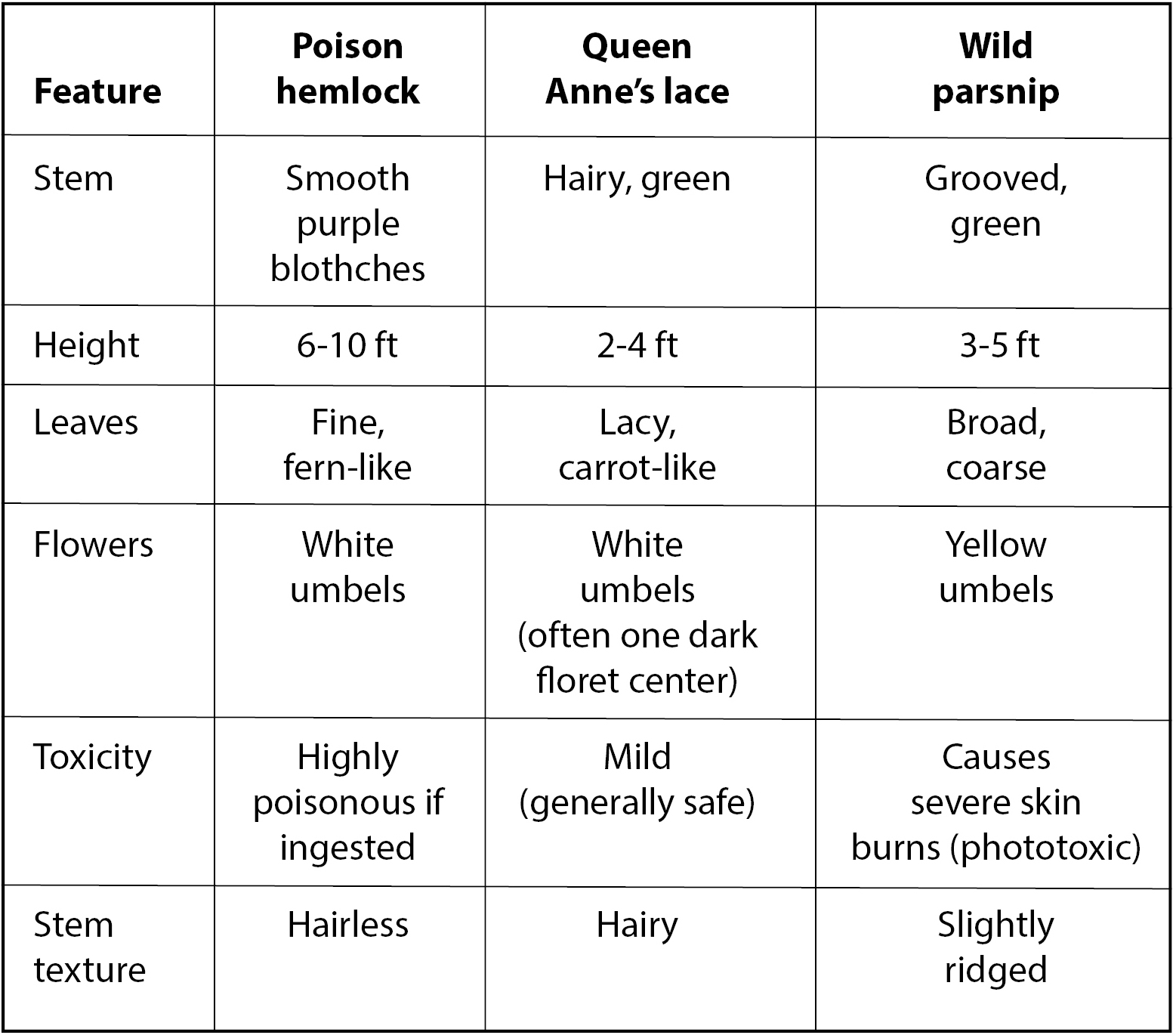
A family full of well known members including celery, parsnip, and parsley, the carrot family – Apiaceae – contains many safe faces. But many of their wild uncultivated relatives possess some form of harmful toxin if bothered. Below is a look-alike comparison of the most common safe look-alike, Queen Anne’s lace, with the two most harmful related invasives – poison hemlock and wild parsnip. With several look-alikes in the same plant family, careful identification is just as important as timing in safely tackling this dangerous invader.
Look-alikes comparison
Other look-alikes:
● American Angelica
● Giant hogweed
● Cow parsnip
● Water hemlock