Elaine Hall
Assistant Resource Manager
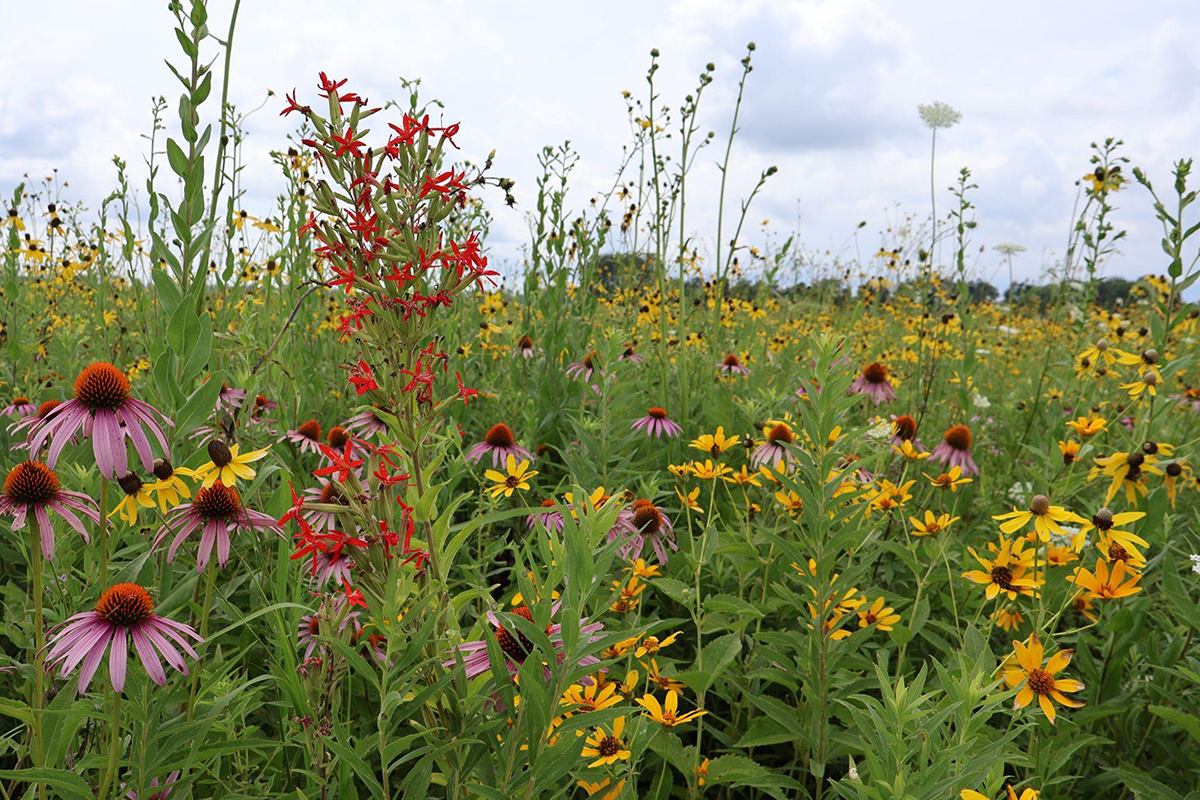
When I was a naturalist one of my favorite programs to lead in July was a prairie walk. At the beginning of the program I would set the tone with a passage from A Sand County Almanac by Aldo Leopold.
A Sand County Almanac by Aldo Leopold
* * *
“Prairie Birthday”
“During every week from April to September there are, on the average, ten wild plants coming into first bloom. In June as many as a dozen species may burst their buds on a single day. No man can heed all of these anniversaries; no man can ignore all of them. He who steps unseeing on May dandelions may be hauled up short by August ragweed pollen; he who ignores the ruddy haze of April elms may skid his car on the fallen corollas of June catalpas. Tell me of what plant-birthday a man takes notice, and I shall tell you a good deal about his vocation, his hobbies, his hay fever, and the general level of his ecological education.
Every July I watch eagerly a certain country graveyard that I pass in driving to and from my farm. It is time for a prairie birthday, and in one corner of this graveyard lives a surviving celebrant of that once important event.
It is an ordinary graveyard, bordered by the usual spruces, and studded with the usual pink granite or white marble headstones, each with the usual Sunday bouquet of red or pink geraniums. It is extraordinary only in being triangular instead of square, and in harboring, within the sharp angle of its fence, a pin-point remnant of the native prairie on which the graveyard was established in the 1840’s. Heretofore unreachable by scythe or mower, this yard-square relic of original Wisconsin gives birth, each July, to a man-high stalk of compass plant or cutleaf Silphium, spangled with saucer-sized yellow blooms resembling sunflowers. It is the sole remnant in the western half of our county. What a thousand acres of Silphiums looked like when they tickled the bellies of the buffalo is a question never again to be answered, and perhaps not even asked.”
* * *
As our nation celebrates its 250th birthday this 4th of July, our prairies too will be celebrating their birthday with a fireworks display of their own. Pops of vibrant red from royal catchfly, purple wisps of bergamot and echinacea, a sea of yellow and gold of multiple asters. Visiting any park while the show is on is sure to cause many to pause. Add the reading of Aldo Leopold’s passage while taking in a prairie in full bloom always gives me chills. For me, our prairies are hallowed grounds. 99% of the original prairie ecosystems of our country are gone. Ohio alone only had 960,000 acres of prairie and now only tiny fragments exist, making them and the plants that grow in them rare and endangered.
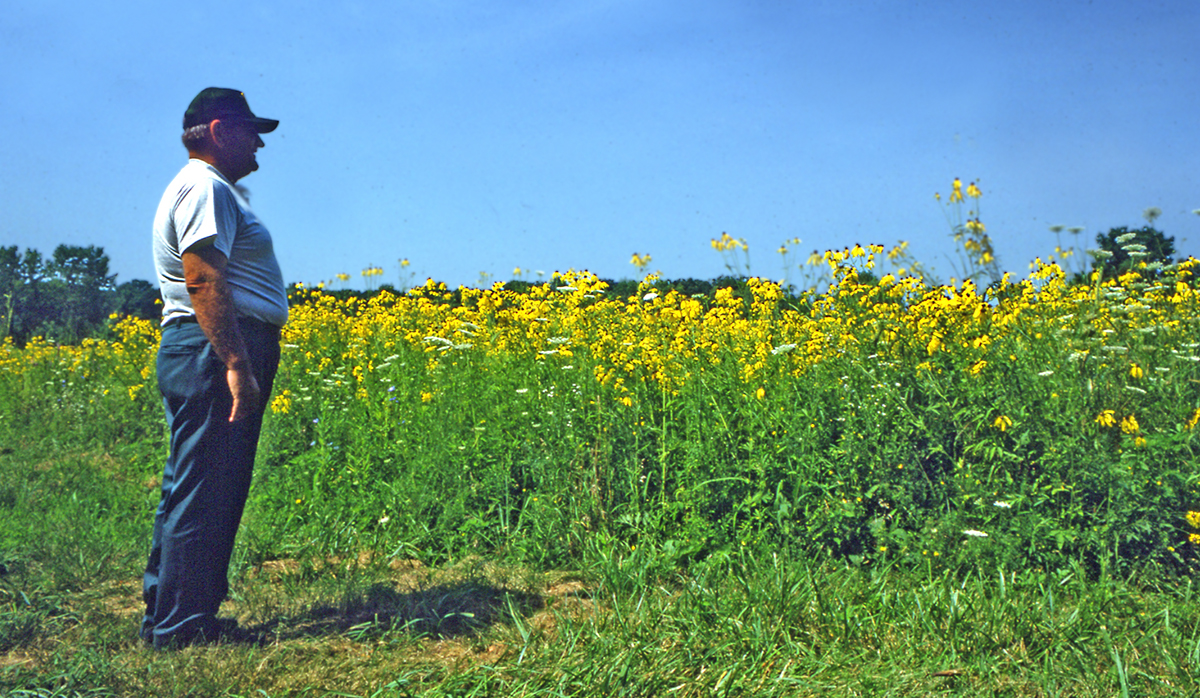
Nearly all prairies you pass in our parks’ have been restored. What forethought someone had to have had to envision such a landscape. “What a thousand acres of Silphiums looked like when they tickled the bellies of the buffalo is a question never again to be answered, and perhaps not even asked.” … Except by someone named Jack McDowell.
Beginning in the 70s with a few handfuls of seeds he’d collected from remnant prairies of the Darby Plains, Jack McDowell created the first Metro Parks reconstructed prairie. His vision has led to the restoration of more than 1,500 acres of native prairie and to the preservation of the original genetics of the Darby Plains prairie plants. Jack even began discussing the idea of returning bison to the Darby prairies in the mid-90s, and saw this dream come true in February 2011 with the reintroduction of bison at Battelle Darby Creek Metro Park.
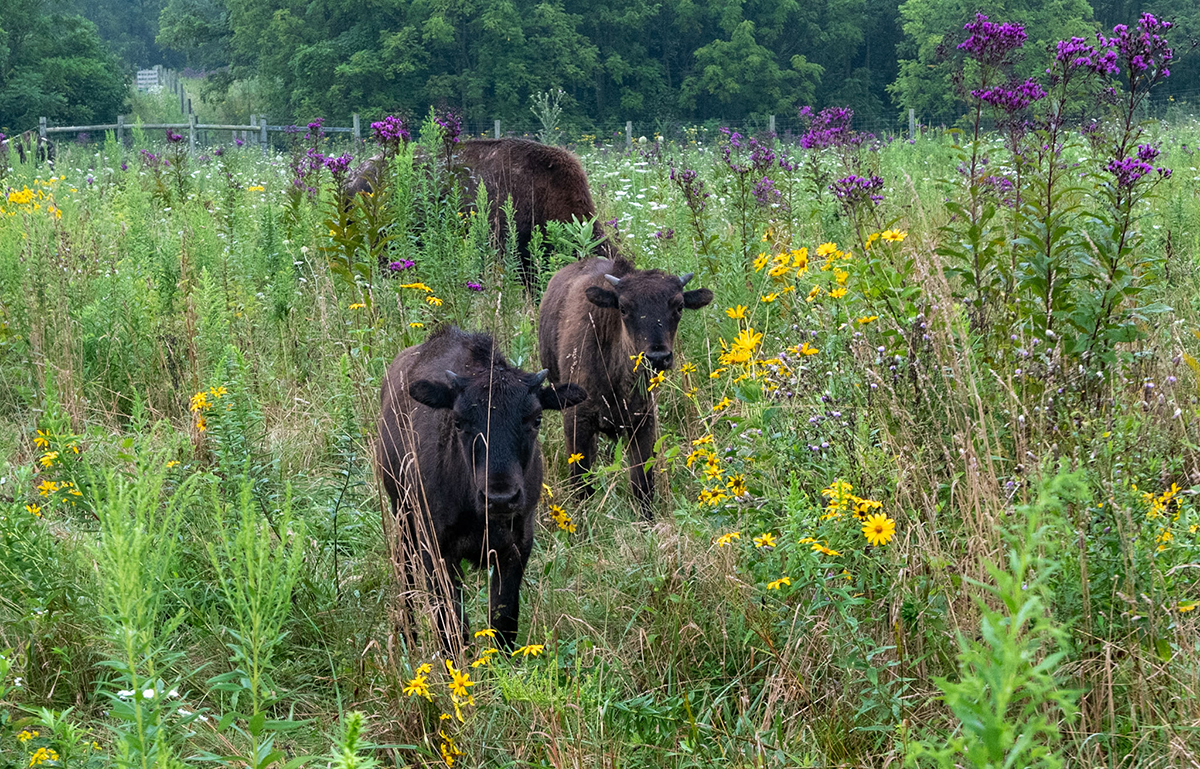
Protecting prairie remnants, and restoring long-gone prairie habitats, is a key goal for Metro Parks’ resource management. Around the same time our nation declared its independence the prairies succumbed to agricultural development. But a remnant prairie is one that has remained intact throughout time. Plants that grow there have persisted from presettlement. Many are found in pioneer cemeteries such as Smith and Bigelow Cemeteries that the Ohio Department of Natural Resources Division of Natural Areas and Preserves manages.
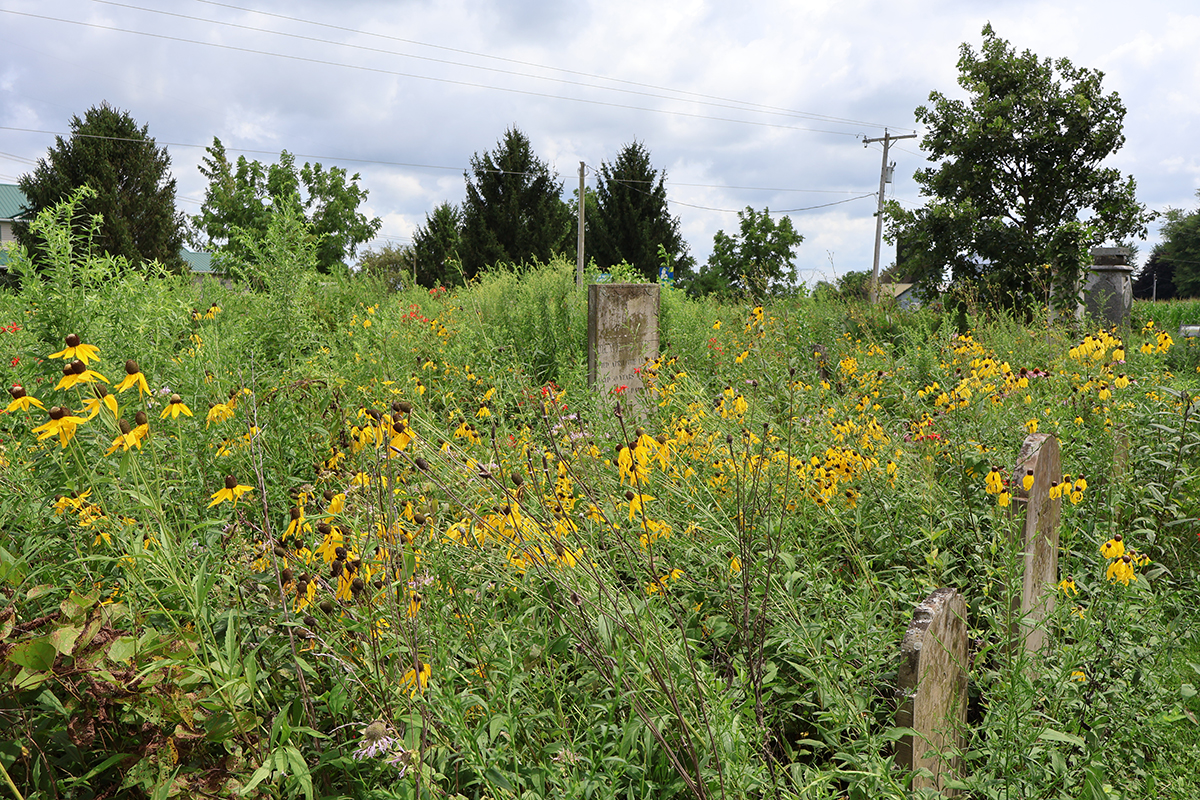
Today Metro Parks manages several remnant prairies, but the most significant is State Nature Preserve W. Pearl King. Annually, Metro Parks spends time at these remnants eradicating invasive species and overgrowth, conducting prescribed fire, and still harvesting seed just as Jack started doing nearly 60 years ago. In time, our restored prairies themselves have become a source of native seeds of Darby Plains grasses and forbs. Seeds of prairie flowers are collected by hand and combine. For prairie grasses, Metro Parks now uses seed stripper machinery to collect seeds in bulk. Today we continue to utilize this seed stock to restore prairie habitats at various projects, such as our H2Ohio sites or newly acquired properties.
This July I encourage you to pause and take a moment to find a patch of prairie, enjoy the show, and celebrate its birthday.