Parker Weber
Social Media and Communications Intern
Battelle Darby Creek’s bison had their biannual veterinary visit this May. Here’s how the Metro Parks team carry out this event and the stages involved, so that the bison can get their health checkups and no one, bison or human, gets injured in the process.
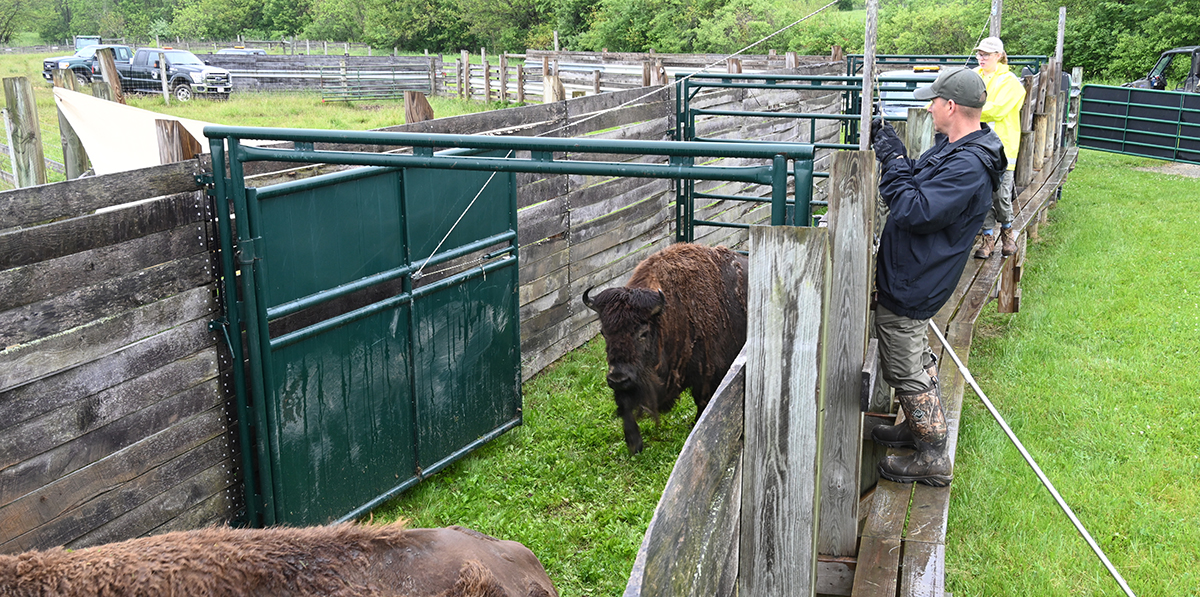
Before anything can happen, the bison need to be moved from their pasture, where they spend their days grazing and running around, to a gathering pen. This pen gives the bison the space they need to wait for the vet to arrive, while also keeping them at the ready.
However, the bison ultimately get to decide if they want to go into the gathering pen or not. This time, for whatever reason, they simply didn’t want to! The stubborn bison had other plans. They declined the invitation into the gathering pen and chose to stay out in their pasture.
The vet visit had to be rescheduled for the following week. On the morning of the new date, the bison were much more enthusiastic about their vet visit. All except one were ready and waiting in the gathering pen when Metro Parks staff checked in on them.
Once the bison were safely secured in the gathering pen, staff started preparing while we waited for the vet to arrive. During this time, we rehearsed how the bison would be funneled from the gathering pen through a system of gates and chutes. The gates separated the herd into smaller groups of three to four bison, and then the chutes would separate those groups into a single-file line. This system enables the bison to move one at a time for their vet appointment. We also created a plan on how to move the one bison that did not want to go into the gathering pen, so it wouldn’t miss its vet appointment.
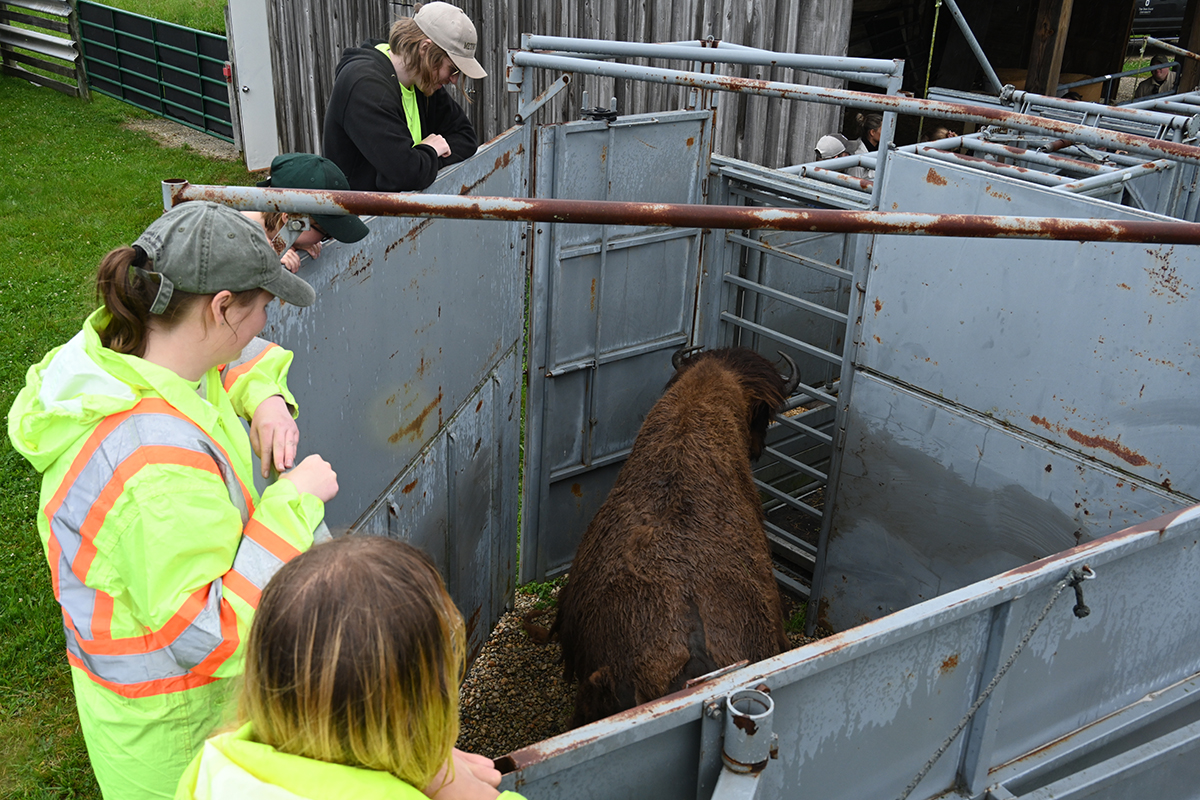
There were many moving parts to guiding the bison through this system, so each person was assigned a specific role to ensure we could guide them safely and effectively from place to place. Staff who had not helped with the bison vet visits in the past had the opportunity to join the experienced staff members to help them execute their task.
When we received the call from the vet that they were on their way, we all hopped in the trucks and headed over to the bison. The first step was to move the bison from the gathering pen into the gate system by guiding them through an open gate. The trucks formed a wall at the far side of the gathering pen and slowly crept across the field to encourage the bison to head towards the open gate that leads to the funneling system. Once the herd started moving into the gate system, they would get grouped up into more manageable numbers.
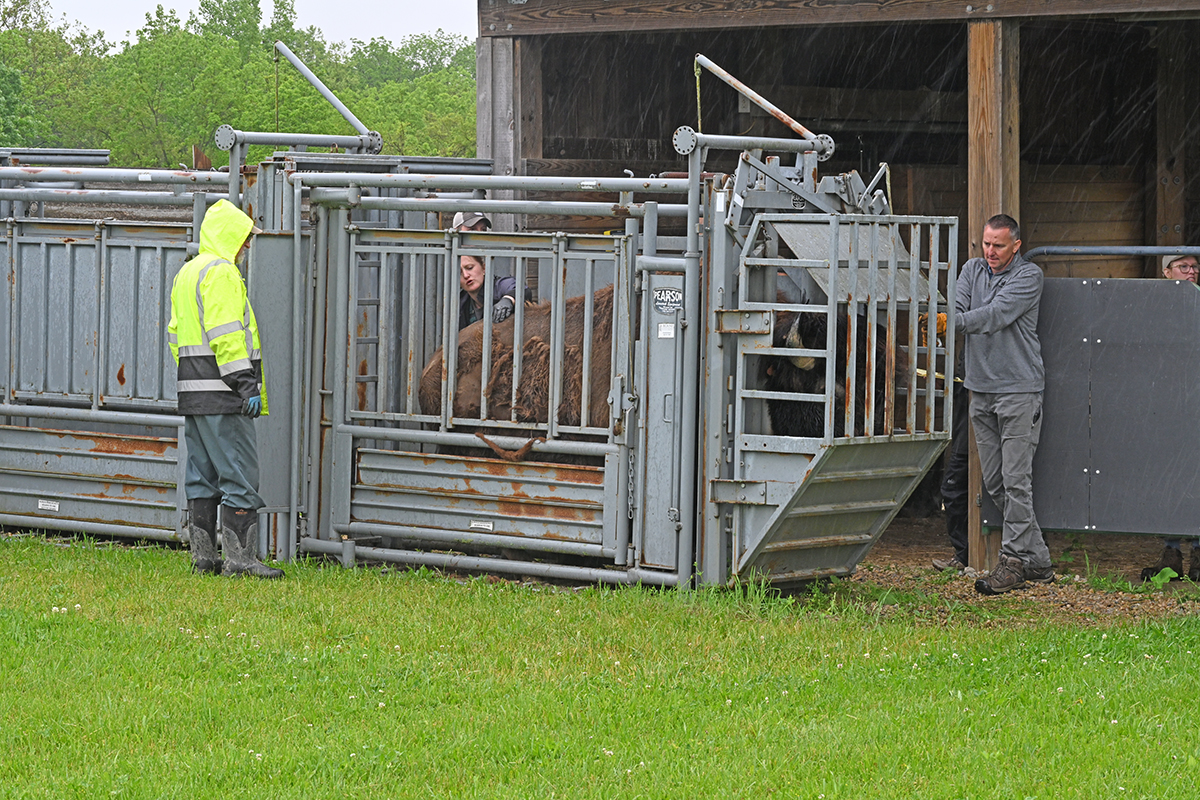
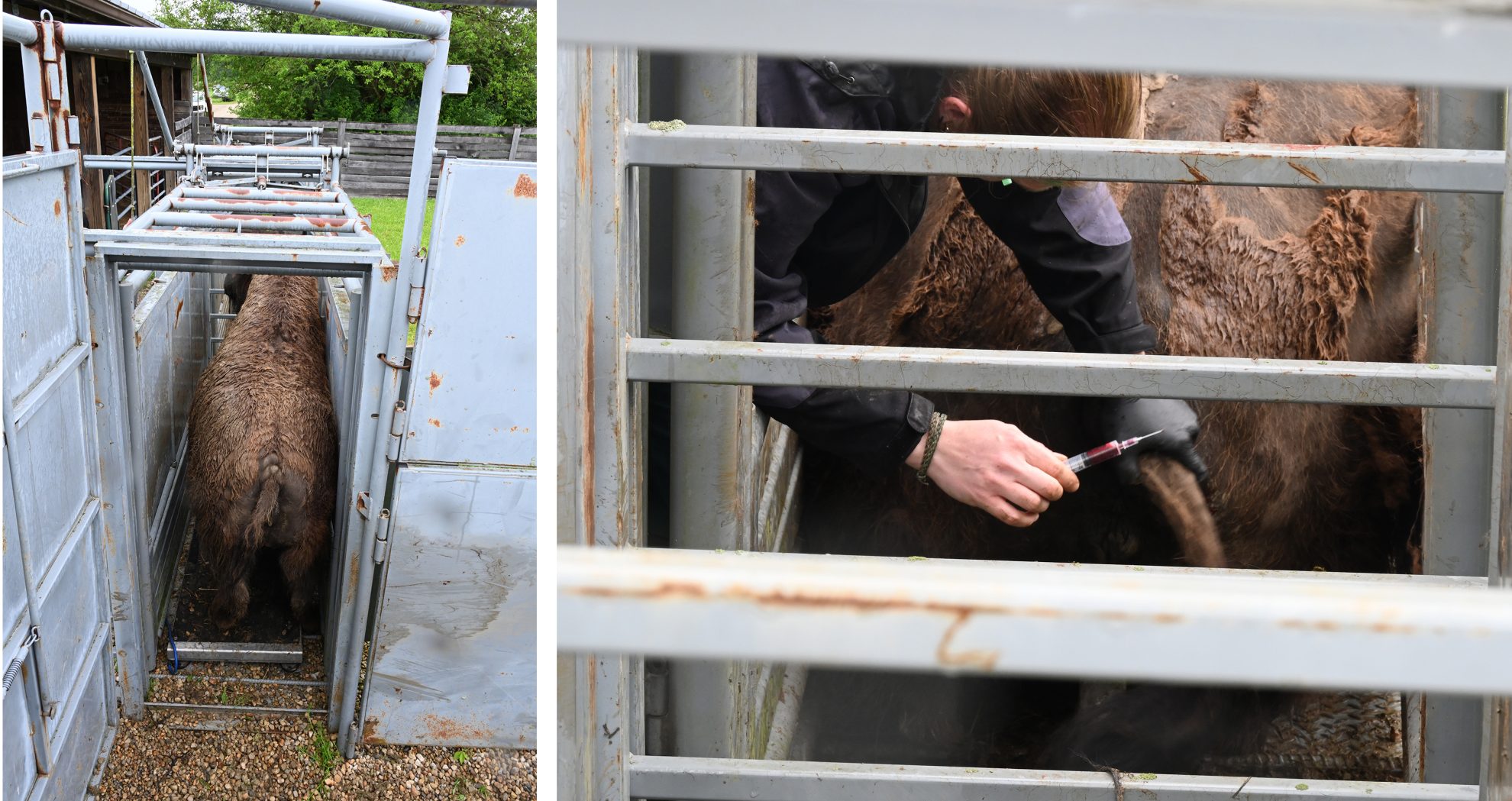
Once we had almost all the bison in the system of gates and chutes, a group of us then put our plan into action and worked on the last remaining and stubbornly reluctant bison. We enticed it to join all the other bison, using food treats. With all the bison out of the pasture, we broke up the small groups so that all the bison stacked up in a line. We moved them one bison at a time, into the chute system, and then into the ‘crush.’
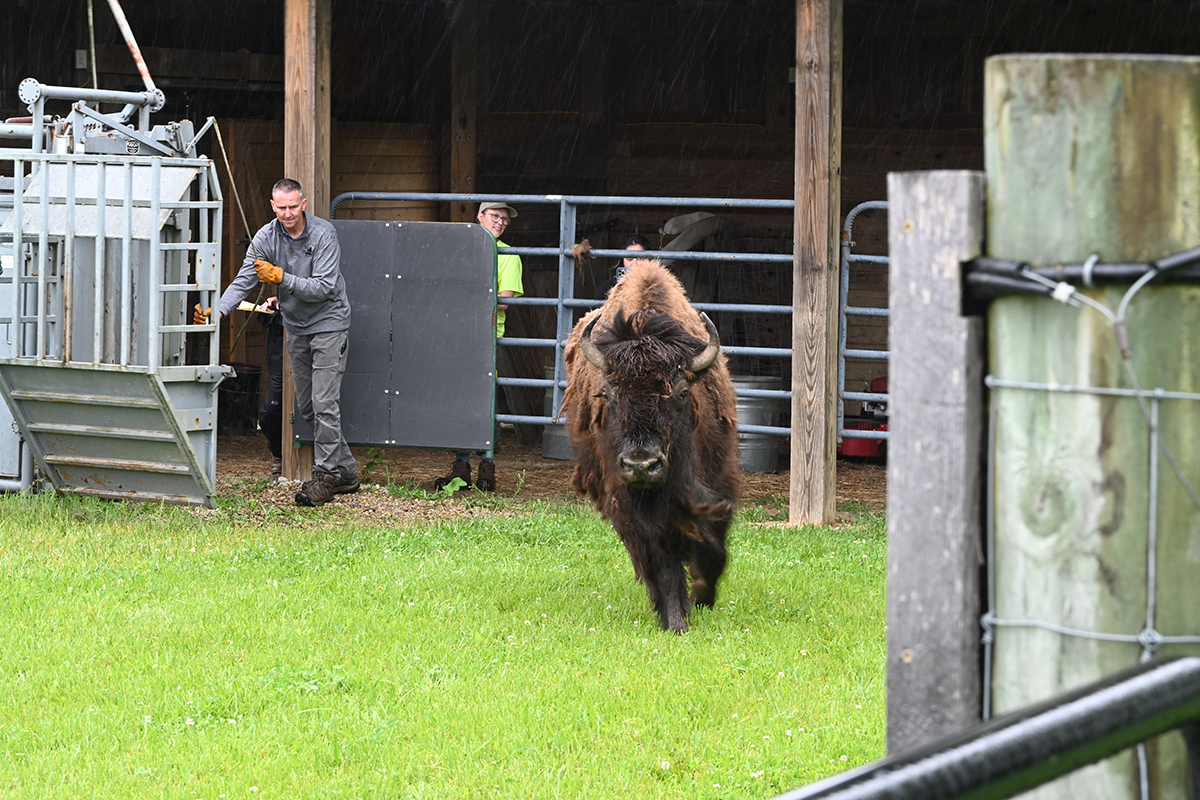
The ‘crush’ is a sturdy two-step cage where the bison would first of all be weighed, and then move to a section where the walls would close snugly around them, so that both the bison and vet would be safe during the check-up. One by one, after each bison was seen by the vet, they were then released back to the pasture, where they snacked on the grass and waited for the rest of the herd to finish up.
And the good news – the vet pronounced that all the bison are looking happy and healthy!
It was interesting to learn how the bison are monitored and cared for during routine veterinary visits, especially given the challenges of working with such large animals. Regular health checks like these seem essential for both the well-being of the herd and the long-term success of conservation and education efforts at the park. Thanks for sharing a behind-the-scenes look at the process.
We went to see them once at the park. UnFortunately for us, they were at the far end of a field . We could hardly see anything, but it still was fun. Franklin County and Columbus has wonderful parks !😀❤️