Maria Bergman
Battelle Darby Creek Naturalist
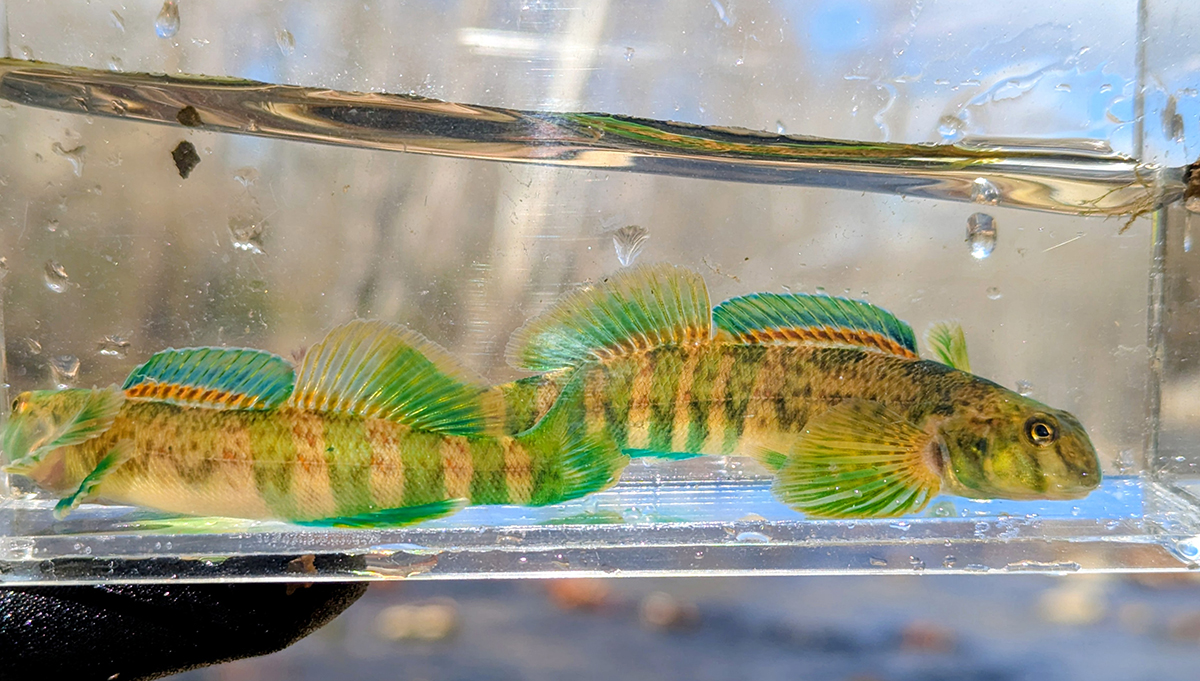
Let’s set the scene: it’s early summer. The water is still cold, all the recent snow and rainfall are slowly filling the stream, and it is warming up in the sunshine. The insects are starting to emerge, or crawl around out on the muddy creek beds. On the bottom of the stream, the beat of the flowing water sets the tune for courtship dances. Except it doesn’t always matter how you move – but often, how vibrant you can look!
What is the most universally fabulous color to wear when trying to impress a future love interest? Is it green? Blue? Potentially a vibrant orange? Maybe it doesn’t matter what color you choose, because you know you’ll impress with your ability to take care of any children in the relationship. In the world of darters, there’s a lot of approaches to be the top bachelor.
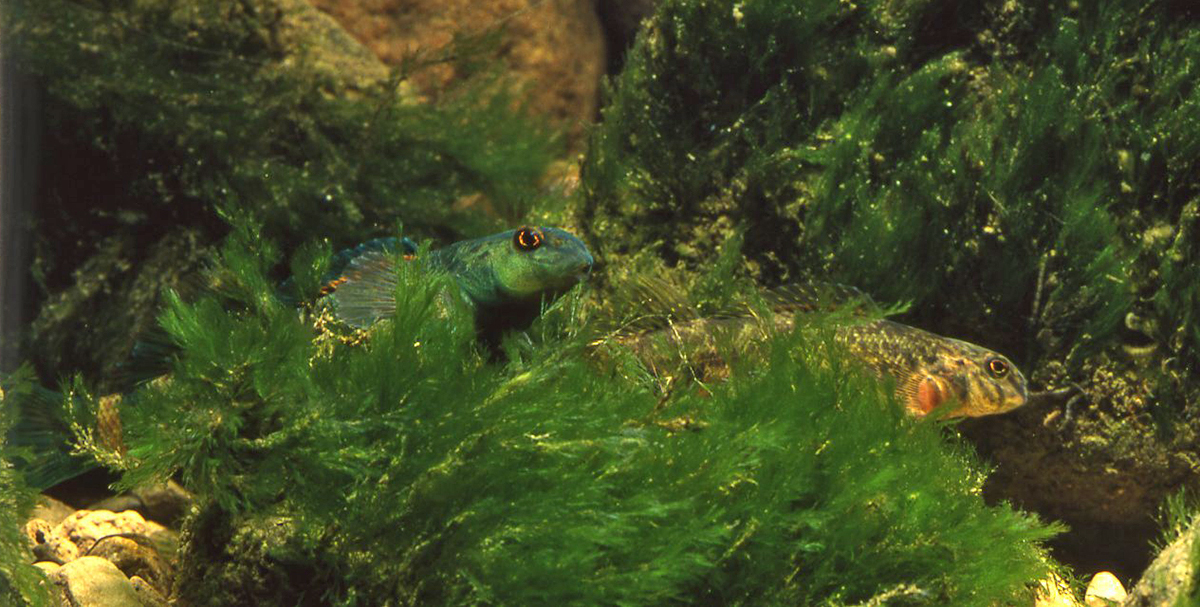
A darter is a small stream fish that lives in the shallow, fast flowing riffles of our local waterways. We have about 22 species of darters in Ohio, 16 of which can be found in Darby Creek. These fish are colorful, small and quick! Unlike the goldfish you might have had as pets, these fish will not be observed floating in the middle of the water table. Darters are known as a bottom-dwelling fish. Most lack a swim bladder, that pocket of air that allows fish to float. Which means if you want to observe them at Battelle Darby Creek’s living stream, you should observe around the rocks and not just go straight to the deep end. BUT! Let’s get back to the dating scene.
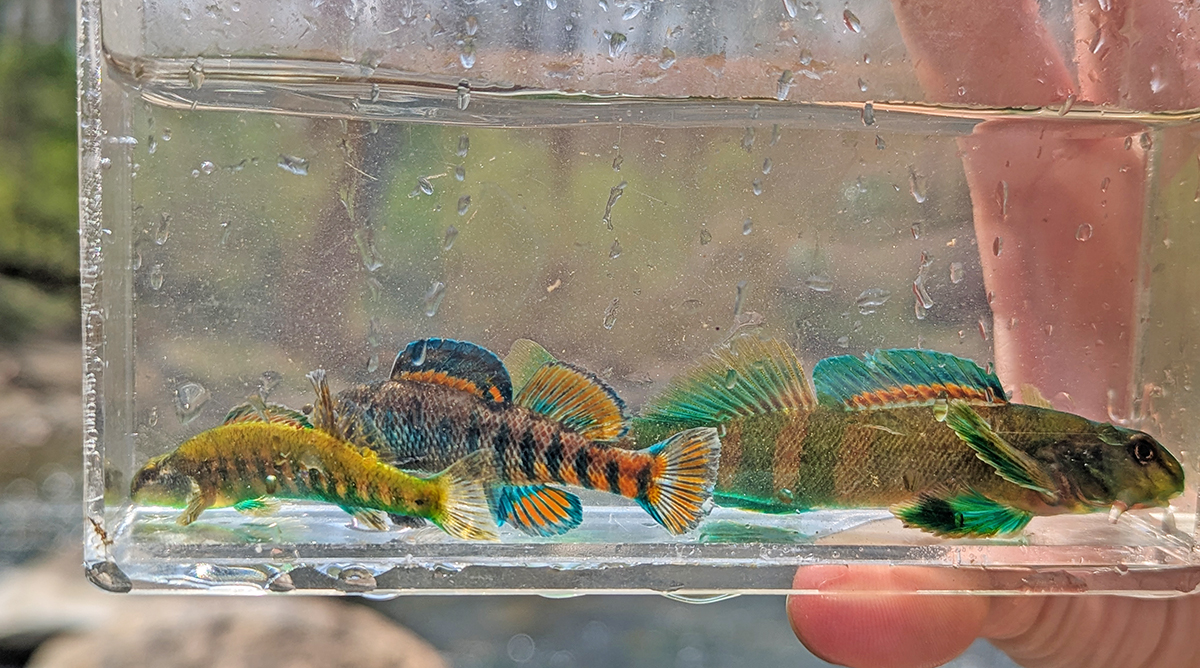
Males of species like the banded darter and greenside darter will flush up their scales into vibrant greens and blues that will blend with the algae strands around them. Great spots to blend and attach eggs. The more vibrant the color flush, the more you can intimidate the male competition while still showing off for the ladies. For species like the rainbow darter, that means puffing out bright blue cheeks, then flashing orange and blue stripes along their body. Species like the variegate darter will show off with colors in different stripes and spots – somehow without clashing too garishly.
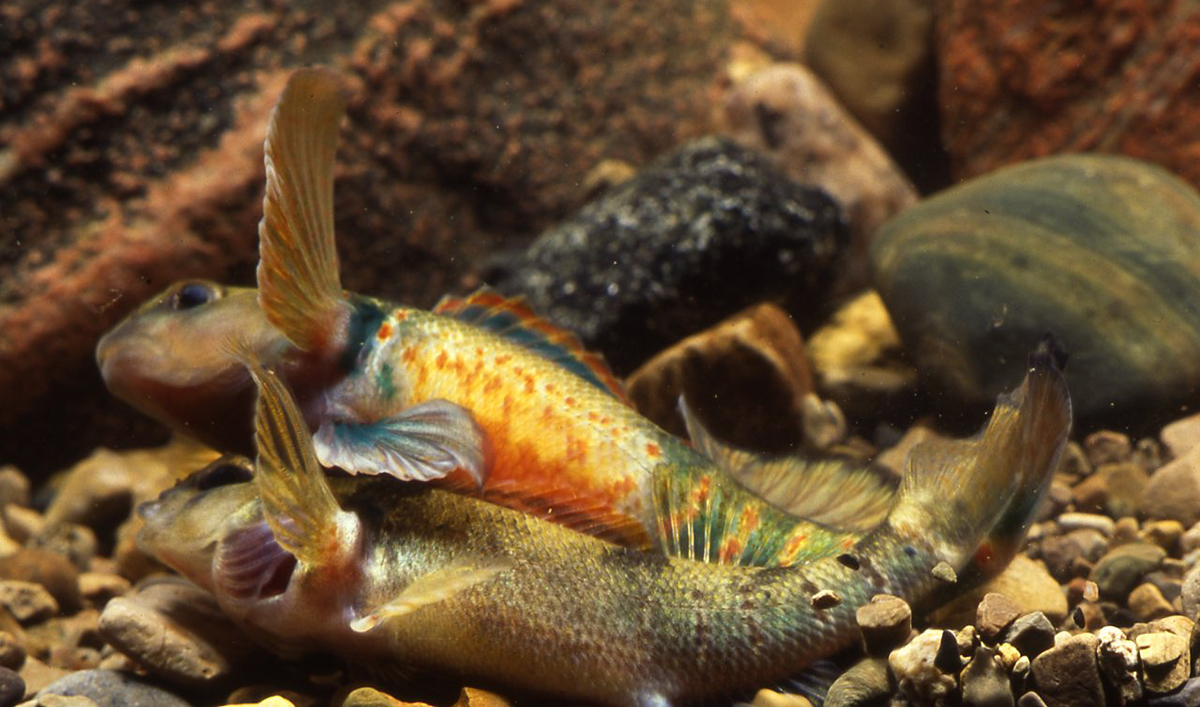
The more saturated the color in the spring, the more mature and reproductively ready they are. They don’t need to shop at Prada when their own body brings out the spring fashion line. The males who are not ready to breed will have light highlights of the colors and patterns their species is known for. Females are often much more sparse in color, as they don’t want to draw attention from predators.
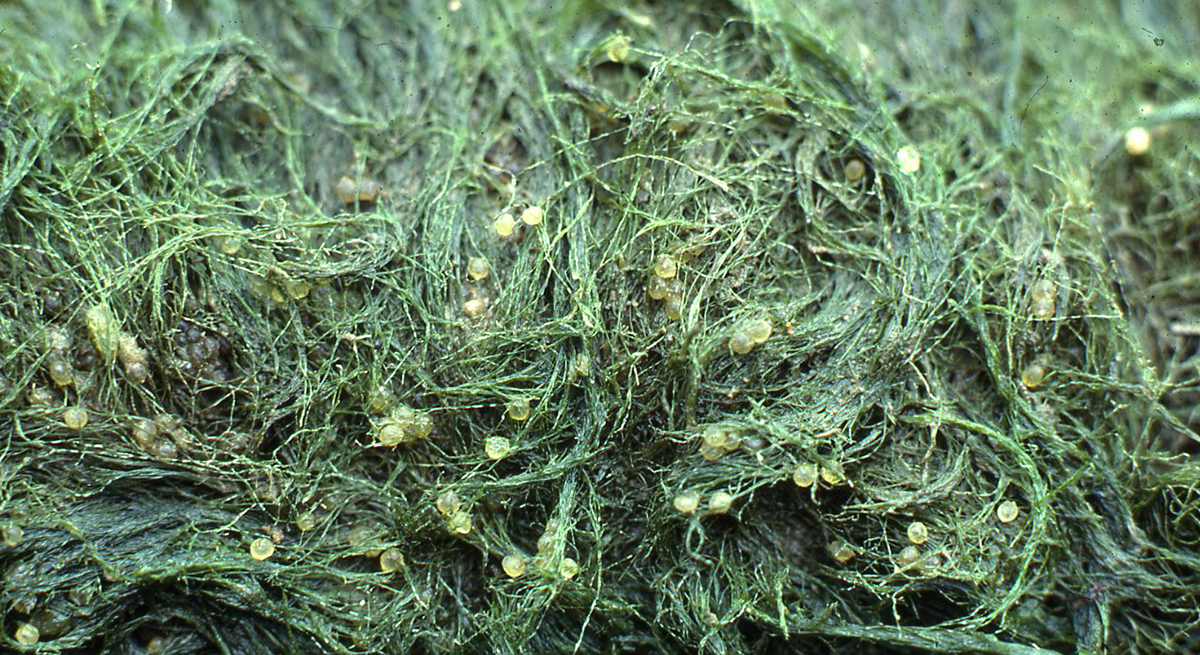
Darters get their breeding colors through a combination of sexual selection, environmental factors and diet. When you don’t have to worry about paying for housing, food or gas, you can afford to have more offspring. Males will maximize their reproductive success by attracting as many females as possible. Whereas females maximize by choosing the best looking males. Often, that shows high fitness, health and good condition. Especially if you have to be quick about fertilizing eggs in a flowing waterway.
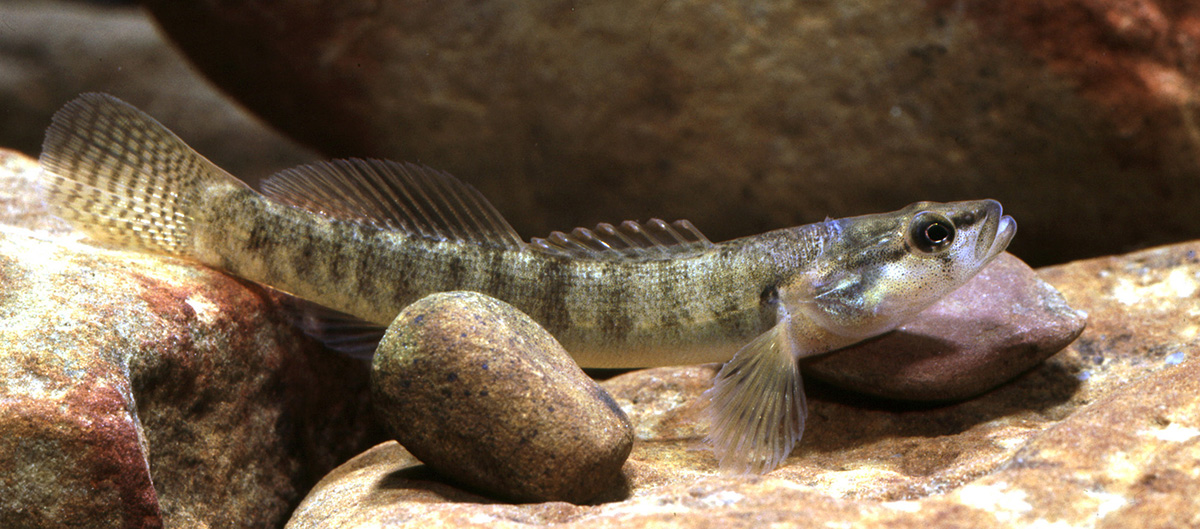
Not every group of darter shows off with their crayon box of colors. Some species rely on showcasing their skills at taking care of eggs. Species like the fantail darter or johnny darter develop egg mimic points on their body. Spots around their fins that look like eggs, which trick the females into thinking they’re already doing a great job at guarding the nest. For a fantail darter, these egg mimics look like drops of glue along their dorsal fin (along their back). Males will entice a pregnant, or gravid, female to lay eggs around his nest site- or add to his current line! I guess they don’t get as overwhelmed taking care of large broods of offspring – can we interest them in the idea of daycare? Much like us, they will eventually go to a school. However, it won’t be a center of learning, but a group of fish hanging out nearby together. Together, but separate enough to not compete for the best spots to hunker down and hunt.
Want a fun activity? Print off a picture of a fish, grab your box of crayons and color it in. Hop on the internet and see if you can find a fish out there that has the same patterns or colors you just made up! There probably is. If your imagination isn’t that heavy, come join us around the park district at creek programs! We’re likely to see more of these species.