
Jen Snyder
Senior Environmental Educator, Inniswood Metro Gardens
There are killers lurking in your garden. Hidden predators lying in wait to claim their next victims. But don’t worry, though sometimes called “natural enemies,” these assassins are no foe to you or your garden. Predatory insects are an essential part of a balanced garden ecosystem. There are plenty of plant munching, garden gobbling pests. It is critical to have a diverse array of predators to keep these pests in check. Read on to get to know just some of the predators protecting your garden.
Assassin bugs
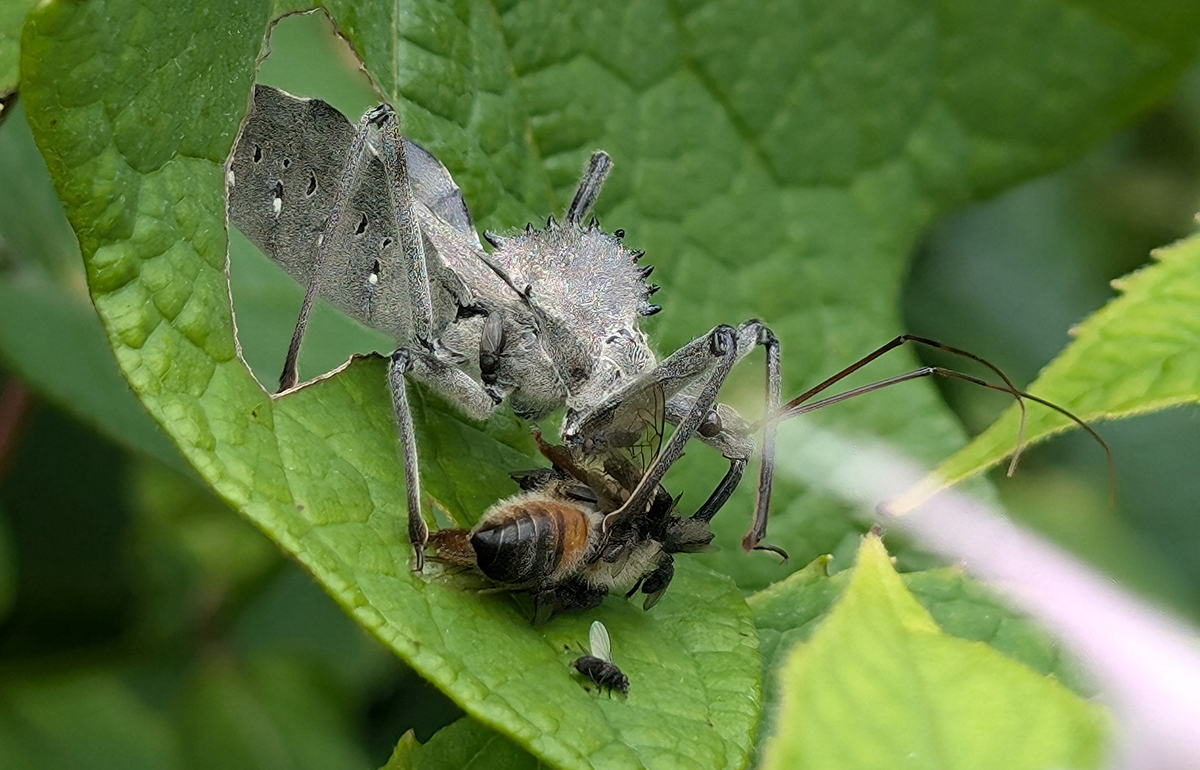
Assassin bugs, family Reduviidae, are insects whose common name not so subtly suggests their predatory nature. The family includes over 160 species in North America. They are typically generalist feeders, with prey that includes aphids, leafhoppers, but also beneficial insects. Armed with raptorial legs, they grab their prey and hold tight. They have long, curved mouthparts called beaks, which they tuck beneath their bodies. With prey in their grasps, they swing their beaks out, pierce their prey’s exoskeleton, inject paralyzing and pre-digestive enzymes, and then suck out their meal’s liquified insides.
One of the largest and most recognizable assassin bugs is the wheel bug, named for what looks like a half cogwheel rising from their thorax. They feed on caterpillars, including fall webworm, sawfly larvae, and locust borers, along with other forest insects. The young nymphs eat aphids.
Robber flies
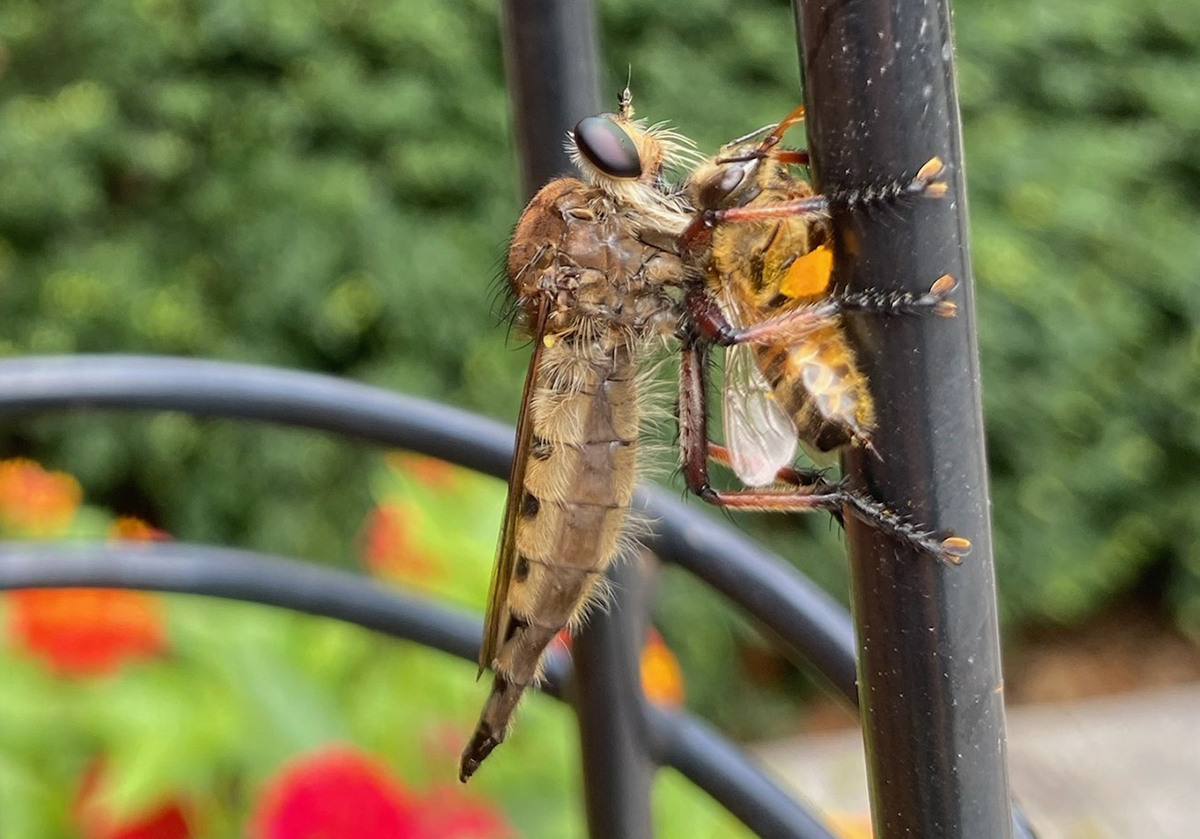
Robber flies, family Asilidae, are best described as aerial assailants. There are roughly a thousand species in North America. They have long abdomens, humped thoraxes, and a mustache of bristly hair above their beak-like mouthpart. Fast and powerful fliers, they lie in wait, watching for the movement of a flying insect. When they spot suitable prey, they launch into a quick, buzzing flight and grab their meal. Similar to assassin bugs they have piercing/sucking mouthparts which they use to paralyze their prey in the air and then return to a resting spot to eat. Larval robber flies live in soil and decaying logs, some may be useful in controlling grubs in turf.
Lacewings
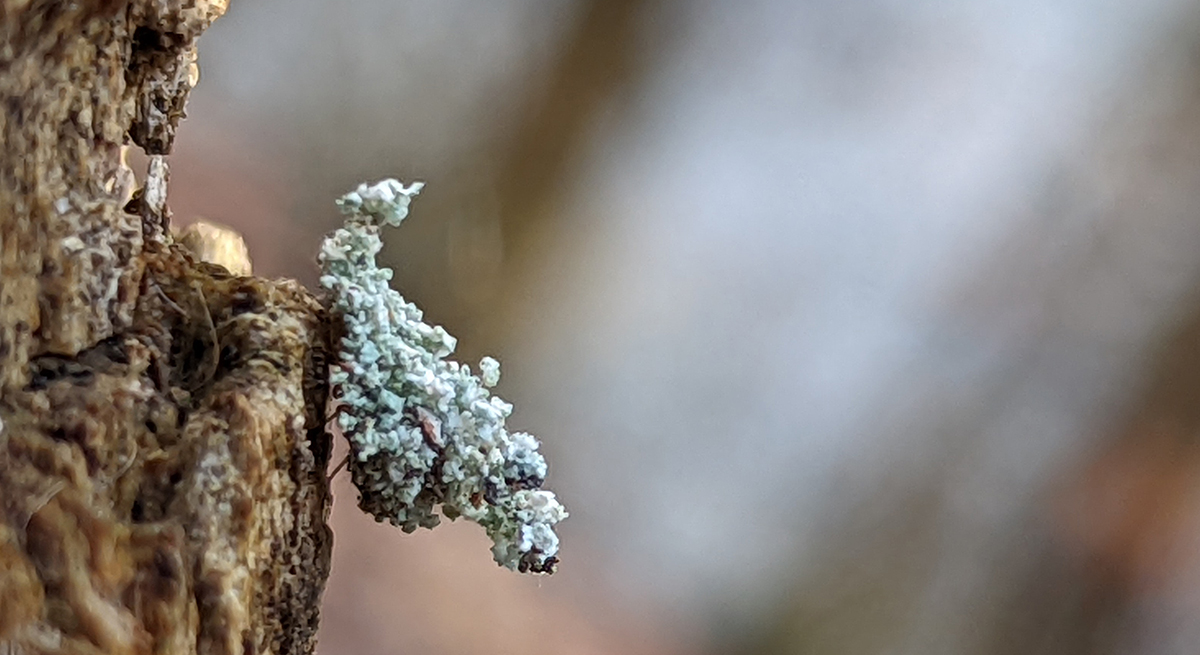
Two families of lacewings are commonly found in Ohio: green lacewings, family Chrysopidae, and brown lacewings, family Hemerobiidae. Species in both families have four large wings as adults, that are heavily veined, accounting for the name, lacewing. Adult green lacewings feed on pollen, nectar and honeydew, while adult brown lacewings feed on insects. The larvae of all lacewing species are predators, consuming hundreds of soft-bodied insects throughout their development, including aphids, mealybugs, whiteflies and insect eggs. Green lacewing larvae are also referred to as “aphid lions” due in part to their voracious appetite for the small insects. Some species of green lacewing larvae also wear aphid parts as a disguise. These larvae will cover their bodies in various debris, such as plant material, lichen, and aphid wax and skins. This suit of debris protects them from predators. It also helps them evade detection by the ants that guard aphid populations, allowing them to feast undetected like a proverbial wolf in sheep’s clothing.
Flower flies
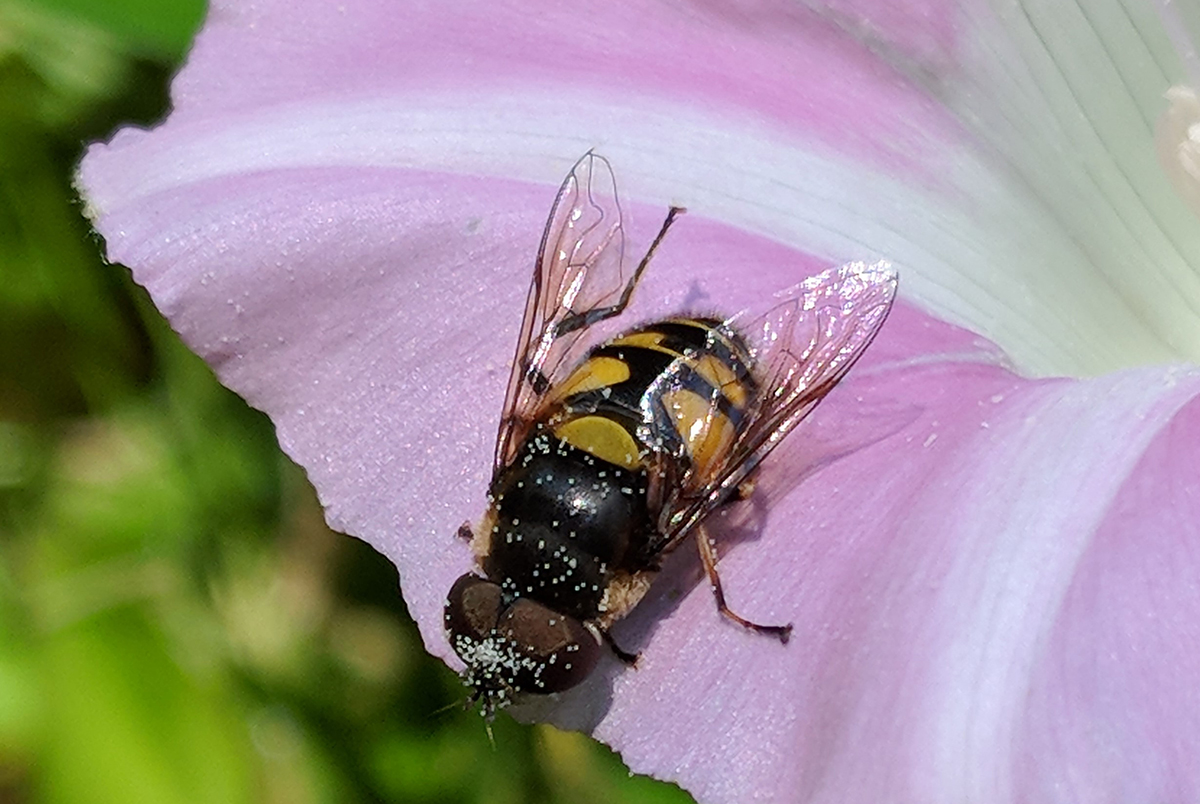
Similar to green lacewings, flower flies serve as both pollinators and predatory insects throughout their life cycle. Classified in the family Syrphidae, they are known as syrphid flies, hover flies or flower flies, and can be found hovering around flowers, hence the common names. They are easy to mistake for other insects, with many species sporting the black and yellow stripes associated with bees and yellowjackets. While the adult flies blend in with the bees and visit flowers, the larvae of many species are amongst the leaves in search of soft bodied insects to munch. They are reported to significantly reduce aphid populations when they are abundant.
Helping natural enemies in your yard
Maintaining healthy populations of predatory insects is an easy way to reduce pests in your yard. To encourage this natural pest control, add native plants in different shapes and sizes from a variety of plant families. This helps to ensure predatory insects have food throughout their life cycle and provides varied forms of shelter. Also, eliminate the use of pesticides, as they kill off both pest and pest predators. Finally, learn to identify predatory insects so you can recognize your teammates in promoting a balanced garden.