Jen Snyder
Senior Environmental Educator, Inniswood Metro Gardens
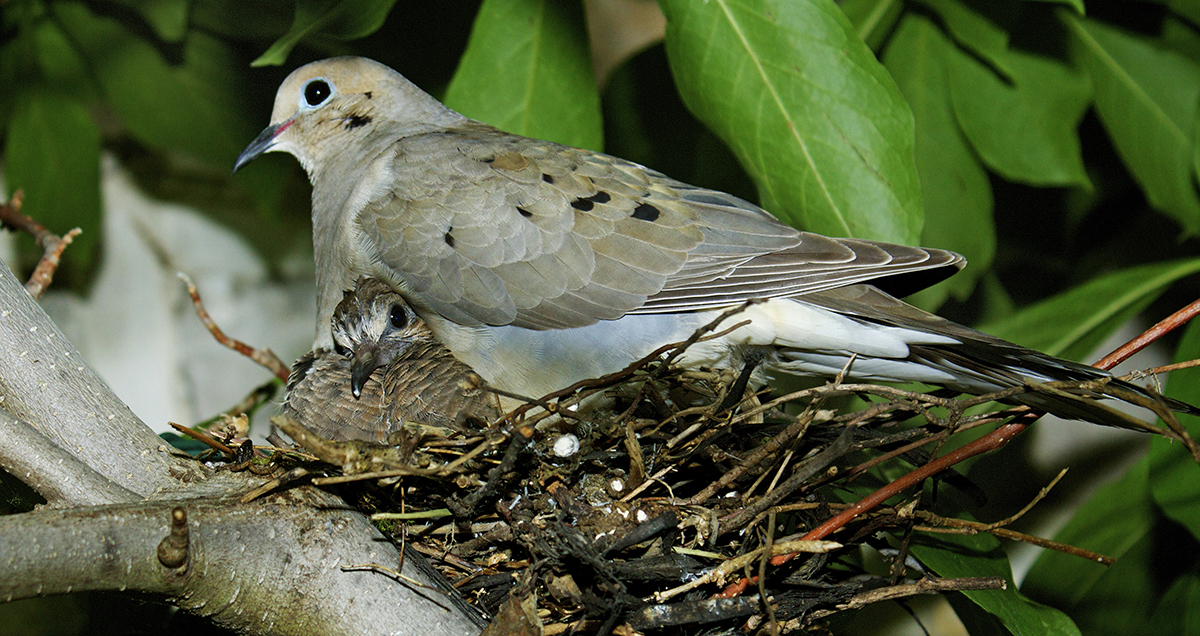
It starts as the days grow longer each spring and continues well into the summer. Birds are singing, building nests and laying eggs. Gardens can play an important role in rearing the next generation of many bird species. Here are some tips for making your garden most impactful for avian families.
Plant food and the food’s food
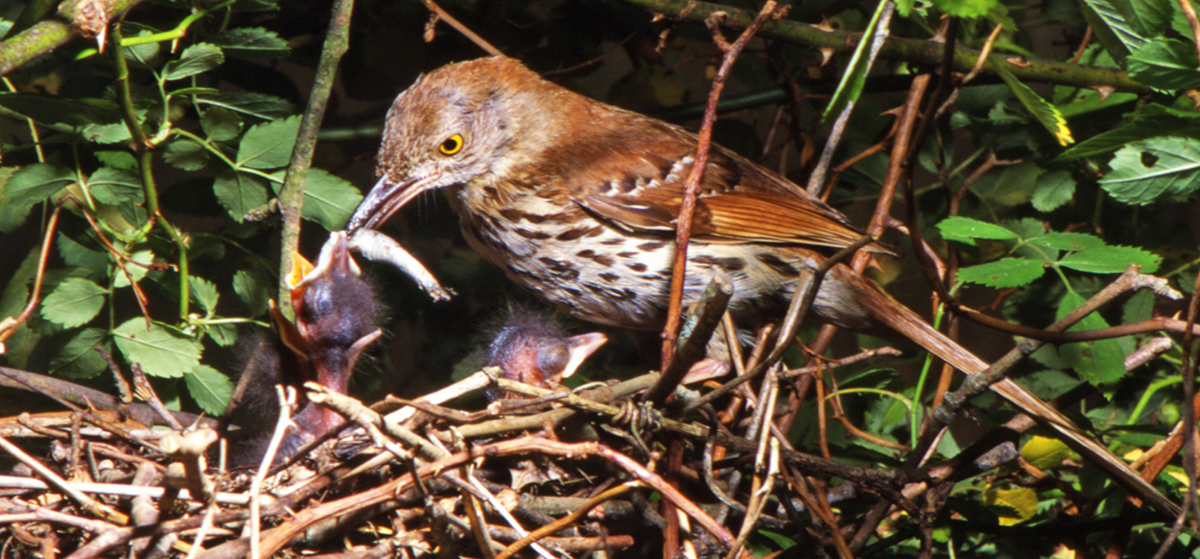
Feeders are great, but to provide food for a diversity of birds through different seasons, grow native plants that provide nectar, seeds and berries. Native plants, especially native trees, provide the most benefit to nestlings because native plants support the populations of invertebrates that young birds need. Ninety-six percent of terrestrial birds in North America feed insects to their young. Caterpillars are an especially nutritious food source. According to entomologist Doug Tallamy, a single breeding pair of chickadees must find 6,000 to 9,000 caterpillars to rear just one clutch of babies.
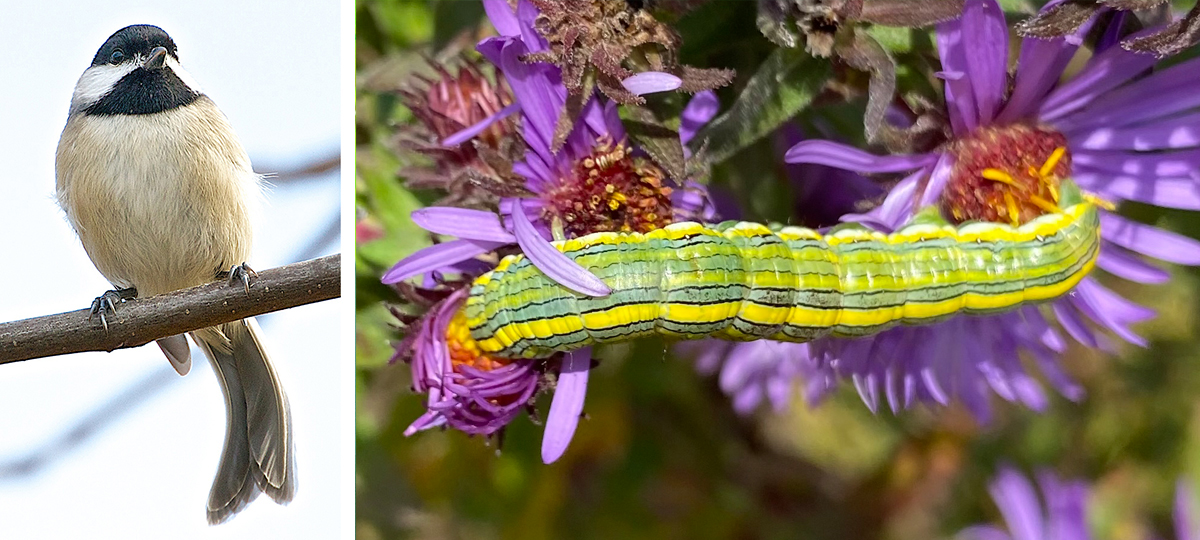
Chickadees need huge numbers of caterpillars to feed their babies. (Chickadee photo, Dan Ferrin. Asteroid moth caterpillar photo, Jen Snyder)
Leaf it be
Wait until spring to do your garden clean-up. Birds can continue to forage on seed heads even as temperatures cool. Fallen leaves and plant stems provide overwintering sites for the insects that will feed next year’s baby birds. Remember that the use of chemicals in your garden can be harmful to invertebrates and birds.
Cover up with layers
Increasing the amount of cover and shelter in your garden benefits all birds. For young birds just learning to fly, having spaces to hide is critical to their survival. Mimic a forest habitat with layers of tall trees and dense shrubs. Other places of shelter include tall grasses, evergreens, ground cover, brush piles and dead trees. For cavity-nesting birds, nesting boxes provide a place to rear young and can be modified to be a shelter from winter’s cold.
Make your yard a safe place for birds
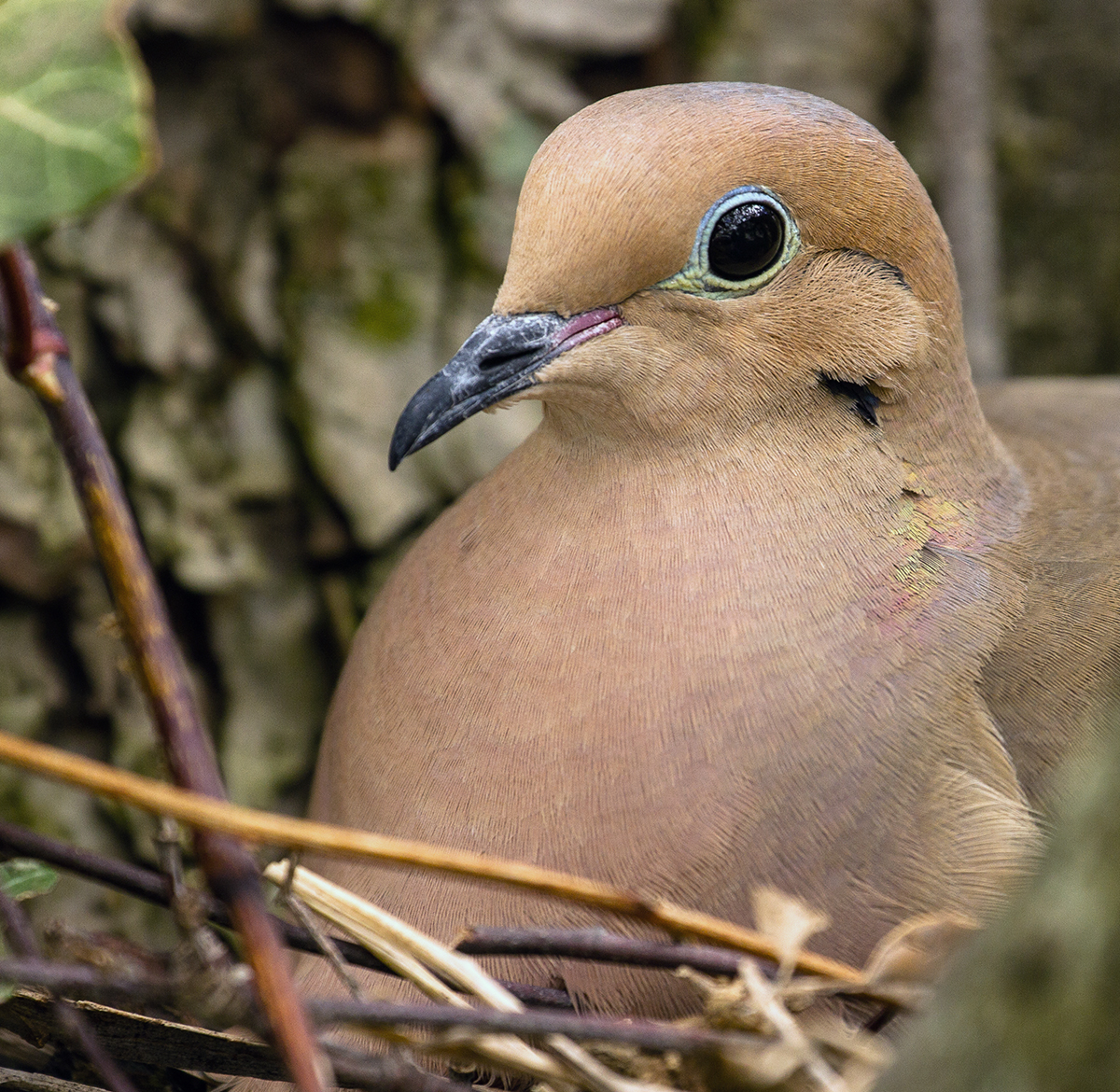
Window collisions are a big concern for birds as they cannot tell the difference between reflections on the glass and open spaces around them. There are numerous ways to reduce reflections on windows including using screens, netting, transparent films, bird tape or decals, and closely spaced rope hung in the windows. Awnings over windows can help to reduce reflections as well.
The birds are calling, so get out in the garden and make it a space that can be enjoyed by you and your avian visitors.