Kate Brierley
Blacklick Woods Naturalist
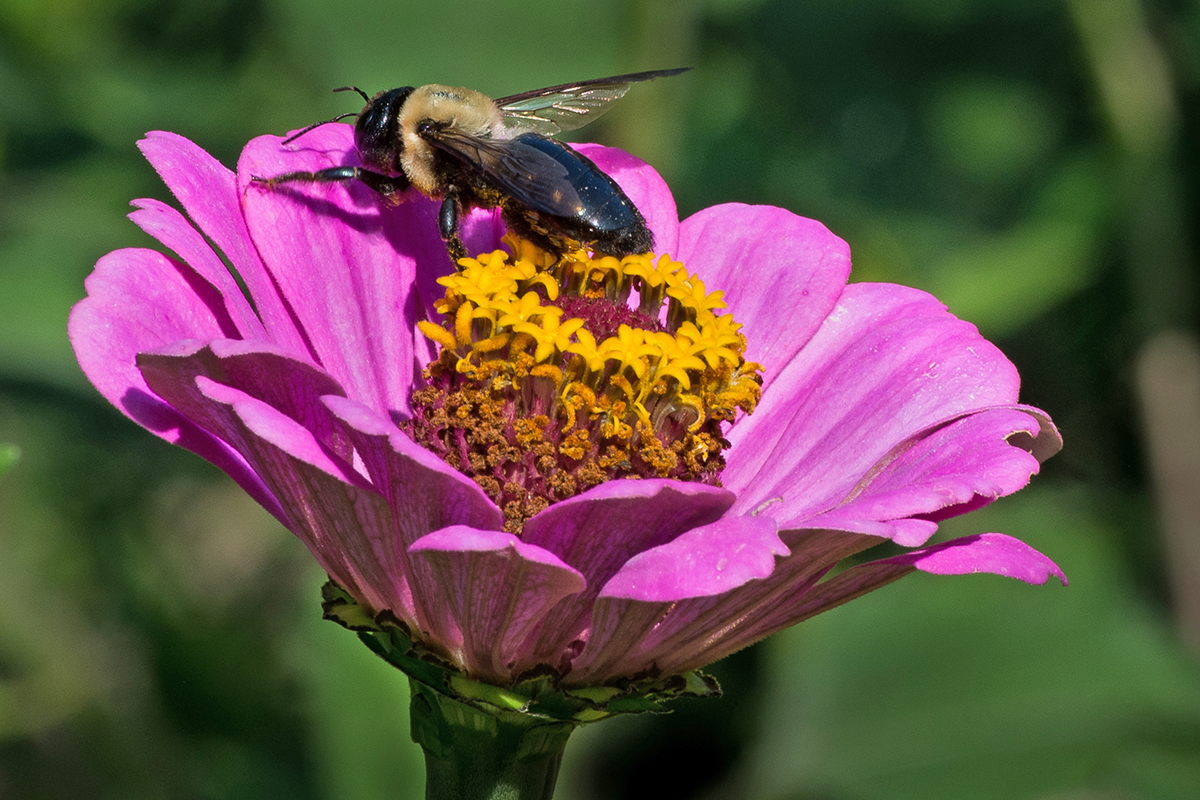
Take a moment to visualize a bee in your mind. Is it yellow and black or is it metallic green? Does it live in a colony or alone in holes in the ground? Is it bigger or smaller than a grain of rice? No matter your answers, it could be a bee! But I’m willing to bet you were not picturing a metallic green bee who lives underground and is the size of a grain of rice.
It’s bee-wildering how much variation there is across Ohio’s more than 450 native bee species, yet these marvelous creatures often go unnoticed or unappreciated in the shadow of the non-native western honey bee. This article is an introduction to the lesser known native bee families that are deserving of some spotlight.
Mason Bees (22 species in Ohio)
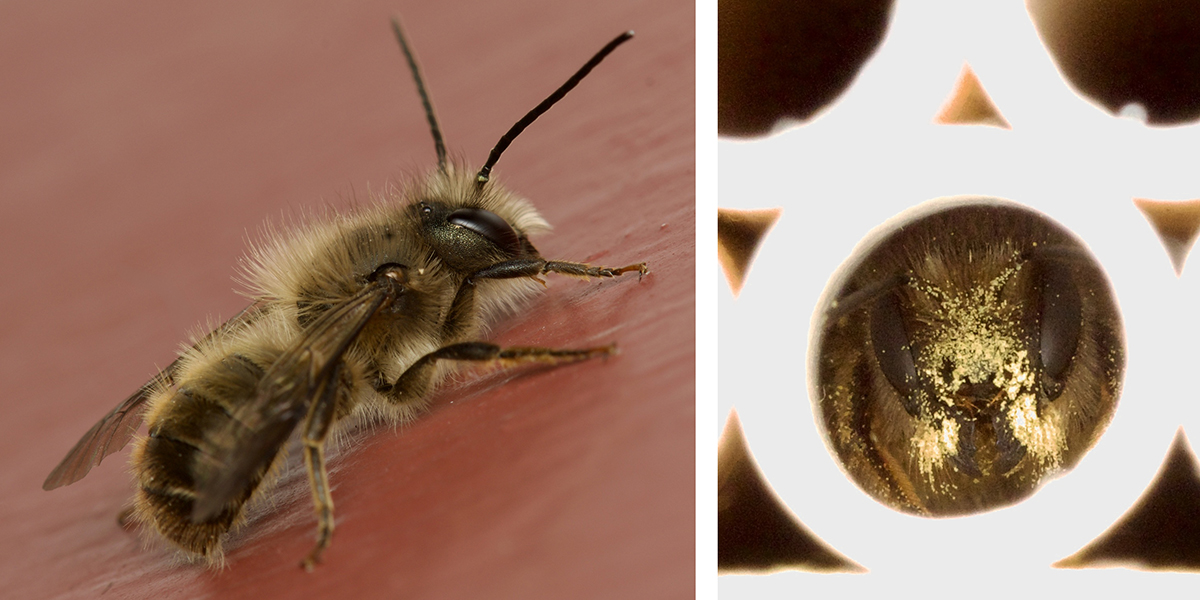
Mason bees are the masonry experts of the bee world. These solitary bees are known for nesting in tubular cavities and holes, both natural and artificial, and for using their building skills to section and seal nests with mud and/or chewed up leaves. Following spring mating, the male mason bees die and the females get started on their nests. Mason bee tunnel nests are constructed from back to front with sealed off partitions for each of the female’s eggs. She seals each egg into the nest with a little ball of pollen and nectar, so that when the larvae hatch, they have immediate access to food. Once a tube is all filled up, she seals the cavity and starts working on a new one! The larvae hatch in the summer, eat all their food, and then hibernate in cocoons until the next spring, where the cycle will begin again. Mason bees are known for being excellent fruit tree pollinators, especially apple, peach and pears.
How to bee-friend mason bees
You can put out a bee hotel/bee box for mason bees. You can make it at home or get one from the store, as long as it has little tubes for the bees to nest in. Mason bees also use the hollow stems of flowers to nest, so you don’t have to cut back your garden just yet.
Mining Bees (100 species in Ohio)
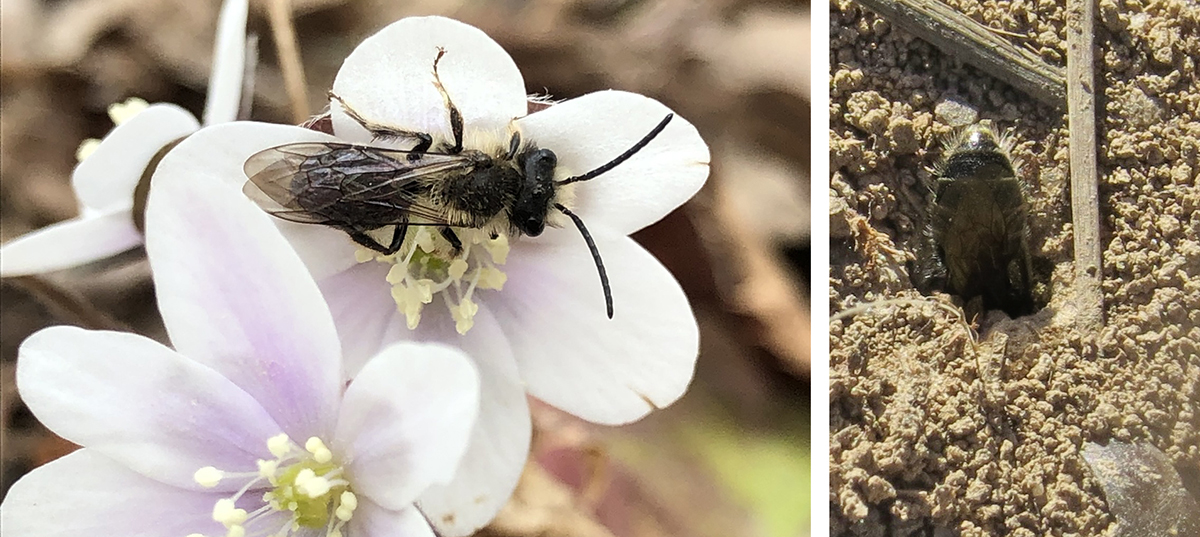
Mining bees get their name from their nesting habits as well. Mining bees are solitary bees that form nest tunnels in open, bare soil. While they are solitary, the female mining bees often build nests in aggregations, large clusters of individual nests, if the conditions are favorable. Mining bees prefer sandy soil and are most active, buzzing close to the ground, in the early spring. It is rare to get stung by a mining bee because they are non-aggressive and the females’ stingers often cannot penetrate human skin. Mining bees are important polylectic plant pollinators, meaning they gather pollen from many different and unrelated plants like apples, cherries and blueberries, for example.
How to bee-friend mining bees
Avoid spraying pesticides or insecticide chemicals on your lawn and open soil areas. If mining bees choose to nest in your yard, let them finish their nesting cycle as they are harmless to people and beneficial to the environment.
Leafcutter Bees (29 species in Ohio)
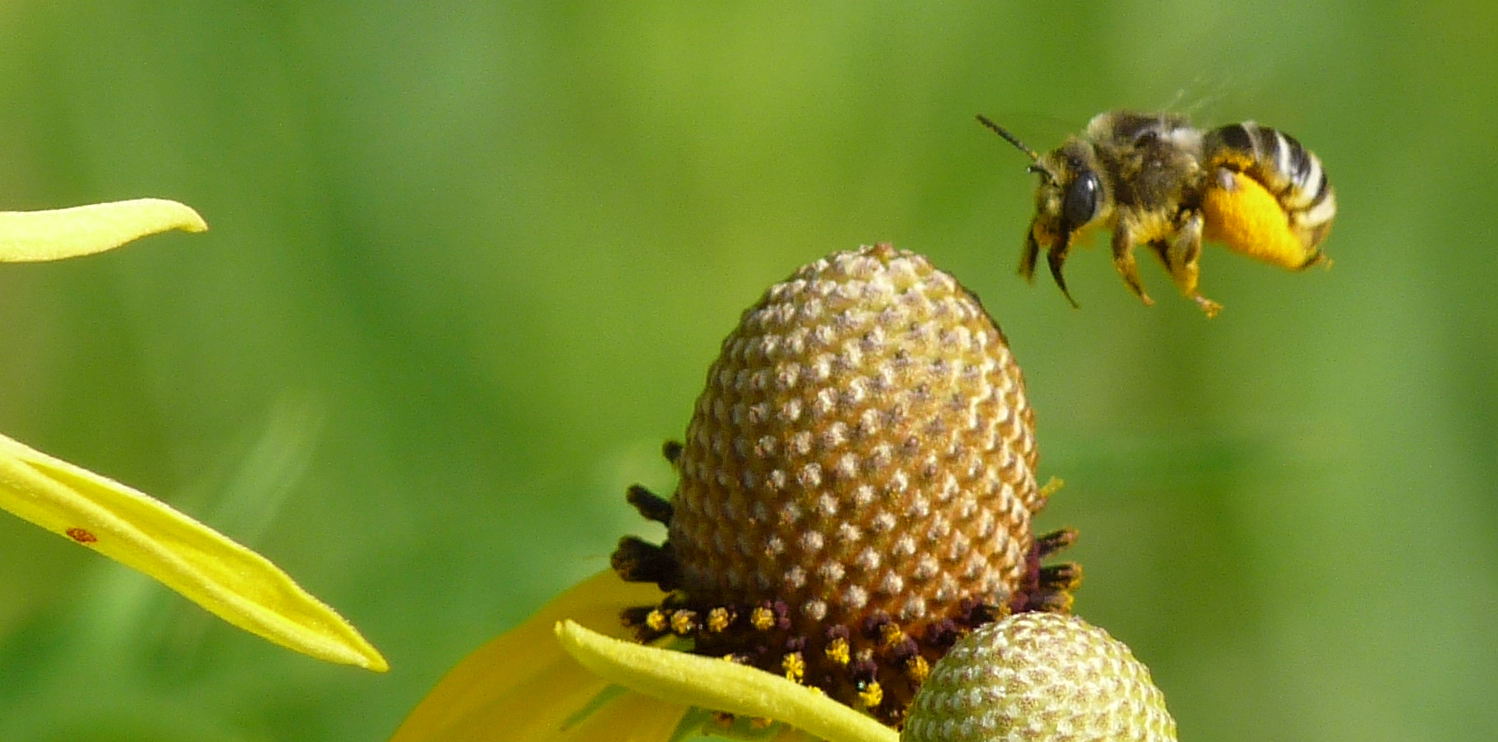
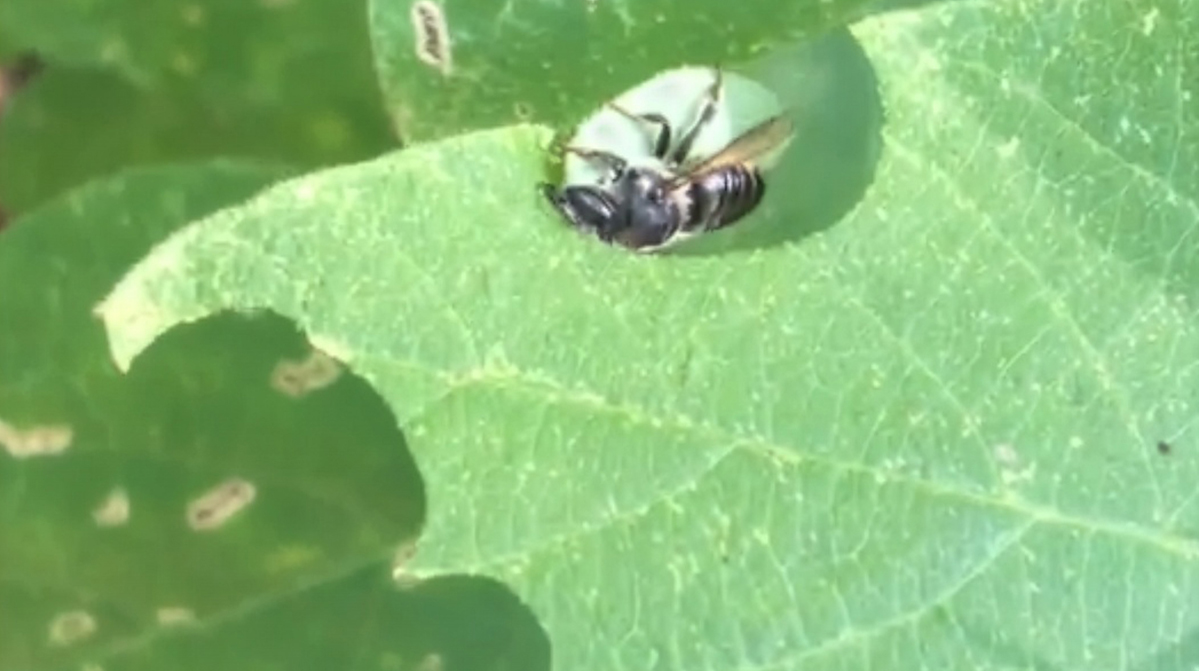
Leafcutter bees, as they are aptly named, use cutouts from leaves and occasionally flowers to make individual, rolled up nesting cells for their eggs. After mating and building a cavity nest, the female bee uses her sharp mandibles to cut round pieces for the egg cell’s base and top and ovular pieces for the walls. Then, she lays an egg and rolls it up with a pollen and nectar ball and tucks it safely into the cavity nest. The female bee will stack these individual incubators until the nest is full, usually accommodating eight to nine wrapped eggs, and will finish her hard work by sealing the nest with a thick, final wall. She dies shortly after. The offspring will continue her legacy the following spring as they pollinate late season fruits and vegetables.
How to bee-friend leafcutter bees
Avoid using pesticides on your lawn and plant native flowers/plants that the leafcutters can use. Soft-leaved plants like the eastern redbud and native roses are great for their nest building; native flowers like purple coneflower and wild bergamot are great for nectar collection.
Bumblebees
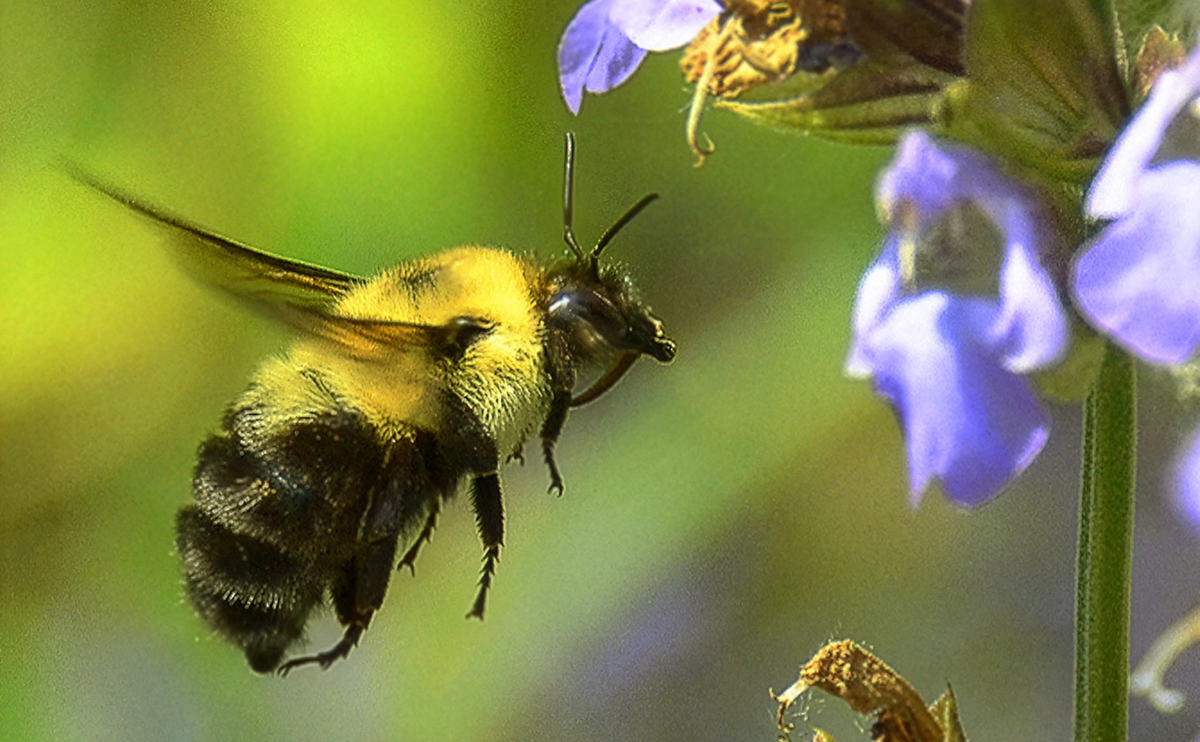
Next to the non-native western honeybee, native bumblebees in the genus Bombus are the only other eusocial bees in Ohio. Eusocial insects form colonies created by an overlap in generations; bumblebee colonies can get exceptionally large with up to 450 workers by the end of the season. The queen builds her colony by secreting wax from her abdomen to create an unorganized comb structure and then lays about a dozen eggs to begin her reign — but it doesn’t last very long. The seasonal colony will naturally collapse by the end of autumn and only the new queens will survive to mate, hibernate and repeat the cycle the following spring. There are about a dozen native bumblebee species in Ohio and they all play a crucial role in pollination. In fact, Ohio’s native bumblebees are significantly more efficient pollinators than honeybees. Bumblebees have a larger body size, longer proboscis (tongue), faster visit speed between flowers, shorter visit duration, and higher weather tolerance compared to honeybees. Rain or shine, bumblebees are buzzing from flower to flower to pollinate major crops like apples, cucumbers, squash, raspberries, blueberries and greenhouse tomatoes. Their unique ability to “buzz” pollinate by grabbing a flower and using their flight muscles to rapidly shake their body allows bumblebees to access pollen that other insects cannot.
How to bee-friend bumblebees
Bumblebees nest in the ground and are often drawn to abandoned mammal cavities or ornamental grass clumps. Pay attention to where bumblebees are going in your yard to note possible nesting sites. Leave those areas undisturbed as best you can.
Sweat Bees
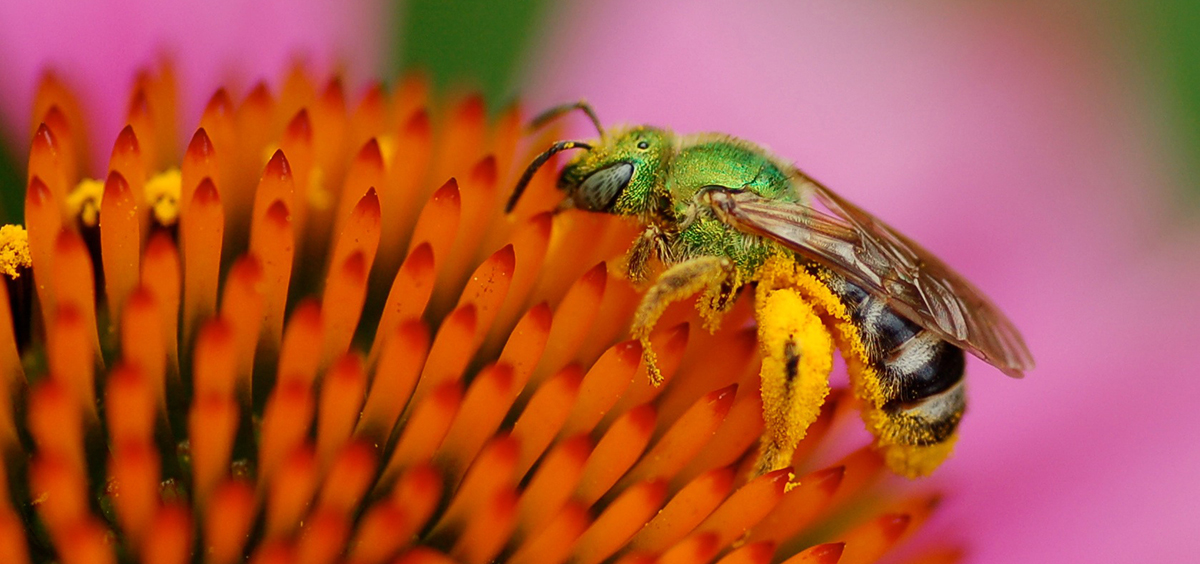
Perhaps the most diverse family of native bees in Ohio is the sweat bee family. Sweat bees are the most diverse in terms of size, color and social behavior. They can be black and brown or a spectrum of metallic greens, range in size from 3 to 13 millimeters, and have varying degrees of sociality. Some sweat bees live a completely solitary life outside of mating, while other species have their initial offspring raise following generations in a colony, just like honeybees. These are the tiny metallic green bees living underground that we imagined at the start of our native spotlights. Sweat bees are named for their affinity towards human perspiration; they are attracted to the salt in our sweat and are known to often land on people to take a sip. These bees visit and pollinate a wide variety of Ohio’s wildflower and native fruit species.
How to bee-friend sweat bees
If a sweat bee lands on you, quietly ignore your visiting friend as they take a quick sip before flying off. If you can’t ignore the bee, give it a gentle brush away from your body. They are non-aggressive bees. Also, by planting native flowers you can increase sweat bee food supply!
These are just a few of the marvelous native bees that keep Ohio beautiful and healthy. There are hundreds more native bee species to learn about that all have unique abilities and contributions to our landscape. Have you ever heard of carpenter bees? They are significant native pollinators too! While they are not bees, wasps are also valuable pollinators and often they are misunderstood creatures. To learn more about native pollinators, visit ohiodnr.gov to read the Common Bees and Wasps of Ohio Field Guide, or attend a public program at your Columbus and Franklin County Metro Parks! Get outside and bee a friend to the bees!