
Kate Brierley
Blacklick Woods Naturalist
What makes Ohio special? Our state is so full of diverse people, animals, plants and landscapes that if I wrote about everything, this article would be an essay the size of a textbook! Ohio’s state nature symbols, the special species that call Ohio home, is a good place to start answering that question. Ohio lawmakers have been designating state symbols since the early 1800s, and the ones written about below are some Columbus Metro Parks’ favorites!
Ohio Amphibian – Spotted Salamander
Did you know? Spotted salamanders can regrow their lost limbs!
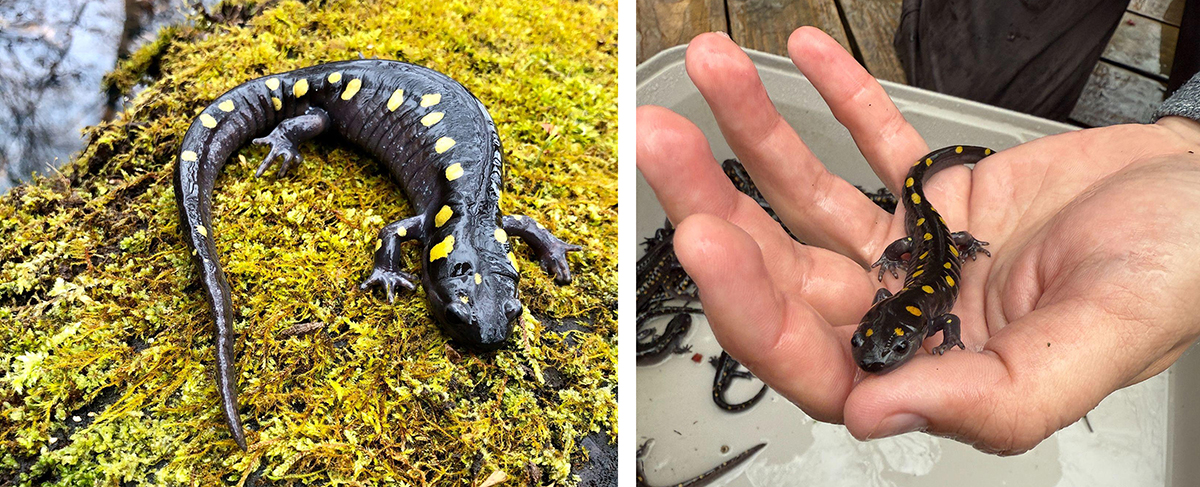
This slippery sleuth looks exactly like its name sounds. The spotted salamander has a chunky grayish black body covered in yellow spots. The spots start behind the salamander’s eyes and repeat in a row all the way down to the tip of its tail. This salamander must be pretty easy to spot, right? Not really!
Salamanders are nocturnal, meaning they are asleep during the day and active at night, and they spend most of their time underground or under leaves and logs. So even though their bright yellow spots make them stand out, this creature manages to stay out of people’s sight! After the sun sets, you’re most likely to find one near swamps in early spring as many female salamanders get ready to lay their eggs in the water. Spotted salamanders can lay egg sacs the size of a fist, containing up to 250 individual eggs.
Ohio Bird – Northern Cardinal
Did you know? Cardinals shed their head feathers in a process called molting, and they become partially or completely bald!
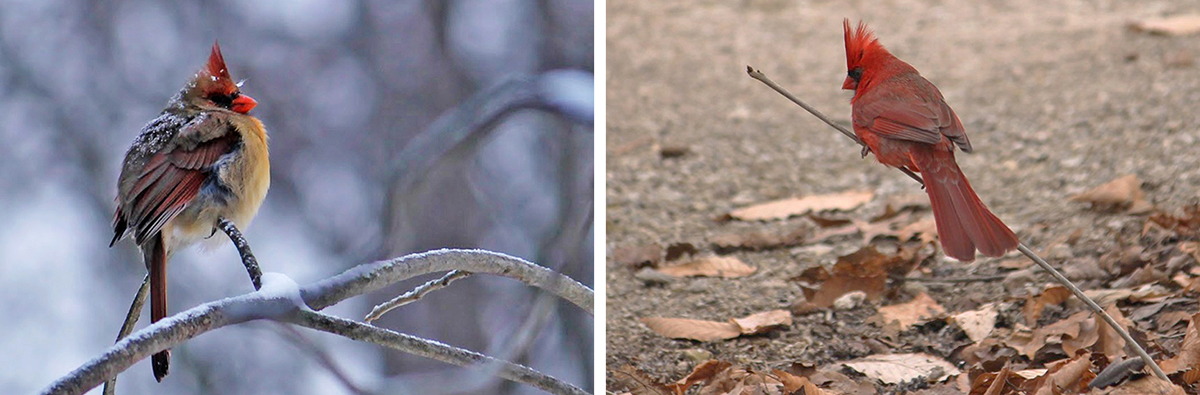
Do you recognize this red bird with his special mohawk and orange beak? It’s a male northern cardinal. Cardinals are common backyard birds throughout the state and live here all year round, even through winter. These birds have adapted to live amidst the Ohio snow by hunting for seeds and nuts that are available year-round and fluffing up their feathers to keep warm. Males are bright red and females are brownish gray with swipes of red on their wings and tail. Because they are such a beautiful and common bird, several other states – Illinois, Indiana, Kentucky, North Carolina, Virginia and West Virginia – have also claimed cardinals as their state bird. Can you think of any other birds in Ohio that would make a good state bird?
Ohio Tree – Ohio Buckeye
Did you know? The Ohio buckeye’s name comes from the light and dark brown appearance of its nut, which resembles the shape and color of a buck’s eye.
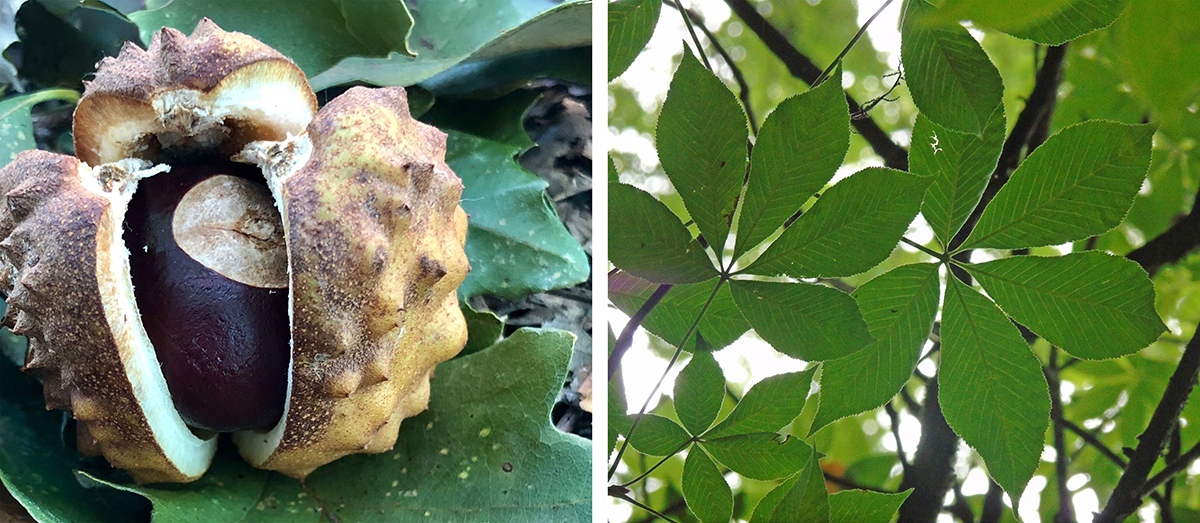
The Ohio buckeye is the first tree to get ready for each Ohio season. As winter melts away and spring sweeps in, Ohio buckeyes are the first trees to gain back their leaves, each composed of five smooth green leaflets. After flowering and dropping their nuts throughout the spring and summer, this tree is the first to lose its leaves in preparation for fall; sometimes all of its leaves have fallen before other tree species even drop one. Buckeye trees are most often identified by their nuts – light and dark brown spheres protected by a spiny yellow case. The buckeye nut, although a common Ohio symbol, is actually toxic if ingested by humans and many animals. Native American communities like the Delaware Peoples use ground up buckeyes as poison for hunting fish! But some animals CAN eat these nuts, like squirrels, and they get their snack all to themselves.
Ohio Native Fruit – Pawpaw
Did you know? There is an Ohio Pawpaw Festival every year where people can try a variety of pawpaw foods and participate in different fun activities!
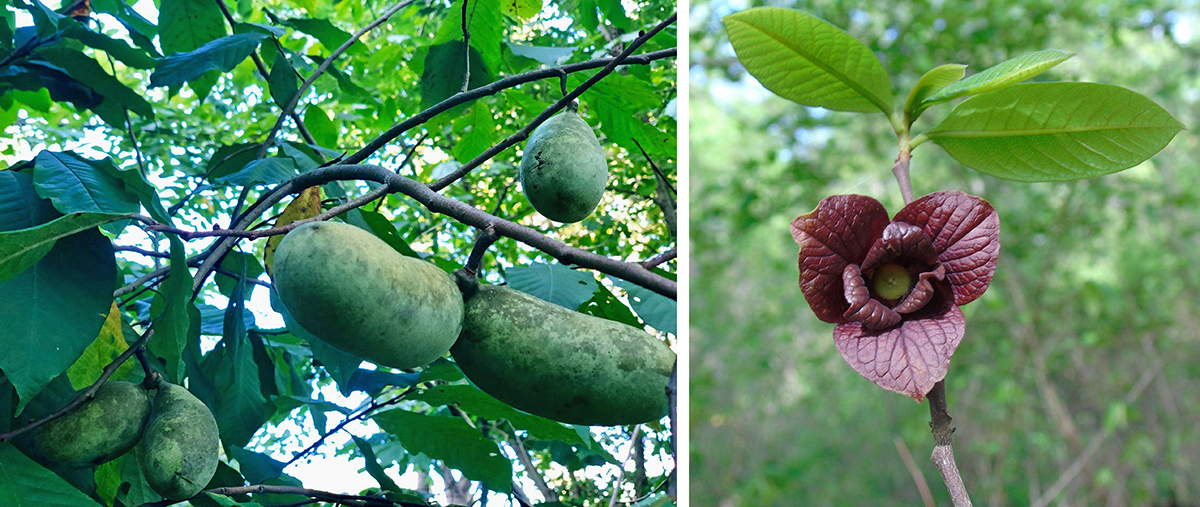
Not many people know that there is a fruit tree that naturally grows in Ohio! It’s called the pawpaw tree and it produces small, green, potato-looking fruits that taste like a combination of all your favorite tropical smoothie flavors: banana, mango and pineapple. This fruit, Ohio’s official native fruit, is the largest edible fruit native to North America. And we have it all over Ohio. Pawpaw fruit falls to the forest floor when it ripens, which begins in late summer and peaks in September and October. Many different animals, including humans, can enjoy the custardy fruit. The fruit is actually quite nutritious and has similar nutrients to a banana, apple, or orange. While they may taste yummy, their flowers are known to be super stinky! The flower’s unpleasant smell attracts beetles and flies as pollinators, while butterflies and bees stay away from the pungent perfume. To find a pawpaw, look for a thin branched tree with large tropical-looking leaves in the understory of the forest and you just might spot a cluster of our native fruit growing overhead.
Only a handful of Ohio’s natural state symbols were discussed here today and there are more fascinating species to learn about. Have you ever heard of our state gemstone? Or our state fossil fish that lived in Ohio 360 million years ago? To learn more about these fascinating features, go to https://ohio.gov/government/resources/ohio-facts-state-symbols to read more.
What do you think makes Ohio special?
where is the Pawpaw festival?
Metro Parks does not host Paw Paw Fest. You can find out more at ohiopawpawfest.com.